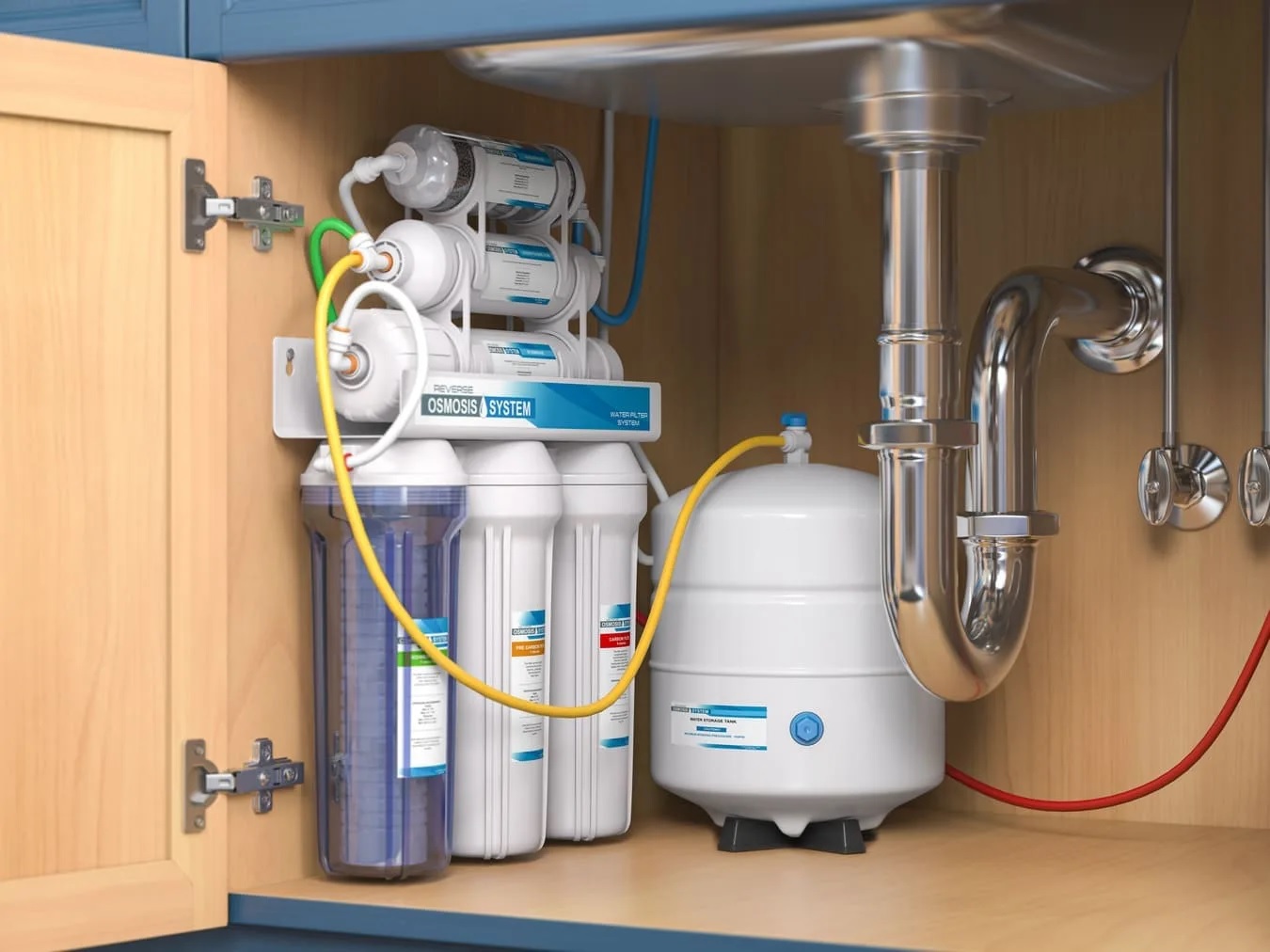
Providing high-quality drinking water at home is a priority for foreign investors and families relocating to Cyprus. Despite government agencies declaring the safety of tap water, its chemical composition and organoleptic properties often fail to meet the expectations of discerning consumers. In 2026, the installation of deep purification systems has become not just a trend, but a mandatory element of the engineering infrastructure of modern apartments and villas.
Sources and actual water quality indicators in Cyprus
In 2026, the island’s water supply relies on two main sources: desalination plants and reservoirs. Desalination provides up to 70% of the needs of urban agglomerations such as Limassol, Paphos, and Larnaca.
Chemical composition and hardness
Water leaving desalination plants undergoes a mineralization process, but its quality can deteriorate significantly during transportation through municipal networks and storage in rooftop tanks.
- High Dissolved Solids (TDS): The total dissolved solids level in Cyprus tap water often ranges from 400–600 mg/L, while the recommended level for comfortable drinking is 50–150 mg/L.
- Hardness: Excess calcium and magnesium ions lead to the formation of limescale deposits on household appliances and plumbing fixtures, which reduces the service life of expensive equipment by 30–40%.
- Chlorination: Chlorine is actively used to disinfect water in municipal networks, which gives the water a specific odor and can negatively affect the condition of the skin and hair.
Benefits of a Reverse Osmosis System in 2026
Reverse osmosis (RO) remains the most effective home water purification technology. It removes up to 99% of all contaminants, including heavy metals, bacteria, viruses, and microplastics, which were recognized as a global environmental threat in 2026.
Technological features of modern systems
In 2026, the Cyprus market will be dominated by systems with 5, 6 and 7 stages of purification.
- Mechanical cleaning: Removal of sand, rust and sediment.
- Carbon filters: Absorption of chlorine and organic compounds.
- Semipermeable membrane: A basic barrier that allows only water and oxygen molecules to pass through.
- Post-filtration and mineralization: Returning the optimal amount of beneficial minerals (potassium, magnesium, sodium) to the water to improve taste and pH balance.
Installation and maintenance costs: detailed calculation
Investment in a water purification system pays for itself within the first 10–12 months, thanks to the elimination of bottled water purchases. In 2026, the average price of a 1.5-liter bottle of water in Cypriot supermarkets was €0.50–€0.80, with 19-liter bottles costing up to €5–€7 each.
Comparison of water treatment systems in 2026
| System type | Number of steps | Price (EUR) | Annual maintenance cost (EUR) | Peculiarities |
| Compact RO (Basic) | 5 steps | 250 – 350 | 80 – 100 | Suitable for small apartments |
| Premium RO with mineralizer | 6-7 steps | 450 – 650 | 120 – 150 | Optimal taste, protection against scale |
| Smart RO with pump and Wi-Fi | 7 steps | 750 – 1,100 | 180 – 220 | Quality control via app |
| Flow-through system (without tank) | 4–5 steps | 400 – 600 | 150 – 180 | Saving space under the sink |
Installation costs
Professional system installation in Cyprus in 2026 costs between €60 and €120, depending on the complexity of the connection and the need for drilling into natural stone or quartz countertops. Many companies offer free installation with the purchase of a premium system.
Operating costs and maintenance schedule
To maintain high water quality, it is necessary to strictly adhere to the consumable replacement schedule. In Cypriot water conditions, the load on pre-filters is higher than average.
- Pre-filter cartridges: Replace every 6 months. For high-consumption families of 4–5 people, replace every 4 months.
- Carbon post-filter: Replace once every 12 months.
- Reverse osmosis membrane: Replacement once every 24–36 months, depending on the volume of water passed through and the efficiency of the system.
- Mineralizer: Replace every 12 months to maintain the physiological value of the water.
In 2026, many service companies offered subscription services. For a fixed fee of €150–€200 per year, specialists conduct two visits, including the cost of all filters and an express TDS test before and after the system.
Impact on the value and attractiveness of real estate
Having a built-in reverse osmosis system in an apartment or villa is a significant competitive advantage in the rental and real estate market.
For tenants
Eliminating the need to carry heavy containers of water increases customer loyalty and allows us to set rental rates 2–3% above market rates.
For buyers
In 2026, environmental sustainability (ESG standards) will play a key role. A home free of plastic waste from bottled water will be perceived as a premium property that cares for the health of its owners and the environment.
In addition to under-sink drinking water systems, villa owners in Cyprus are increasingly installing mains water softening systems at the entrance to their homes in 2026. This protects all appliances, boilers, and central air conditioning systems from corrosion and limescale deposits, preserving the market value of their assets.
FAQ: Frequently Asked Questions
Is it true that water after reverse osmosis is “dead” and harmful?
This is a common misconception, but in 2026, numerous studies disproved it. The system does remove minerals, but modern models are equipped with mineralization units that restore the necessary salt balance. Furthermore, humans obtain most of their essential minerals from food, not water. Keeping the water free of chemical contaminants is more important than its calcium content.
How much water does the system consume (drainage)?
In 2026, technology had advanced. While older systems discharged up to 4–5 liters for every 1 liter of clean water, modern models with booster pumps and high-performance membranes have a ratio of 1:1 or 1:1.5. This makes them environmentally friendly even in the water-scarce conditions of Cyprus.
Is it possible to install the system myself?
Installation is possible with basic plumbing skills, but as of 2026, to maintain the system’s warranty and prevent leaks, it is recommended to contact certified plumbers. Incorrectly connecting the drain clamp or overtightening the fittings can damage kitchen cabinets.
How to check if it’s time to change the filters?
The most reliable method is to use a TDS meter. If the reading at the outlet of the purification system’s tap begins to rise and approaches 50-70% of that of tap water, the membrane and filters require replacement. In smart systems from 2026, indicator lights on the faucet or a smartphone notification will automatically notify you when service is needed.
Does reverse osmosis remove desalinated seawater?
Yes, reverse osmosis technology was originally developed specifically for seawater desalination. A home system effectively purifies municipal water, removing residual salts that may remain after industrial purification, as well as secondary contaminants from pipes.