Comfortable living in premium apartments in Cyprus in 2026 is unthinkable without a high level of acoustic privacy. Despite the rapid advancement of construction technologies, soundproofing remains a pressing issue for many developer projects on the island. Traditional reinforced concrete frames and hollow brick wall infills cope well with seismic loads, but they create an environment conducive to the free propagation of impact and airborne noise. For discerning buyers, understanding the technical nuances of soundproofing floors is key to protecting their investment and ensuring quality of life.
Acoustic standards and realities of the Cypriot market in 2026
European building standards (Eurocodes) are in effect in Cyprus, but local developers have long focused on thermal insulation and energy efficiency (Class A). In 2026, this situation will change: buyers in the luxury segment in Limassol, Paphos, and Larnaca are demanding sound insulation standards of at least 50–55 dB for floors between apartments.
Noise in apartment buildings is classified into 2 types:
- Airborne noise: sounds from voices, television, and dogs barking. It travels through the air and penetrates cracks or weak barriers.
- Impact noise: footsteps, moving furniture, falling objects. This type of vibration is transmitted directly through the building’s structures (floors and walls).
Cyprus is characterized by the use of hard flooring—marble, granite, or porcelain stoneware. Without a special acoustic underlay, such floors turn each apartment into a “resonator,” transmitting the footsteps of the neighbors above with high intensity.
Technical inspection of ceilings at the construction stage
If you purchase a property at the off-plan stage or during the finishing process, you have a unique opportunity to oversee hidden work that cannot be changed after the property is delivered.
Study of design documentation
The first step is to request the developer’s “Technical Specifications” section. You should ensure that the project includes a floating floor system. This is a technology in which the floor screed is separated from the concrete base and walls by a special damping layer.
Key characteristics of a quality system in 2026:
- Thickness of the acoustic membrane under the screed: not less than 5–10 mm.
- Use of specialized materials such as high-density cross-linked polyethylene or rubber mats.
- The presence of a damper tape around the perimeter of all walls in each room.
Physical inspection of the object
When visiting a construction site, pay attention to the joints between the floors and walls. High-quality soundproofing eliminates “sound bridges.” If the screed is poured flush against vertical structures without a separating layer, impact noise will spread unimpeded throughout the building’s frame.
Check the thickness of the interfloor slabs. In modern projects as of 2026, the standard thickness of monolithic floor slabs is 20–25 cm. The mass of concrete itself dampens airborne noise well, but is powerless against impact noise without additional layers.
Comparative characteristics of soundproofing materials in Cyprus
To visualize the effectiveness of various solutions in 2026, the table below is based on average market indicators in Cyprus.
| Material type | Impact noise reduction (dB) | Installation cost with materials per 1 m2 ( €) | Service life (years) | Features of application |
| Thin underlay for laminate flooring | 15–18 | 5–8 | 10 | Minimum efficiency |
| Acoustic membrane (PVC/Bitumen) | 22–26 | 18–25 | 30+ | Ideal for new buildings |
| Cork covering (5–8 mm) | 20–22 | 35–50 | 20 | Eco-friendly, moisture-resistant |
| Floating floor system (wool + screed) | 30–40 | 60–90 | 50 | Maximum protection |
How to inspect a finished apartment: a buyer’s checklist
If the facility has already been commissioned, the inspection becomes more difficult, but remains possible. Use the following methods to assess acoustic comfort:
- The “tap test.” Ask an assistant or agent to walk around the apartment above in hard-soled shoes. In a quality home, footsteps should be muffled and barely audible. A hollow, ringing sound indicates a lack of soundproofing.
- Inspect utility lines. Sound is often transmitted through shared sewer and water supply shafts. In 2026, high-quality residential complexes began using silent pipes. Open inspection hatches and check for insulation on the risers.
- Evaluation of window systems. Up to 40% of external noise enters through windows. Ensure that double-glazed windows with different glass thicknesses (e.g., 6 mm, 12 mm, 4 mm) are installed to dampen resonance. In 2026, premium-class systems such as Schuco or Alumil with increased noise reduction ratings will be the standard.
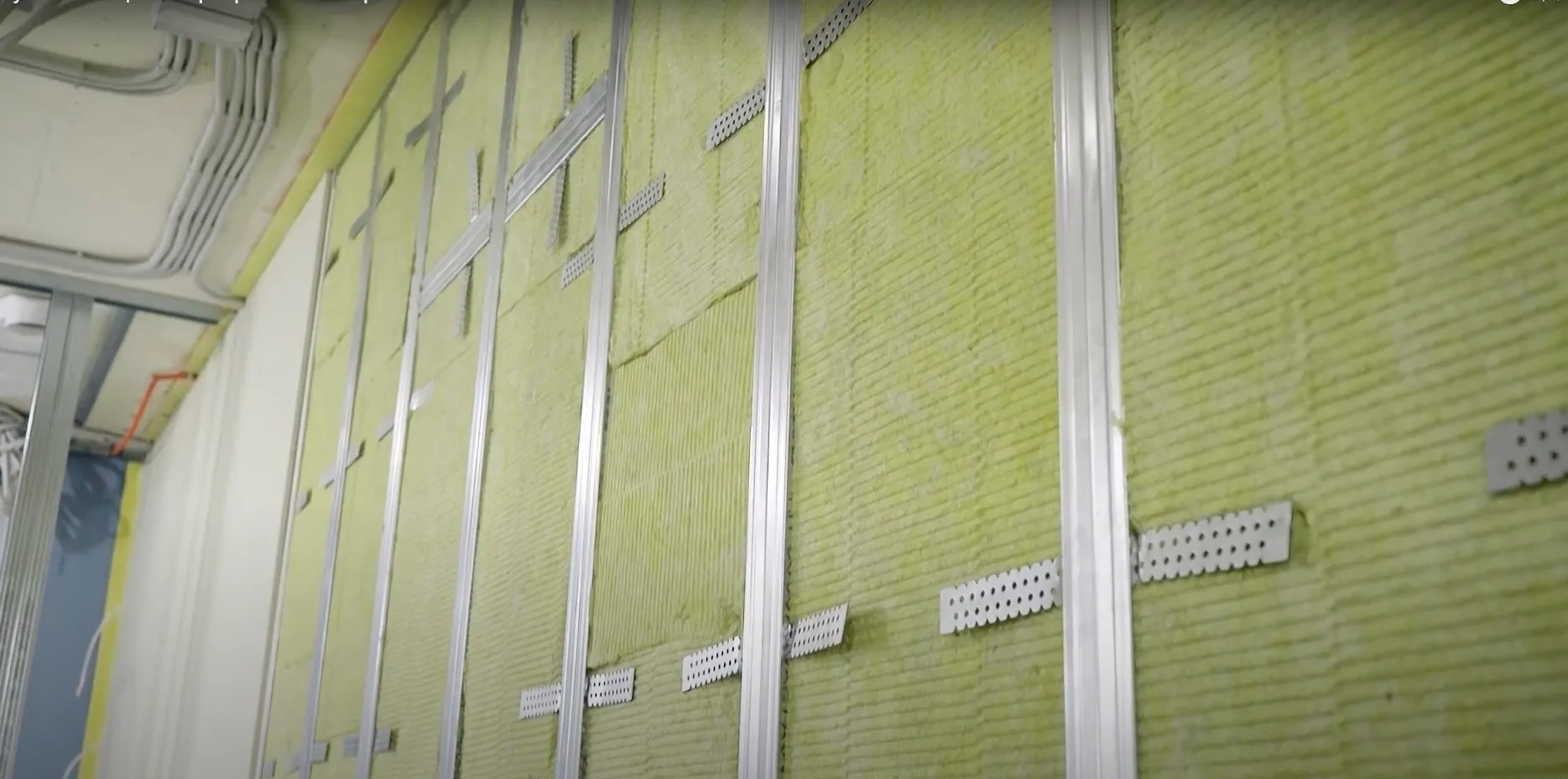
- Checking the walls between apartments. In Cyprus, double-layered brickwork with a layer of stone wool is often used. Knock on the wall; it shouldn’t sound like a hollow drum.
The role of planning solutions in acoustics
Professional developers in Cyprus are using the “noise zoning” method in 2026. When reviewing plans, pay attention to the placement of bedrooms. They should not border elevator shafts, stairwells, or living rooms of adjacent apartments. The ideal layout includes “buffer zones” in the form of walk-in closets or bathrooms along walls shared with neighbors.
The presence of podiums and terraces should also be considered. Penthouses with roof gardens are popular in Cyprus. In such properties, the soundproofing of the ceiling should be doubled due to the operation of pool pumps and possible noise from parties.
FAQ: Frequently Asked Questions
Are there any noise regulations in Cyprus for residential buildings?
Yes, developers are required to comply with national building regulations, which align with pan-European standards. However, in practice, detailed acoustic calculations are only provided for high-end projects. In 2026, when receiving the Final Certificate of Approval, basic sound insulation will be mandatory, but its quality may vary.
Will installing a suspended ceiling improve soundproofing from neighbors above?
A stretch ceiling itself is not a sound insulator, and in some cases can create a “drumming” effect, amplifying low-frequency noise. To achieve this, it’s necessary to fill the space between the main ceiling and the stretch ceiling with specialized sound-absorbing slabs made of mineral or stone wool at least 50 mm thick.
What type of flooring is considered the quietest in Cyprus?
High-quality engineered parquet laid over an acoustic underlayment demonstrates the best performance. However, due to the climate (high humidity and underfloor heating), porcelain stoneware is more often chosen in Cyprus. To ensure its quietness, a floating floor system is required during the screed pouring stage.
How effective are foam block walls in soundproofing compared to brick?
Foam blocks (Ytong and similar) have good thermal insulation properties, but due to their low density, they have poorer sound insulation than traditional solid brick or concrete. In modern Cypriot buildings built in 2026, it is recommended to use composite structures for partitions between apartments: two layers of brick with an internal filling of high-density mineral wool.
Is it worth paying extra for an apartment with improved soundproofing?
This makes perfect sense from an investment perspective. In 2026, the liquidity of real estate in Cyprus is directly dependent on living comfort. Apartments with a proven high level of acoustic insulation sell 10-15% faster and at a higher price, as freedom from neighboring noise is a top priority for expat families and wealthy renters.