A private pool in Cyprus is not just a luxury item but a critical asset, increasing the market value of a property by 15-20% and its rental potential by 30-50%. However, integrating a hydroelectric structure into an already completed and landscaped plot in 2026 requires a thorough understanding of legal procedures, building codes, and future operating costs. Mistakes at the planning stage can lead to lawsuits from municipalities and the failure to obtain the final building certificate.
Legal status and necessary permits
Many owners mistakenly believe that they can install a swimming pool on their private property without government approval. According to Cypriot law, any permanent or prefabricated structure requiring subsurface installation or permanent utility lines is classified as construction.
Stages of obtaining documentation
In 2026, the procedure for legalizing a swimming pool on a completed site will consist of three consecutive steps:
- Planning Permit (Poleodomiya). At this stage, the pool’s compliance with the site’s building codes (Building Coefficient) is verified. It is necessary to ensure that the water surface and utility areas do not extend beyond the permitted building footprint and maintain a minimum setback from adjacent property lines (usually at least 3 meters).
- Building Permit. After the architectural plan is approved , a building permit must be obtained from the municipal or district administration. This requires the submission of engineering calculations, filtration plans, and drainage system plans.
- Final Certificate of Final Approval. After completion of the work, the inspector verifies the site’s compliance with the approved plans. Without this document, changes to the Title Deed are impossible.
Installing a swimming pool without permission will be punishable by fines of up to €20,000 in 2026, and if the buyer attempts to sell the property, they will face an encumbrance that will prevent the transaction from going through the Land Registry.
Comparative installation costs and design types
The choice of technology is influenced by the soil characteristics in Cyprus (predominantly limestone or clay) and the accessibility of heavy equipment access to the completed site. In 2026, material and labor prices stabilized after the inflation spike, but remain high.
| Pool type | Average cost (8×4 m) in 2026 | Construction period | Features of operation |
| Concrete (Overflow) | €35,000 – €55,000 | 3 – 5 months | Maximum aesthetics, expensive chemicals |
| Concrete (Skimmer) | €25,000 – €38,000 | 2 – 4 months | Optimal price/quality ratio |
| Liner | €18,000 – €26,000 | 3 – 6 weeks | Requires film replacement every 10 years |
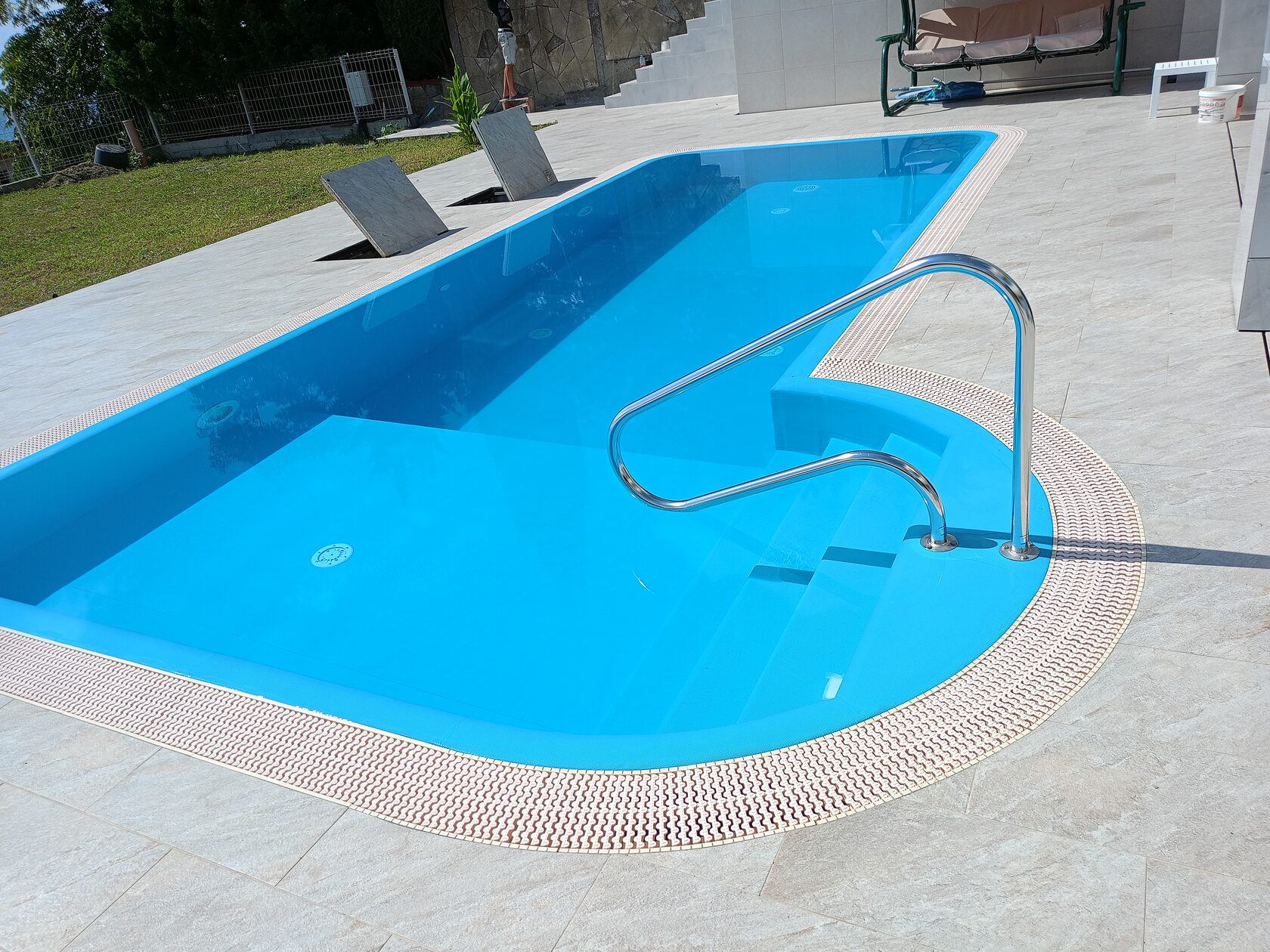
| Fiberglass (Prefab) | €16,000 – €24,000 | 2 – 3 weeks | Limited in forms, quick installation |
The price includes a standard equipment package: a pump system, filtration, LED lighting, and basic tiling or mosaics. Using automatic safety covers will add an additional €8,000 to €12,000, which will be mandatory for families with children and rental villas in 2026.
Taxation and government fees
The presence of a swimming pool directly affects the assessed value of the property, which is used to calculate annual taxes.
Municipal taxes and sewerage
Once the pool is added to the title deed, the Department of Lands will recalculate your property’s market value. This will result in two types of fees being increased:
- Municipal Tax: The increase will be approximately €50 – €150 per year depending on the area.
- Sewage Board Fees: Calculated based on the property value. Having a swimming pool can increase this fee by 10-15%.
Maintenance and service costs in 2026
The Cypriot climate, with extremely high temperatures in summer and high levels of dust (dust from the Sahara), imposes specific requirements for water care.
Energy consumption
The main expense is operating the circulation pump. In 2026, the average electricity cost in Cyprus is approximately €0.35 per kWh. Operating a standard pump (8 hours per day) will cost €70–€100 per month. The trend for 2026 is the use of inverter pumps and connecting the pool to solar panels (Net Metering), which can reduce electricity costs by up to 80%.
Chemistry and water
The cost of reagents (chlorine, pH-minus, algaecides) for a 40-50 m³ pool will be approximately €40-€60 per month during the summer. Replenishing the water due to evaporation (up to 1 cm per day in August) will cost an additional €15-€25 per month.
Professional service
In 2026, the cost of a certified pool maintenance professional ranged from €120 to €180 per month for two visits per week. This fee typically includes pool bottom cleaning, filter cleaning, and water chemistry testing. For investors renting out their property, professional maintenance is a mandatory requirement for liability insurance.
Engineering challenges on site
When integrating a pool into an existing landscape, three technical factors must be taken into account:
- Machine access. A concrete pool requires an excavator and a concrete pump. If access is difficult (due to narrow gates or adjacent buildings), the cost of excavation work can double due to the use of manual labor or small equipment.
- Retaining walls. If the site has a slope, building a pool will require the construction of retaining structures, which significantly increases the cost of the project and requires a separate engineering calculation for soil stability.
- Connecting the filtration system to the control panel and sewer system may require removing existing garden tiles or damaging the automatic irrigation system. It is recommended to allocate 10% of the budget for landscaping restoration.
FAQ: Frequently Asked Questions
Is it possible to install a swimming pool if the title to the house has not yet been received?
This is an extremely risky strategy. Any changes to the architectural plans before the final certificate and title deed are received will delay the property registration process for years. First, the house must be legalized before a new application for a swimming pool can be submitted.
Do you need a permit for a portable (above ground) pool?
Prefabricated structures that lack a foundation and can be dismantled within a day typically don’t require official construction permits. However , if such a pool is equipped with a permanent filtration system and pump, the municipality may classify it as a violation of the site’s development regulations.
Which disinfection system is better for the Cyprus climate: chlorine or salt?
In 2026, most owners opted for salt electrolysis (Salt Chlorinator). Despite the higher installation cost (starting at €1,500), this system provides soft water without the harsh chlorine odor, making it ideal for families with children and people with sensitive skin. The salt system also requires less manual intervention to maintain water balance.
Is it mandatory to install a fence around a pool in 2026?
According to updated safety regulations in effect in Cyprus since 2024, all private swimming pools must be protected from accidental falls by children. This may include a fence at least 120 cm high with a self-closing gate or an automatic hard surface capable of supporting the weight of an adult. Failure to ensure this safety measure may result in insurance coverage being denied in the event of an accident.
Does a swimming pool affect garbage tax?
A swimming pool doesn’t directly affect the Refuse Collection Fee, as this fee is tied to the type of property and the number of occupants . However, in some municipalities (for example, Limassol), the calculation is based on the property’s area, and a swimming pool may be counted as part of the infrastructure used, resulting in a slight increase in the annual bill of €20-€30.