Cyprus boasts one of the most famous mysterious places, attracting the attention of not only tourists but also researchers of paranormal phenomena. This is the so-called anomalous zone, or “antigravity road,” a section of road where a car parked on it appears to move uphill without the engine. Such phenomena are among the island’s natural mysteries and remain the subject of numerous discussions, explanations, and even debates among an even wider circle of visitors.
Contents
Location of the anomalous zone
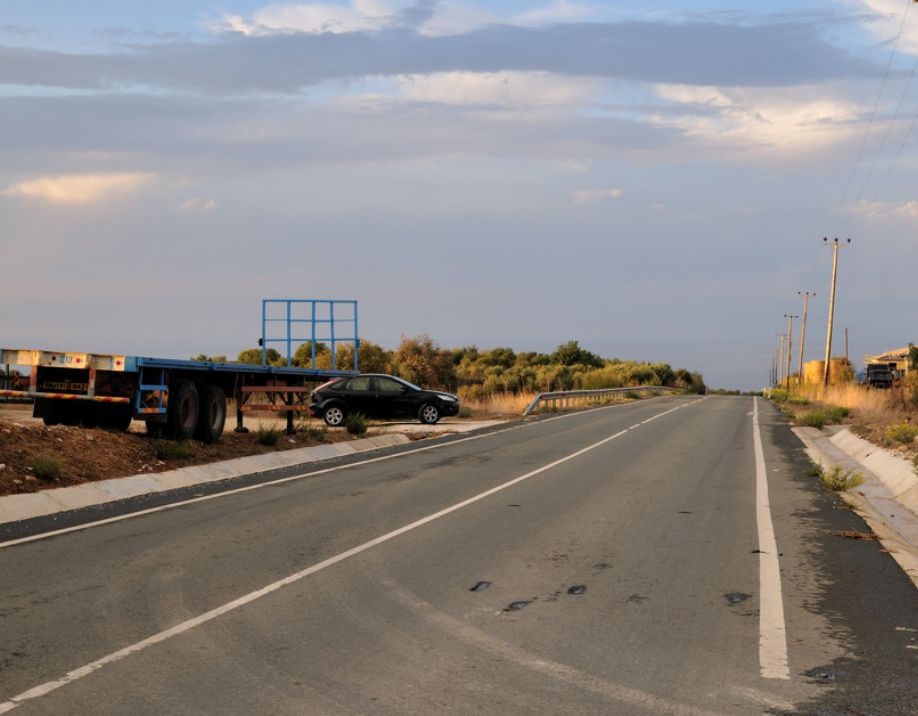
The anomalous zone is located in central Cyprus on a stretch of highway connecting the cities of Paphos and Nicosia, near the village of Lefkara or in the direction of it, depending on the approach. Its precise geographic location is determined by a bend in the road where the slope appears illogical to visual perception. Most descriptions indicate that the area is located on an incline, but this is difficult to perceive visually or with instruments.
On this stretch of road, you can often see cars stopped at the edge, as if on a normal hill, but when the engine is turned off and the car is in neutral, it begins to move “up”, that is, in the direction opposite to the intended slope, which creates the illusion of anti-gravity or a “magnetic force” pulling cars up the slope.
History and popularity
The history of the anomalous zone in Cyprus dates back to publications and tourist reports dating back to the second half of the 20th century, when the first car travelers noticed unusual vehicle behavior on this stretch. Over time, rumors of a “magic road” became a topic of discussion in guidebooks, travel blogs, and online ‑communities.
Interest in this place was fueled by stories of how the sensation of upward movement persists even after exiting the car and observing with one’s own eyes that the car “seems to roll itself” in a direction other than the intended direction of the terrain. This impression is enhanced by the visual context: the horizon line, the arrangement of surrounding objects, road signs, and visually aligning elements.
Geography and landscape around
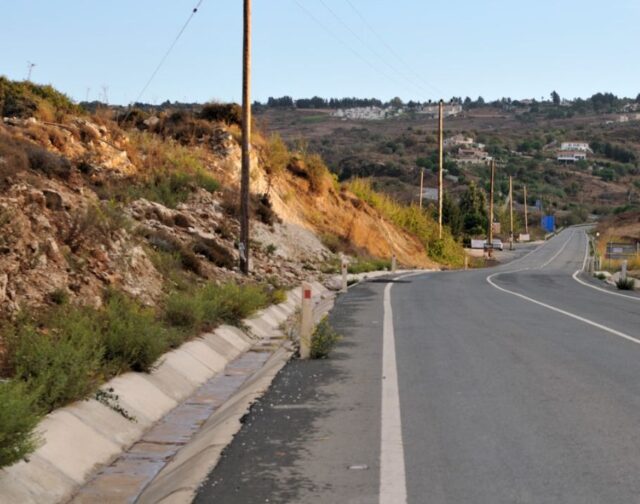
The area around the anomalous zone is shaped by a landscape typical of Cyprus: gently rolling hills, sparse rocks, olive trees, shrubs, and open spaces. The highway on which the anomalous zone is located runs through the countryside and is surrounded by views typical of the island’s central regions. There are no steep mountains, gorges, or sharp elevation changes nearby, which only enhances the impression of anomaly, as the visual assessment of the slope is based on the relatively flat, calm, green surface surrounding it.
The surrounding landscape helps create the illusion of flatness, and the road’s placement among the hills creates a situation where the human eye and cerebral perception cannot always accurately determine the true direction of the slope. The terrain is vast and open, so for tourists visiting this area for the first time, the impression of upward movement may seem more pronounced than it actually is.
Physical and visual phenomena
The key element of the anomalous zone phenomenon is an optical illusion. The landscape, the shape of the road, and the horizon deceive the human brain as it attempts to estimate the true slope. This phenomenon is well-known in the geometry of perception: when the surrounding terrain creates false cues, the visual system can misjudge the direction of the slope.
Visual cues such as tree lines, slopes, parallel road elements, the absence of strong contrasts, and road curves contribute to the brain’s misperception of direction. This leads to the impression that the car is rolling “up” the road, while in fact it is moving down—an optical illusion that creates the false perception.
Eyewitness accounts
Tourists and locals who have visited this stretch of road describe the experience differently ‑, but many note one thing: when a car stops at this point with the transmission in neutral, it begins to move in a direction that seems “upward.” Some claim this effect is enhanced when viewed from the car window, while others report an almost mystical sensation accompanied by a gentle upward movement.
Proponents of the mystical explanation claim that some kind of “energetic magic,” “anomalous force,” or “gravitational field” operates in this area, defying the standard laws of physics. These claims, however, are not supported by measurements of the terrain’s slope, but are part of folk tales, travel stories, and discussions in online ‑communities dedicated to the mysteries of Cyprus.
Scientific explanation
The real scientific explanation for the anomalous zone in Cyprus is a combination of optical illusions, terrain features, and the subjective perception of slope. When measured correctly, a road level shows that the slope is downward rather than upward. However, the human eye, without additional instruments, is often unable to accurately determine the direction of the slope in conditions where the landscape context and visual cues are misleading.
Such effects are known internationally as antigravity roads, configurations where vertical perspective and horizontal lines of the surrounding environment create a false sense of direction. They are observed in various countries, and in Cyprus, the section near Lefkara has become one such landmark.
Tourist attraction
The anomalous zone in Cyprus has become a popular stopover during road trips around the island. Many tourists deliberately plan to stop at this spot to experience the “uphill” effect and take photos that appear to show their car parked on a slope, but moving in the opposite direction. This has fueled interest in the central areas of the island, which are otherwise not known for their dramatic natural features, but are gaining popularity thanks to this mystery.
This section of the road is frequently visited by travelers exploring other natural areas of the island: the Akamas Nature Reserve, the hills, and the beaches that lie in close proximity to routes through the central regions. Visits to the anomalous zone are usually combined with excursions, photo shoots, and outdoor recreation.
Practical advice
If you plan to stop in an anomalous zone, it’s recommended to first determine the road’s direction of travel using GPS or an elevation map, then observe the change in the vehicle’s direction with the transmission in neutral. This will allow you to better understand the true slope and the apparent gradient.
It’s important to obey traffic rules, stop in safe areas, and consider traffic. Many tourists take photos by the side of the road, checking the effect of “uphill movement,” and then compare these impressions with data from apps that measure the road’s slope.
The anomalous zone in Cyprus is a striking example of how human perception can diverge from physical reality. Despite the apparent upward movement, measurements confirm that the car is moving downward. The main causes of this effect are visual cues, landscape features, and the eye’s habit of judging slope based on relative objects in the surrounding environment.
The site has become popular among tourists due to its mystique and the opportunity to experience an unusual sensation, easily explained by science but surprising upon first encounter. The anomalous zone is part of Cyprus’s cultural and natural landscape, serving as a reminder that perception of the world often depends not only on objective facts but also on how the brain interprets incoming visual information.