Cyprus is one of the Mediterranean islands steeped in history. Its culture was shaped by the intersection of the ancient Greek, Byzantine, Oriental, and Latin worlds, leaving behind a vast number of monuments. Some of these have received the highest international recognition—UNESCO World Heritage Site status. These sites reflect Cyprus’s millennia-long history, its spiritual, artistic, and architectural identity.
Currently, the island has three UNESCO World Heritage sites, with several pending nominations. Each represents a unique chapter in Cyprus’s history, from ancient ruins to the Byzantine churches of the Troodos Mountains.
Contents
Paphos Archaeological Park
The city of Paphos, located on the southwest coast of Cyprus, is considered one of the island’s most ancient cultural centers. In ancient times, it was the capital and main religious center associated with the cult of the goddess Aphrodite. Thanks to its wealth of archaeological finds, the historic part of Paphos was inscribed on the UNESCO World Heritage List in 1980.
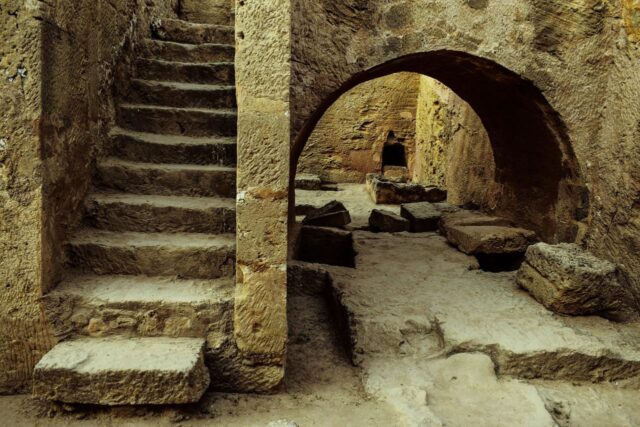
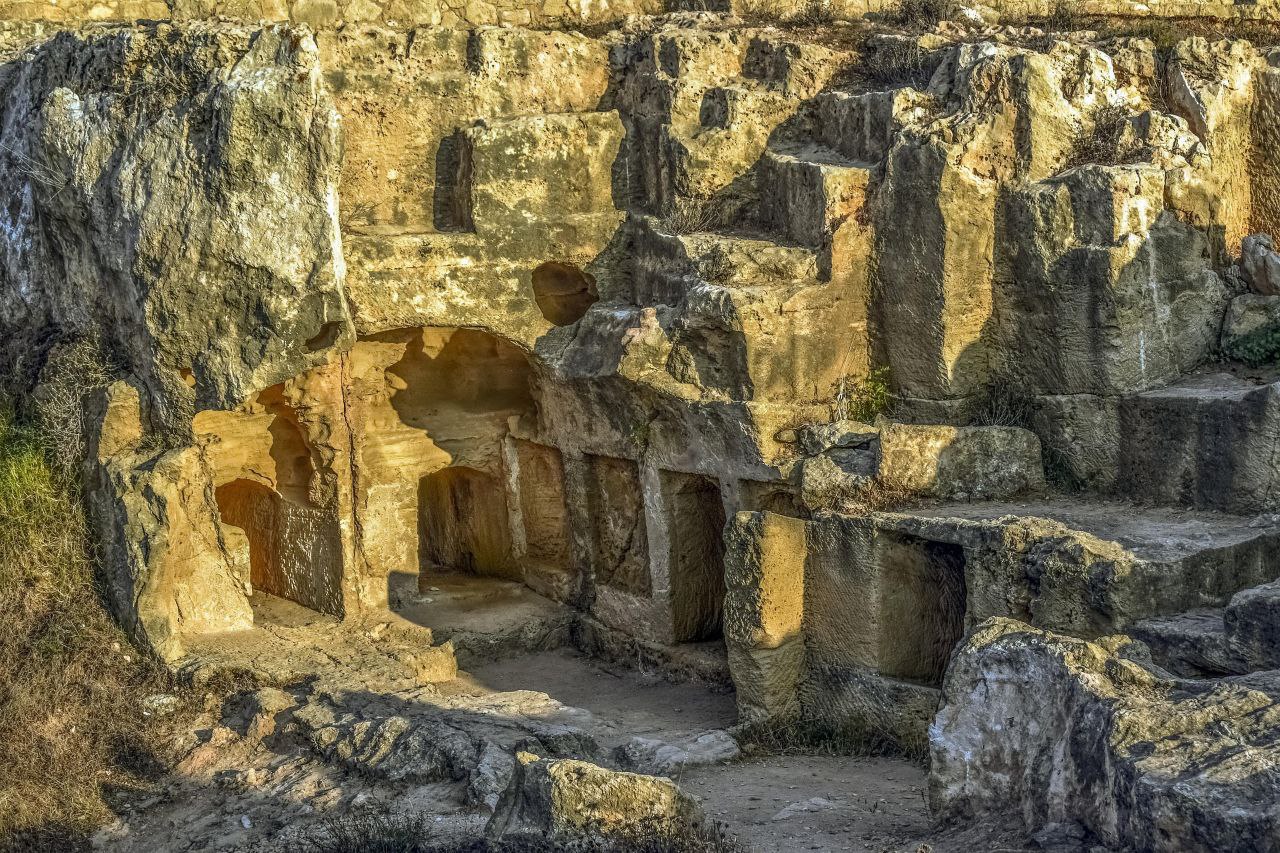
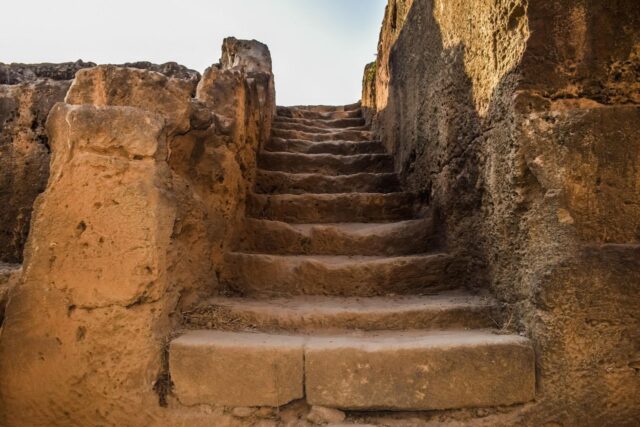
The territory of the modern archaeological park contains numerous monuments spanning the period from the 4th century BC to the Middle Ages. These include the ruins of Roman noble villas, the Odeon amphitheater, fortification walls, Roman baths, and underground catacombs.
Of particular value are the mosaics of ancient villas —the House of Dionysus, the House of Orpheus, the House of Theseus, and the House of Aion. These masterpieces of the Roman mosaic school are distinguished by their high artistic level and perfectly preserved scenes from ancient Greek mythology.
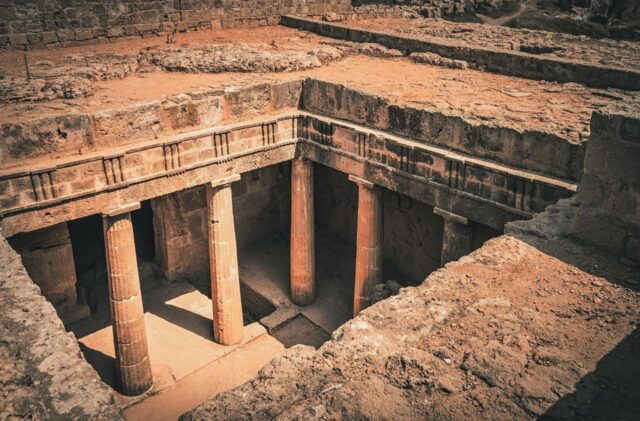
On a hill near the harbor stands Saranta Kolones (“Forty Columns”), a Byzantine fortress built in the 10th century to protect the city. In the northern part of the archaeological complex are the Royal Tombs, carved into the rock during the Hellenistic period. Despite their name, they served not the kings but the aristocracy, but are striking in their scale and architectural harmony.
Paphos is unique in that it combines ancient ruins, Byzantine structures, and elements of medieval architecture. It is an “open-air museum city” that reveals all eras of Cypriot history.
Churches and monasteries of the Troodos region
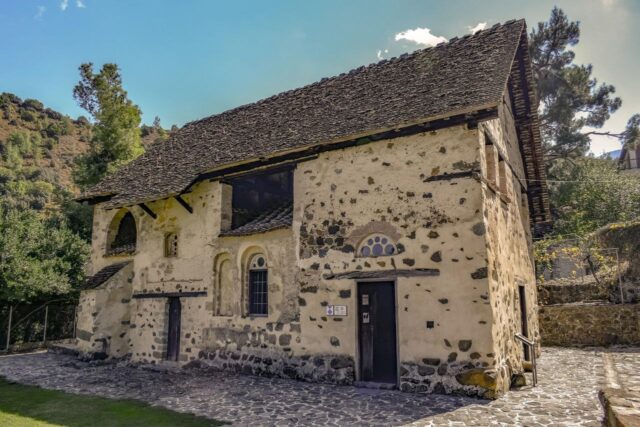
Cyprus’s second UNESCO World Heritage Site is a group of Byzantine and post-Byzantine churches located in the Troodos Mountains. This region is renowned for its picturesque valleys, pine forests, and highland villages, where Orthodox architectural traditions have been preserved for centuries.
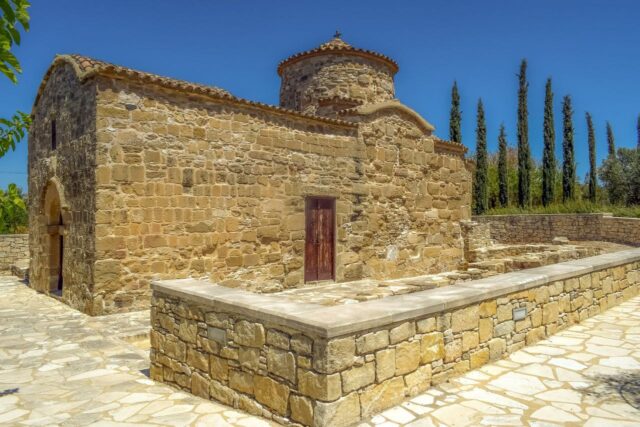
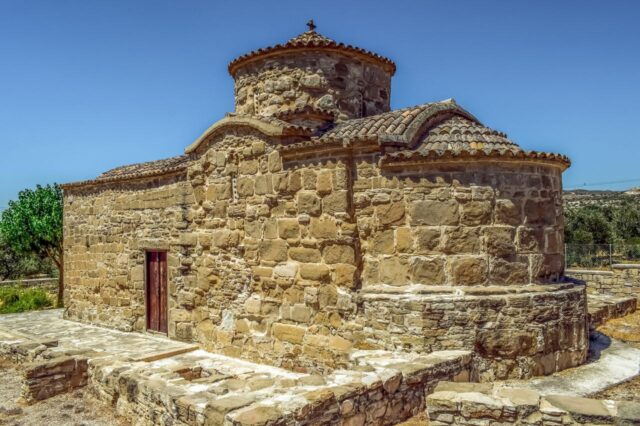
The complex consists of ten churches built between the 11th and 16th centuries. All are distinguished by unique wall frescoes representing the highest achievements of Byzantine and medieval art. Among the most famous churches are the Church of Archangel Michael in Pedoulas, Panagia Asinou in Nikitari, Agios Nikolaos tis Stegis in Kakopetria, Panagia tou Araka in Lagoudera, and the Monastery of Saint John Lampadista in Kalopanayiotis.
Each church is not only an architectural monument but also an art gallery beneath its vaults. The interior walls are completely covered with paintings depicting scenes from the Gospel, the lives of saints, and episodes from the Old Testament. These frescoes are distinguished by their refined color scheme, dynamic compositions, and a distinctive Cypriot style, which blends Byzantine tradition with Western European Gothic influences.
The most famous church is Agios Nikolaos tis Stegis (“Saint Nicholas under the Roof”), built in the 11th century. The church preserves wall paintings from the 12th to 16th centuries, reflecting the development of Byzantine painting over five centuries.
This Troodos church complex was inscribed on the UNESCO World Heritage List in 1985 and is one of the best-preserved examples of Byzantine art outside Greece.
Neolithic settlement of Khirokitia
The third UNESCO World Heritage Site in Cyprus is the archaeological site of Choirokoitia, located in the southern part of the island, near Larnaca. It is one of the oldest settlements in the Eastern Mediterranean, dating back to the 7th–5th millennia BC.
Khirokitia offers insight into the first agricultural and sedentary communities of Cyprus. Here, archaeologists discovered round stone houses approximately three meters in diameter, grouped into small blocks, as well as household items, jewelry, pottery, and the remains of domestic animals.
The settlement’s inhabitants led a sedentary lifestyle, farming, raising goats and sheep, and crafting stone and bone tools. Interestingly, stone blocks were placed at the entrances to houses—a kind of amulet against evil spirits.
Excavations revealed that Khirokitia was surrounded by a wall, indicating a high level of social organization and the need for protection from external threats. The settlement was abandoned around 5500 BC, but its structure and artifacts allow for a detailed study of the early stage of human civilization in Cyprus.
Khirokitia was inscribed on the UNESCO World Heritage List in 1998 as a unique testimony to the Neolithic culture of the Eastern Mediterranean.
Candidates for inclusion on the UNESCO list
In addition to the already recognized sites, Cyprus is positioning several new candidates:
- The city of Nicosia (old center) is a unique example of a medieval city with 16th-century Venetian walls.
- The Soli archaeological complex is an ancient city-state in the northwest of the island, founded in the Bronze Age.
- The villages of the Commandaria wine region are the area where the dessert wine of the same name, one of the oldest in the world, has been produced since ancient times.
- Mount Olympus and the Troodos Natural Ecosystem is Cyprus’s candidate for the Natural Heritage category due to its flora and geological structure.
The Importance of UNESCO Sites for Cyprus
The inclusion of Cypriot monuments on the World Heritage List not only acknowledges their historical value but also promotes their preservation and the development of cultural tourism. These sites attract scholars, restorers, and travelers from around the world, and also instill in local residents a sense of pride in their national heritage.
For Cyprus, UNESCO sites have become a symbol of the continuity of civilizations—from the first Neolithic settlements to the Christian art of Byzantium. They serve as a reminder that the island has always been a bridge between East and West, uniting cultures, religions, and peoples.
The UNESCO World Heritage Sites in Cyprus represent three time periods of history, reflecting the development of human civilization: Neolithic Khirokitia, ancient Paphos, and the Byzantine churches of Troodos. Each of these sites represents a distinct era, but all are united by a single idea: the preservation of human genius, spirituality, and cultural memory.
Visiting these monuments allows you to understand the soul of Cyprus – an island where antiquity coexists with modernity, and the legacy of the past lives on in every stone, fresco, and mosaic.