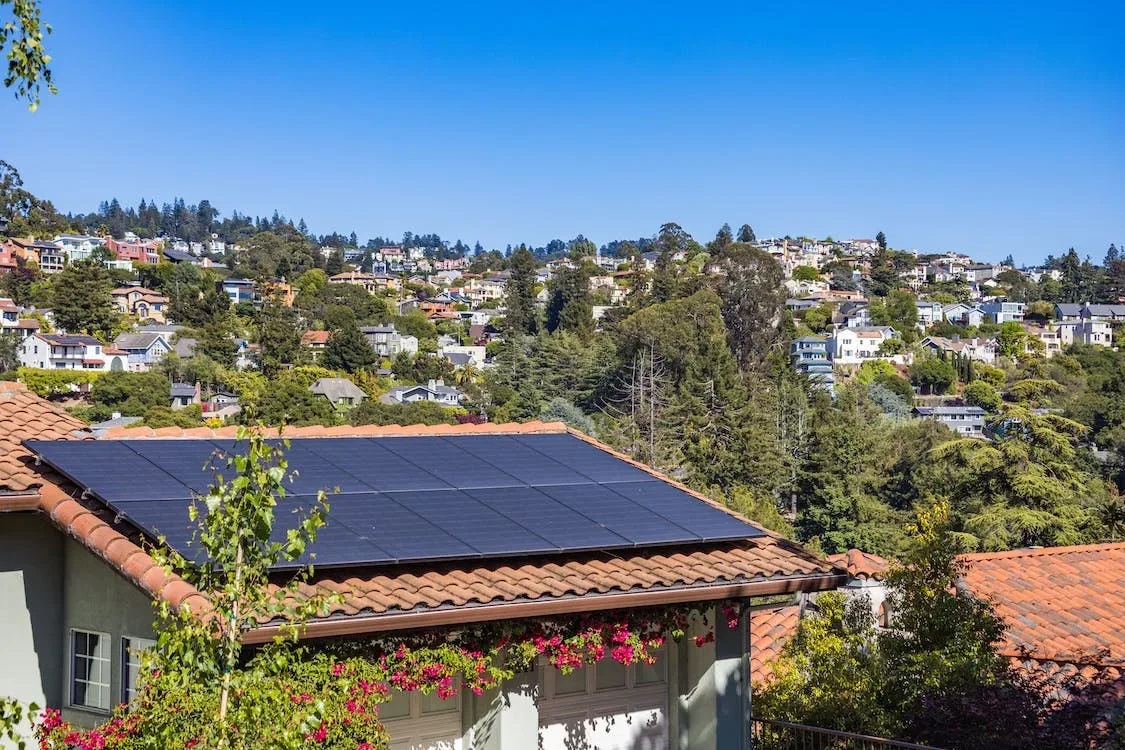
Cyprus’s energy landscape in 2026 is characterized by a transition to a green economy and the implementation of smart grids. For owners of private villas and investment properties, installing photovoltaic (PV) systems has ceased to be an option and has become a de facto standard. With electricity costs held at €0.35–€0.42 per kWh in 2026 due to carbon emission quotas and fuel import costs, solar power generation provides a rapid return on investment. Net metering remains the primary mechanism for interaction with the state grid (EAC), supplemented by a more complex net billing system for larger properties.
Contents
- 1 Net Metering System Operation Principles in 2026
- 2 Net Billing: Selling Energy to the State
- 3 Net Metering and Net Billing Comparison in 2026
- 4 Technical requirements and installation stages in 2026
- 5 Economic efficiency and government subsidies
- 6 Impact on property values
- 7 FAQ: Frequently Asked Questions
Net Metering System Operation Principles in 2026
The Net Metering system is designed for residential buildings with solar installations up to 10 kW. It operates on a net-network principle: the electricity generated by the panels during daylight hours is primarily consumed by the building. Any excess is fed into the national grid.
At night or during periods of low solar activity (for example, during cloud cover, which is rare in Cyprus), the home draws energy from the grid. At the end of each two-month billing period, EAC issues an invoice only for the difference between the energy consumed and the energy supplied.
Energy metering and storage
If the system generates more electricity during a billing period than the home consumes, the excess kWh is carried over to the next billing period. In 2026, the billing cycle ends annually in March. Any unused surplus energy accumulated during the year is reset to zero, with no monetary compensation to the owner. Therefore, it is critical to correctly calculate the system’s capacity to match the family’s annual consumption, including the use of air conditioners in the summer and heating systems (heat pumps) in the winter.
Net Billing: Selling Energy to the State
For owners of large residences, commercial properties, or systems with a capacity of over 10 kW, the Net Billing scheme is used. Unlike Net Metering, it uses separate financial accounting.
- Energy consumed from the grid is paid for at the full retail rate.
- Energy exported to the grid is purchased by the state at a wholesale price (the cost of avoided production), which in 2026 is approximately 0.18–0.22 euros per kWh .
- The difference is credited to the owner’s account and can be used to pay future bills.
This system is beneficial for properties with high daytime energy consumption, such as office buildings or villas with powerful pool filtration systems and central air conditioning running during peak hours.
Net Metering and Net Billing Comparison in 2026
| Characteristic | Net Metering | Net Billing |
| Target audience | Private households | Large villas, business |
| Power limit | Up to 10 kW | No hard limit (depending on network) |
| Calculation method | Credit kWh ( 1 to 1) | Financial offset (retail vs. wholesale) |
| Carryover of the remainder | Until the end of the financial year (March) | Open-ended financial loan |
| Benefit | Maximum for residential sector | Optimal for high consumption |
| Payback period | 3-4 years | 5–6 years |
Technical requirements and installation stages in 2026
The process of transitioning to solar energy in 2026 has become as digital as possible. Applications to the EAC and the Ministry of Energy are submitted through a single portal.
Prerequisites for installation
To install a 5-7 kW system, which is sufficient for a family of four, approximately 30-40 square meters of usable roof space is required. Orientation is important: in Cyprus, a south-facing panel with a 28-30 degree slope is ideal.
Project implementation stages:
- Expert audit of energy consumption over the past 12 months.
- Preparation of engineering plan and obtaining permission from EAC.
- Equipment installation: in 2026, preference will be given to N-type panels with an efficiency of over 22%.
- Installation of a bidirectional smart meter (Smart Meter), which transmits data in real time to the owner’s mobile application and the EAC control room.
- Inspection of the system by the state technical supervision and signing of the Net Metering agreement.
Economic efficiency and government subsidies
In 2026, the Cypriot government will continue to actively promote photovoltaic installation through the “Photovoltaics for All” program. This initiative allows families to install systems with no down payment, paying for the cost of the equipment in installments through their electricity bills.
Financial indicators
The average cost of a high-quality 5 kW turnkey system in 2026 is €6,500–7,500. With an average electricity bill of €300 for two months (excluding panels), savings amount to approximately €1,500–1,800 per year. With a 5% VAT rate for primary residences, the investment pays for itself in less than four years. After this period, the owner receives essentially free electricity for the next 20–25 years (the lifespan of the panels).
Impact on property values
Having a net metering system installed significantly increases a property’s liquidity in the Cyprus market. In 2026, buyers and tenants will be paying attention to the building’s energy performance certificate (EPC). A home with an A + energy efficiency rating and a solar panel is valued 7-10% higher than similar properties without panels. For rental investors, this means the ability to include electricity costs in the rent without the risk of huge bills during the summer.
FAQ: Frequently Asked Questions
Is it possible to completely disconnect from the grid and become autonomous?
Technically, this is possible with the installation of high-capacity storage systems (batteries), but it is not economically feasible in 2026. Net metering allows the public grid to be used as a “free battery.” An autonomous system would require investment in batteries (€5,000 to €10,000), which have a limited lifespan of 10–12 years.
What happens to energy production on cloudy days?
Even with dense cloud cover, modern panels in Cyprus generate 15–25% of their rated capacity. Given that the island enjoys over 320 sunny days per year, annual output remains stable. Energy shortfalls on such days are automatically compensated for by the grid using previously accumulated kWh credits .
Do the panels need to be washed and how often?
Dust and sand from the Sahara Desert can reduce system efficiency by 10-15%. In Cyprus, it is recommended to clean panels with water 3-4 times a year, especially after dust storms in the spring. As of 2026, many companies offer automated cleaning systems or professional cleaning services using deionized water.
Can you charge an electric car using Net Metering?
This is the most efficient way to utilize solar energy. By 2026, the electric vehicle charging station (EV Charger) will be integrated into the home’s overall monitoring system. Charging the car during the day allows for 100% of the energy to be used, making vehicle operation virtually free.
What happens if I install a system that is more powerful than I need?
Under Net Metering, excess generation above your consumption will be transferred to the grid free of charge at the end of the reporting year (in March). EAC does not pay for this surplus. Therefore, experts recommend designing the system with a reserve of no more than 10-15% to accommodate future increases in household appliances or the purchase of an electric vehicle.