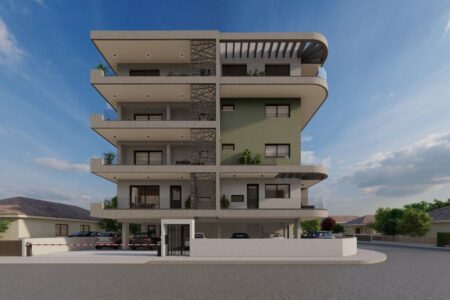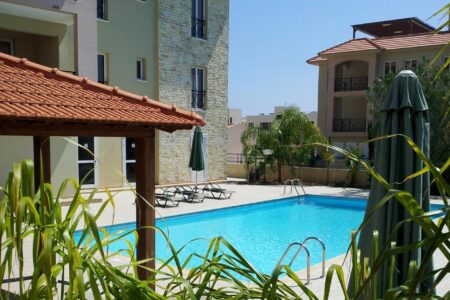
Effective management of an apartment building or gated villa complex in Cyprus in 2026 is impossible without a well-functioning Residents’ Management Committee. This body serves as a liaison between owners, government agencies, and service providers. For investors, understanding the committee’s work guarantees the property’s liquidity, and for residents, it ensures a comfortable and conflict-free living experience. Under the updated legislation for 2024–2025, which came into full effect in 2026, the rules have become stricter, particularly in matters of financial discipline.
Contents
- 1 Legal status and procedure for establishing a committee
- 2 Committee Functions and Powers: What You Pay For
- 3 Self-management vs. professional management company
- 4 The Debtor Problem: Collection Mechanisms in 2026
- 5 Building Regulations: Why is it needed?
- 6 Financial reporting and auditing
- 7 FAQ: Frequently Asked Questions
Legal status and procedure for establishing a committee
According to the Common Property Act (Cap 224), any building consisting of five or more separate units (apartments, offices, maisonettes) is required to have a Management Committee. Even if a building only has two apartments, the law recommends the creation of a formal management body.
Formation procedure in 2026
- Annual General Meeting (AGM): The committee is elected at the general meeting of owners. In 2026, a hybrid format—in person and through verified online voting platforms—became the norm for such meetings.
- Quorum: For legitimate decisions to be made, the presence of owners representing more than 50% of the total area of common shares is required. If a quorum is not reached, the meeting is adjourned for 7-14 days, after which decisions are made by a majority of those present.
- Composition: The committee typically consists of 3-5 members: a chairperson, a secretary, and a treasurer. In larger complexes, the number of members may increase to 7-9.
- Registration: Details of the elected committee and minutes of the meeting must be filed with the Land Registry to formally confirm its authority.
Committee Functions and Powers: What You Pay For
The committee is a non-profit organization. Its purpose is to administer common areas and distribute collected funds (Common Expenses) for the benefit of the building.
In 2026, the committee’s key responsibilities include:
- Conclusion of contracts for technical maintenance: elevators, swimming pools, fire protection systems, automatic gates.
- Security and video surveillance: taking into account the strict requirements of the GDPR regulation on personal data protection.
- Building insurance: mandatory insurance of the building structure against fire, earthquake and civil liability.
- Sinking Fund Management: Accumulates funds for long-term projects such as painting a facade or replacing a roof.
- Representation in court: the committee has the right to act as plaintiff or defendant on behalf of all owners.
Self-management vs. professional management company
Many committees in 2026 prefer to hire a professional property management company, reserving only the function of monitoring and approving the budget. This minimizes conflicts between neighbors and ensures an expert approach to technical issues.
Comparison of property management models
| Parameter | Self-government (by residents) | Professional Management Company (PMC) |
| Price | Minimum (direct costs only) | Company fee (10–20% of the budget) |
| Transparency | Depends on the honesty of the treasurer | Monthly reports in the app |
| Legal support | It is attracted one-time for an additional fee. | Usually included in the service package |
| Repair speed | Depends on the committee’s initiative | 24/7 emergency service |
| Working with debtors | Often complicated by personal relationships | Strictly within the law and the contract |
The Debtor Problem: Collection Mechanisms in 2026
Utility arrears are a threat to a building’s infrastructure. In 2026, Cypriot legislation simplified the lives of utility committees by introducing effective enforcement tools against defaulters.
Pre-trial measures
The committee’s first step is official notification. In 2026, notification sent not only by registered mail but also via registered email or the complex’s official messenger will be considered legally binding.
If the debt is not repaid within 30 days, the committee has the right to:
- Restrict access to non-critical common areas: gyms, courts, swimming pools, and lounge areas (provided such a provision is included in the building’s Charter).
- Disable personal access codes and remote controls for public gates (allowing pedestrian access only).
- Charge penalties (fines) in the amount of up to 9% per annum , if approved by the AGM protocol.
Judicial Collection and Memo
If the debt exceeds €1,500, the committee initiates legal proceedings. In 2026, the process in small claims courts for real estate matters takes between 4 and 8 months.
The result is a court decision, on the basis of which an encumbrance is imposed on the property – Memo :
- The owner of a property with Memo cannot sell the property.
- The property cannot be transferred to the heirs.
- Real estate cannot be used as collateral for a loan.
- Removal of the Memo is possible only after full payment of the debt, legal costs and the committee’s lawyers’ fees.
In exceptional cases, when critical amounts of debt have accumulated (over 10,000–15,000 euros), the 2026 law allows the committee to petition for the forced sale of the property at auction to pay off the debt to the housing association.
Building Regulations: Why is it needed?
Many conflicts in 2026 arise due to the lack of a clear charter. The standard charter proposed by the Land Registry is often outdated. Experts recommend that committees adopt individual charters that regulate:
- Short-term rental policies (Airbnb): Possibility of limiting or imposing additional fees.
- Keeping pets in common areas.
- Time of noisy work.
- Design of external air conditioner units and awnings to preserve the aesthetics of the facade.
Financial reporting and auditing
In 2026, committees will be required to maintain transparent accounting. All funds must be held in a separate bank account opened in the name of the committee (not an individual). The treasurer must submit a cash flow statement once a year. For complexes with an annual turnover of over €20,000, it is recommended to engage an independent auditor to confirm the proper use of funds.
FAQ: Frequently Asked Questions
Can a tenant be a member of the committee?
No, only property owners or their authorized representatives with power of attorney may serve on the management committee. Tenants may attend meetings by invitation, but have no vote on financial decisions.
What to do if the old committee does not transfer documents to the new one?
This is an offense. The new committee, elected legitimately, has the right to appeal to the police and the court to demand seals, bank access rights, and financial documentation. In 2026, such disputes will be resolved fairly quickly through administrative lawsuits.
Am I obligated to pay if the committee does not submit reports?
The obligation to pay for common area maintenance is unconditional. However, you have the legal right to demand an extraordinary meeting or initiate an independent audit. Failure to pay due to management issues will result in legal action against you, where the lack of reports will not be recognized as a valid reason for accumulating debt.
How do I find out if I have Common Expenses debt when buying an apartment?
In 2026, when completing a purchase and sale transaction, the buyer’s lawyer is required to request a “Clearance Letter” from the Cadastre. Without this document, registering the transaction with the Cadastre may be complicated, and the debts of the previous owner may fall on the new owner, unless otherwise specified in the contract.
Who is responsible if a person is injured in a public pool?
The Management Committee is responsible for the safe operation of the facility. This is why public liability insurance is essential. If there is no insurance, damages to the injured party may be distributed among all owners proportionally to their shares.