Purchasing an apartment or villa in a gated community in Cyprus is only the first step in owning assets on the island. In 2026, when residential infrastructure has become significantly more complex, including not only swimming pools but also coworking spaces, gyms, and smart irrigation systems, the issue of maintaining common areas becomes paramount. Common expenses, known in Cyprus as Communal Fees, are a mandatory expense for every owner. Understanding how the community budget is formed, who oversees spending, and the penalties for non-payment are critical to maintaining the market value of your property and ensuring a comfortable stay.
Contents
- 1 The structure of common house expenses and what they include
- 2 Methodology for calculating and distributing payments
- 3 The role of the Management Committee and its powers
- 4 Fighting defaulters and legal consequences
- 5 Energy Saving and Digitalization of Management in 2026
- 6 Reserve fund and capital repair planning
The structure of common house expenses and what they include
Common building expenses are aimed at maintaining the functionality and aesthetic appearance of all common areas. The standard service package in 2026 includes regular cleaning and chemical treatment of swimming pools, landscaping and community garden maintenance, hallway and parking lot lighting, and elevator and fire safety system maintenance. Additionally, a significant portion of funds is allocated to insuring the building against fire, earthquake, and water damage. In modern complexes, this list is supplemented by expenses for 24-hour security, video surveillance, and concierge services. All these costs are aggregated and distributed among property owners proportionally to their share in the project.
Methodology for calculating and distributing payments
The amount each owner pays is not arbitrary. It is calculated based on the total area of a specific property relative to the total living area of the entire complex. In 2026, a simple formula is often used for calculations, where the total annual costs of the complex, “E,” are divided by the total area of all units, ” ” and multiplied by the area of a specific apartment, ” .” Mathematically, it looks like this:
This approach ensures a fair distribution of the financial burden: owners of penthouses with large verandas pay more than those of compact studios, as their share of common property ownership is higher. It’s worth noting that in some complexes, the coefficients may be slightly adjusted depending on exclusive access to certain amenities.
The role of the Management Committee and its powers
According to Cypriot law, every apartment building or complex must have a Management Committee, comprised of owners. The committee is empowered to decide on the selection of cleaning and repair contractors, approve the annual budget, and monitor the timely payment of fees. In 2026, many committees delegate operational responsibilities to professional management companies, but legal responsibility and signature authority remain with the elected body of residents. The committee is required to hold an annual general meeting, where it presents a detailed report on expenditures and plans for major capital investments, such as repainting the façade or replacing pumping equipment.
Fighting defaulters and legal consequences
Debt remains one of the most pressing issues for Cypriot residential communities. In 2026, legislation in this area was strengthened to protect conscientious payers from infrastructure degradation due to lack of funds. The management committee has the right to sue a defaulter, and if successful, a memo (court lien) may be placed on the property. This prevents any sale or transfer of the property until the debt is fully repaid, taking into account accrued penalties and legal costs. In some cases, the new regulations allow for restrictions on debtors’ access to optional community services, such as a swimming pool or gym, provided that this does not violate basic tenancy rights.
Energy Saving and Digitalization of Management in 2026
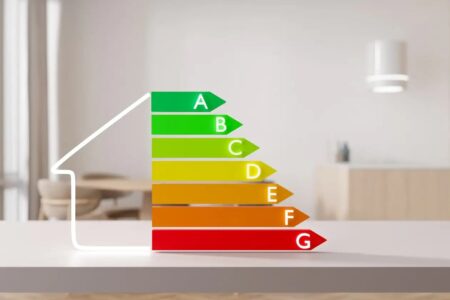
Modern trends in 2026 dictate a shift toward more transparent and efficient management methods. Most new residential complexes in Cyprus now use specialized mobile apps, allowing owners to view their fund balances in real time, receive receipts, vote on agendas, and submit repair requests. Another important trend has been the introduction of energy-saving technologies to reduce utility fees. Installing solar panels on building roofs to illuminate common areas and operate pumps can significantly reduce electricity bills, which account for up to 40% of all common building expenses. Investments in such systems quickly pay for themselves by reducing monthly bills for all residents.
Reserve fund and capital repair planning
In addition to ongoing operating expenses, effective property management in Cyprus requires the creation of a sinking fund. This is a savings account intended for costly repairs required every 5-10 years, such as major roof repairs, elevator upgrades, or foundation waterproofing. In 2026, the presence of such a fund is an indicator of quality management and the high liquidity of a property. Buyers are increasingly requesting a statement of the complex’s sinking fund when inspecting a property. Having a sinking fund will prevent owners from having to make large one-time payments in the event of an emergency, making property ownership on the island more predictable and secure.