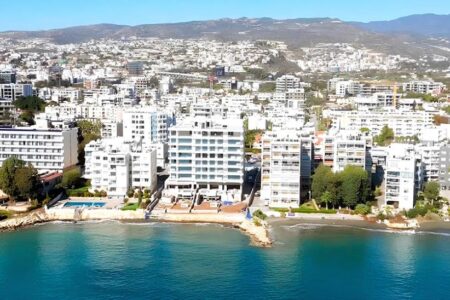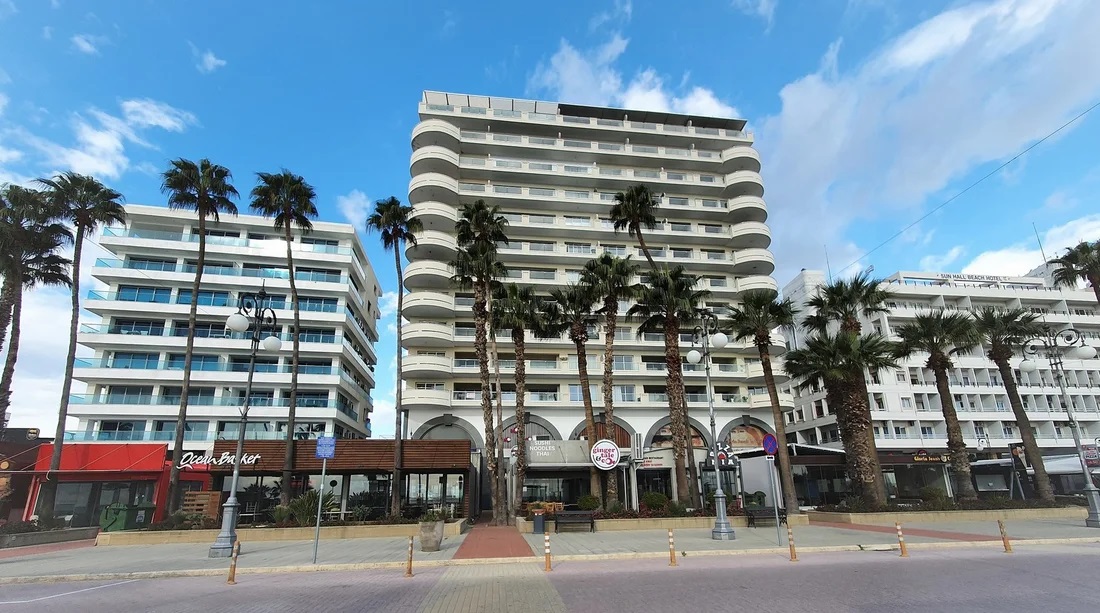
The Larnaca region is currently undergoing a period of active transformation. New large-scale projects are being announced, construction cranes fill the skyline, and foreign investor interest is rapidly growing. However, behind this optimistic façade lies an important question: will the city become a livable place or remain merely a tool for profit?
Contents
Potential and infrastructure assets
On paper, Larnaca has undeniable advantages. It has excellent road connections to all areas of the island, is home to the country’s main international airport , and has a port and marina that, if properly developed, could enhance the city’s role in the region. The implementation of projects such as ” Land of Tomorrow ” and ” Horizon ” reinforce the image of a “developing” city.
However, cities aren’t built solely on infrastructure and advertisements. Sustainable development requires creating incentives for people and employers to choose these places for long-term residence.
Residential real estate as a financial instrument
A close examination of the development structure reveals a clear pattern. Most large projects are primarily residential complexes, aimed primarily at foreign investors rather than end users. The dominant focus is on income, not relocation or employment.
Buyers are purchasing one-, two-, and three-bedroom apartments, furnishing them, and renting them out short-term. As a result, residential real estate is becoming a financial instrument rather than a foundation for a stable urban community. This drives sales and prices in the short term, but does not create a stable urban economy.
One of the area’s main problems remains the lack of large private sector companies. With the exception of a few well-known brands, Larnaca has few major employers. Office projects are few and far between and often located on the outskirts.
A lack of jobs leads to a lack of talent. Without professionals, there’s no demand for modern offices, innovation, and high-tech services. This economic flywheel hasn’t yet been activated in Larnaca . The private education system is an additional constraint: schools are operating at capacity, effectively preventing families from moving in—the very group that turns newcomers and investors into permanent residents.
Tourism, in turn, remains a secondary industry. Boutique hotels in the city center enhance the aesthetics and vibrancy of the area, but Larnaca rarely becomes a primary destination. It benefits from the influx of tourists: when Limassol is too expensive, Paphos is crowded , and Protaras is seasonal. Influx of tourists is not a strategy.
Today, Larnaca often functions as an alternative. Those working in other areas settle here because residential property is cheaper than in Limassol. Investors flock here because of the airport’s proximity, boosting Airbnb listings . However, only a few choose Larnaca for its unique economic or professional opportunities.
Three development paths for Larnaca in the coming decades
- Investment-oriented city: Maintaining its status as a short-term destination. This is an attractive, but unstable and policy-sensitive model.
- Correction through oversupply: A decline in returns if investor expectations do not match reality.
- Consciously building for the future: Creating what’s currently lacking—office clusters, attracting major employers, and developing infrastructure that allows families and professionals to connect their lives with the city for decades to come.
Cities that thrive in the long term are not just centers of consumption, but centers of production. Airports, roads, and marinas facilitate growth, but they don’t create it. Large residential projects can only accelerate a region’s development if they are accompanied by the creation of jobs, schools, and year-round demand.