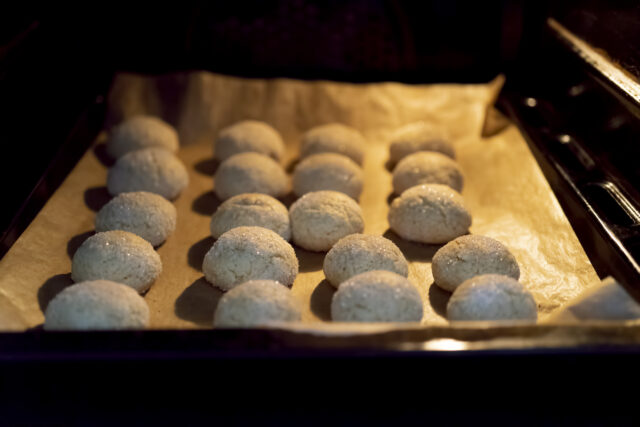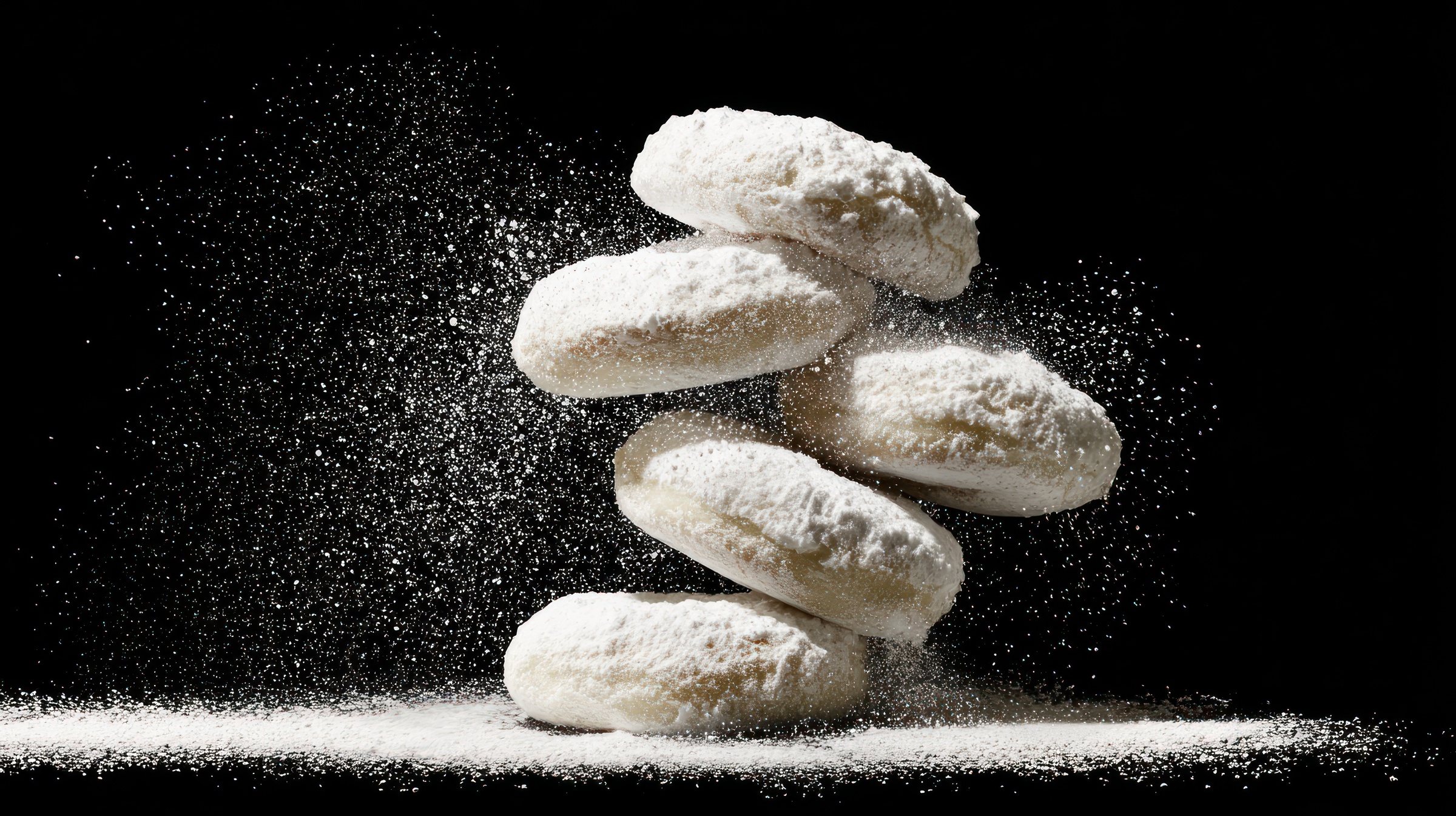
Kourabiedes (κουραμπιέδες) is one of the most famous traditional delicacies of Greece and Cyprus. These delicate, crumbly cookies, generously dusted with powdered sugar, are an integral part of Christmas celebrations and family gatherings. The aroma of almonds, butter, and vanilla makes kourabiedes a symbol of warmth, hospitality, and joy.
Contents
- 1 Origin and history of kurabiedes
- 2 Symbolism and traditions
- 3 Almonds are the heart of the kourabiedes
- 4 Features of the Cypriot and Greek versions
- 5 Classic composition and preparation technology
- 6 Modern varieties and culinary adaptations
- 7 Serving and storage
- 8 Christmas tradition
- 9 Kurabiedes in culture and everyday life
- 10 Interesting facts
- 11 A recipe proven over centuries
Origin and history of kurabiedes
The history of kourabiedes dates back to the Ottoman era and even further, to the culinary traditions of the Middle East. The word is believed to derive from the Turkish “kurabiye,” meaning “cookie” or “sweet pastry.” However, it was in Greek and Cypriot cuisine that this delicacy acquired its distinctive character, sophistication, and festive significance.
The first written references to the recipe date back to the 19th century, but kourabiedes were likely being prepared long before that. In villages in Cyprus and mainland Greece, they were baked for special occasions: weddings, christenings, Christmas, and Easter. On the island of Cyprus, these cookies became part of not only religious holidays but also everyday hospitality—a sweet sign of respect for guests.
Symbolism and traditions
Kourabiedes are associated with joy, abundance, and purity. The white powdered sugar symbolizes snow, renewal, and the beginning of a new year. In Cypriot homes, these cookies are served at Christmas with a glass of komandari (a traditional dessert wine) or coffee.
At weddings, kurabiedes are presented as a symbol of happiness and family well-being. In some regions of the island, there is a custom of placing a coin inside one of the cookies—whoever finds it is promised good luck for the entire year.
Almonds are the heart of the kourabiedes
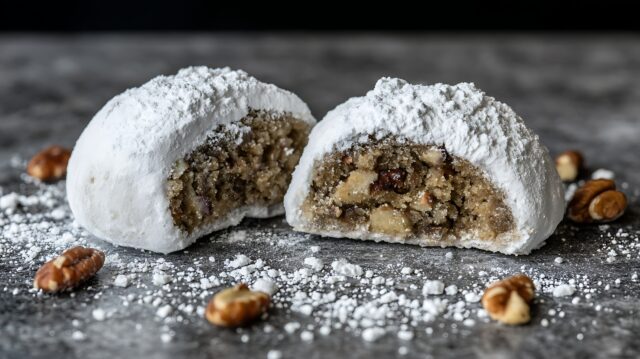
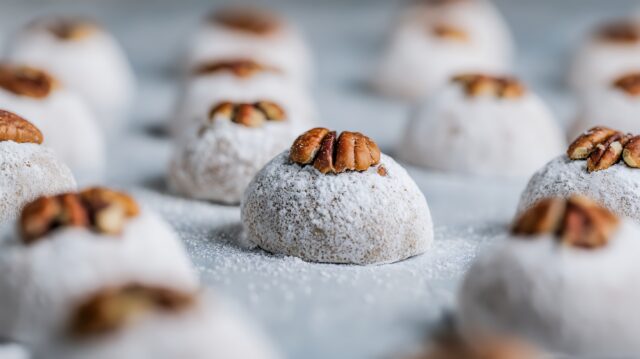
The main ingredient that defines the cookies’ flavor is roasted almonds. In Cyprus, they’re often ground into large pieces rather than into flour, so the cookies crunch and release their aroma when broken. Sometimes a whole almond is placed inside—a symbol of the “heart of the home.”
In some regions, almonds are substituted with walnuts, but the classic version remains unchanged. Almonds impart a subtle sweetness and a distinctive texture that makes kourabiedes unlike any other cookie.
Features of the Cypriot and Greek versions
Although the recipe for kourabiedes is similar in all regions of Greece and Cyprus, there are local variations:
- In Cyprus, sheep’s or goat’s milk butter is often used, which gives the cookies a richer flavor. Some varieties add a touch of rose water or flower essence, a characteristic of Cypriot sweets.
- In Greece, butter made from cow’s milk or a mixture with vegetable fat is preferred. Brandy or ouzo (anise liqueur) is sometimes added for flavor.
One thing remains common: high calorie content and a rich aroma, making kourabiedes a festive treat, not an everyday pastry.
Classic composition and preparation technology
The traditional recipe for kourabiedes includes simple ingredients:
- butter is the base of the dough, giving it a crumbly texture;
- powdered sugar – used both in the dough and for generous sprinkling;
- flour – usually soft, wheat, premium grade;
- ground almonds or walnuts;
- vanilla, rose water or brandy for aroma.
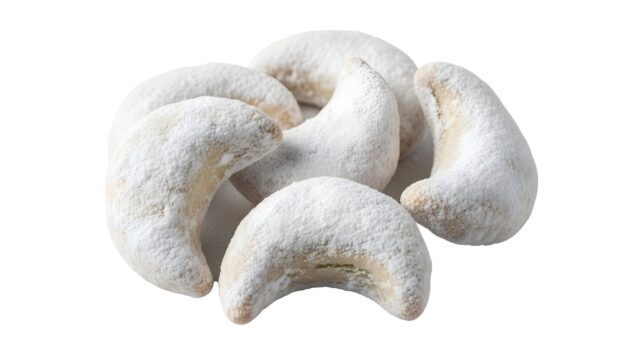
Preparation begins with thoroughly beating butter and powdered sugar until creamy. Then, gradually add flour and ground almonds. The dough is shaped by hand, often into crescents, balls, or flatbreads.
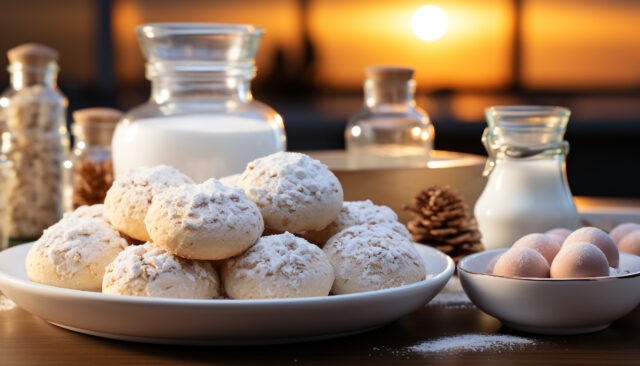
Bake the kourabiedes at a medium temperature until lightly golden. After cooling, generously dust them with powdered sugar to ensure a completely white surface. Some bakers roll the cookies twice to achieve a dense, snow-like coating.
Modern varieties and culinary adaptations
Modern chefs are experimenting with the classic recipe, adding chocolate, pistachios, orange zest, and even coconut. Gluten-free and vegan versions have also appeared, made with vegetable oil and almond flour.
However, in traditional Cypriot and Greek homes, kourabiedes are prepared the old-fashioned way: without excessive sweetness or embellishment, preserving that very “snowy simplicity” that distinguishes homemade baked goods from factory-made sweets.
Serving and storage
Kourabiedes are served on large platters lined with white paper or lace napkins. The cookie layer is usually dusted with powdered sugar to maintain a snowy appearance even when served.
They pair best with coffee, sweet wine, or Cypriot herbal infusions. Kourabiedes keep for a long time—up to three weeks in an airtight container, which made them a convenient holiday treat in centuries past. With time, the flavor becomes even more mellow and the aroma more intense.
Christmas tradition
In December, the aroma of kourabiedes wafts through every home and café in Cyprus and Greece. They’re prepared alongside other holiday sweets—melomakarona (honey and nut pastry) and vasilopita (a New Year’s pie).
Every home has its own “secret recipe,” passed down from generation to generation. Some add more almonds, others rose water or brandy. But the essence remains the same: kourabiedes bring the family together, creating an atmosphere of celebration and anticipation of a miracle.
Kurabiedes in culture and everyday life
For Cypriots and Greeks, this cookie is not just a sweet treat, but a part of their national identity. It is referred to in literature, folklore, and cookbooks as the “sweetness of joy.”
In Cyprus’s tourist areas, kourabiedes are sold in souvenir packages—they’re often taken home as a culinary symbol of the island. Restaurants and hotels serve them with coffee as a compliment to guests, and in village bakeries, the aroma of freshly baked kourabiedes has become part of the local flavor.
Interesting facts
- In some areas of Cyprus, kourabiedes are prepared not only for holidays, but also in memory of loved ones, as a symbol of fond remembrance.
- Larnaca and Limassol host annual Christmas markets where bakers compete to make the best kourabiedes.
- The powdered sugar should completely cover the cookies; if the dough layer is visible, the product is considered defective.
- In Cyprus they say: “ White as a kourabies” – about a person with pure intentions.
A recipe proven over centuries
The classic version requires 1 kg of flour, 500 g of butter, 150 g of powdered sugar, 200 g of almonds, a little vanilla, and a couple of spoons of brandy. After baking at 180°C for 20 minutes, the kourabiedes are cooled and sprinkled generously with powdered sugar.
Despite its simplicity, it’s the balance of ingredients that creates the perfect flavor. Even a few grams of oil can alter the texture and aroma. Therefore, in Cypriot families, this recipe is meticulously followed and passed down from hand to hand.
Kourabiedes are more than just cookies, but a living tradition that unites generations and cultures. Their flavor symbolizes comfort, home, and joy, while the white layer of powder symbolizes the purity and light of the holiday.
In Cyprus and Greece, kourabiedes remain a staple Christmas treat, timeless over the years. Each serving is a reminder of family values, respect for tradition, and the love embodied in a simple yet perfect recipe.