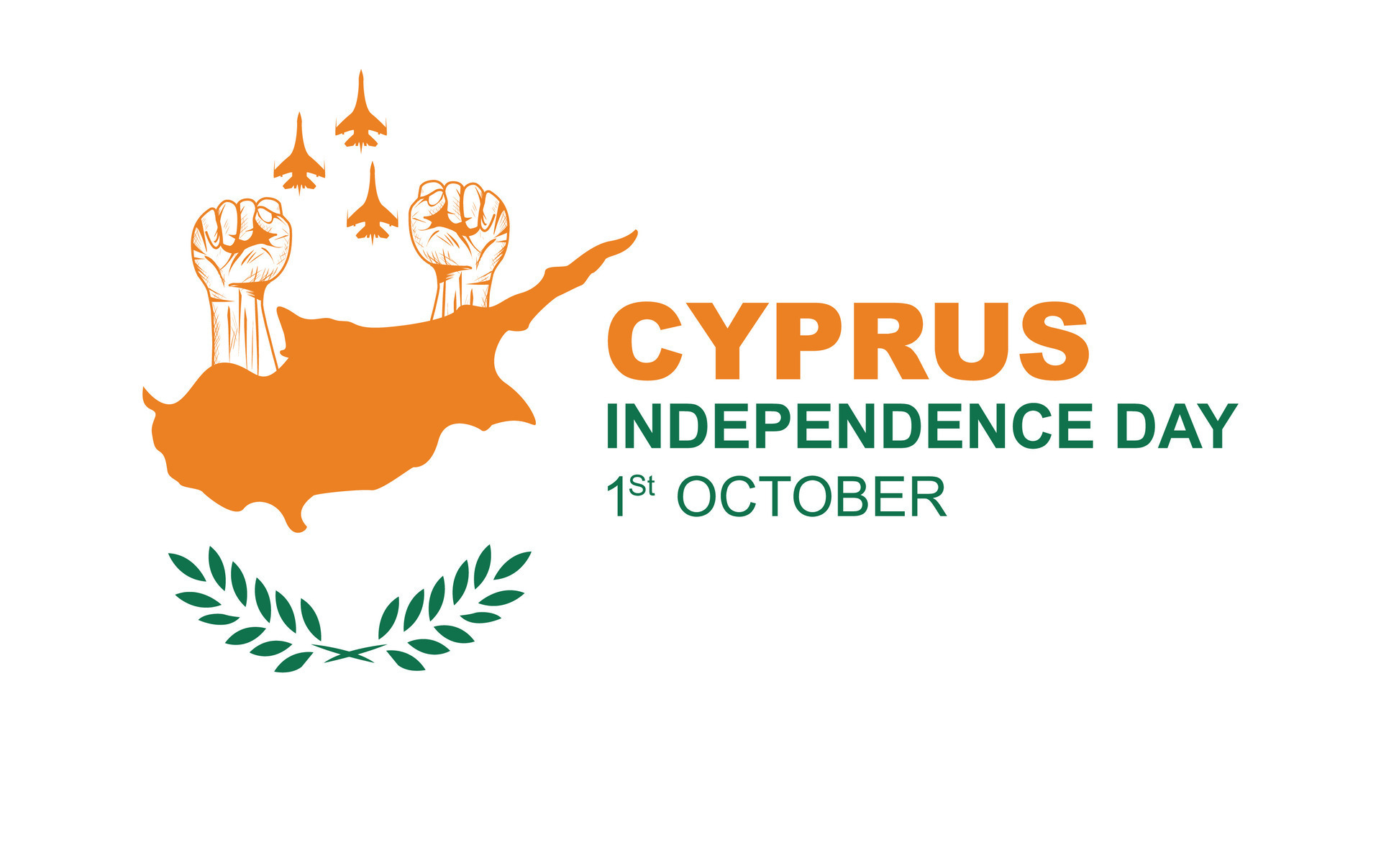
Cyprus Independence Day is one of the island’s major public holidays, celebrated annually on October 1st. This date symbolizes the end of British colonial rule and the birth of the sovereign Republic of Cyprus in 1960. The holiday unites the island’s residents, recalling the price paid for freedom and the Cypriots’ aspirations for peace, dignity, and independence.
Contents
- 1 Historical background
- 2 The struggle for independence
- 3 Proclamation of the Republic of Cyprus
- 4 Why is Independence Day celebrated on October 1st?
- 5 How Cyprus Celebrates Independence Day
- 6 Symbolism and meaning of the holiday
- 7 The role of holidays in modern society
- 8 Interesting facts
- 9 Why is the holiday important today?
Historical background
Cyprus’s path to independence was long and difficult. After the end of Ottoman rule in 1878, the island came under British control, which officially declared Cyprus a colony in 1925. However, Cypriots, particularly the Greek majority, strove for enosis —unification with Greece—from the very beginning, seeing it as a sign of historical justice and cultural identity.
During the first half of the 20th century, these aspirations became increasingly tense. Political rallies, protests, and diplomatic attempts to change the island’s status were unsuccessful. By the mid-1950s, the movement for self-determination had taken on an armed form.
The struggle for independence
From 1955 to 1959, the underground organization EOKA (Ethniki Organosis Kyprion Agoniston), led by Georgios Grivas (alias Digenis), operated in Cyprus. The movement’s goal was to overthrow the British colonial regime and achieve enosis.
The uprising was accompanied by sabotage, attacks on British installations, and mass arrests. A state of emergency was declared on the island. However, despite these harsh measures, Cypriots continued to resist.
In 1959, after years of negotiations between Great Britain, Greece and Turkey, the Zurich-London Agreements were signed, providing for the creation of an independent state – the Republic of Cyprus.
Proclamation of the Republic of Cyprus
On August 16, 1960, Cyprus officially became independent. Archbishop Makarios III was elected president of the country, and Turkish Cypriot Fazıl Küçük was elected vice president. The new constitution was based on the principle of ethnic balance between the Greek and Turkish communities.
According to the agreements, British military bases at Akrotiri and Dhekelia remained on the island, and Greece and Turkey were granted the status of guarantors of Cyprus’s independence. However, despite international recognition, internal tensions between the two communities gradually escalated, leading to the crisis of 1963–1974 and the de facto division of the island.
Why is Independence Day celebrated on October 1st?
Although the formal date of independence was August 16, 1960, the holiday was moved to October 1. This decision was made in 1963 at the initiative of the Cypriot government to avoid clashing with the tourist season and to enhance the symbolic significance of the beginning of the new month as a time of renewal.
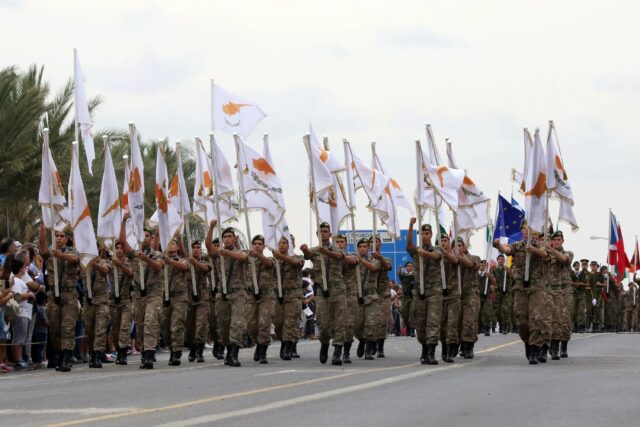
Since then, October 1 has become a day of national celebrations, state events and a military parade in honor of the establishment of the Republic.
How Cyprus Celebrates Independence Day
Independence Day celebrations span the entire island, encompassing official ceremonies, military parades, cultural programs, and public festivities.
Military parade in Nicosia
The main event takes place in the capital, on Makarakis III Avenue. The armed forces, police, firefighters, and rescue services participate. Helicopters and aircraft of the National Guard fly over the city. The parade symbolizes the country’s unity and its readiness to defend its independence.
Remembrance ceremonies
Services are being held at cemeteries and memorials to commemorate the fallen independence fighters. The president, ministers, and military personnel lay wreaths at the monument to the EOKA fighters and other heroes of the national liberation struggle.

Raising the national flag
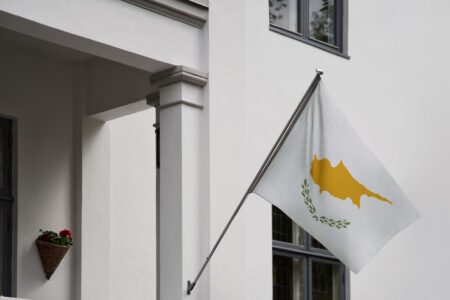
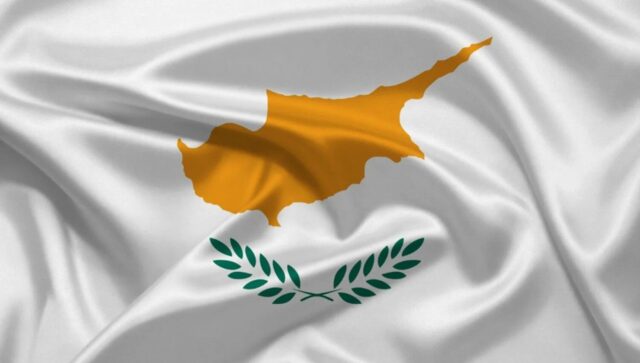
The morning begins with a ceremonial raising of the flag of the Republic of Cyprus at the presidential palace. The national anthem is played, and in all government buildings, the British flag is lowered and the Cypriot flag—a white flag with a copper map of the island and two olive branches symbolizing peace—is raised.
City decoration
The streets are decorated with national flags, garlands, and posters bearing the slogan “Ziτω η Ελευθερία!”—”Long live freedom!” Schools are holding thematic lessons where children are taught about the history of independence and the importance of national unity.
Folk festivals and concerts
In the evening, concerts, theater performances, dance shows, and fireworks displays take place in the city’s central squares. Schoolchildren and students organize exhibitions dedicated to the country’s history, and museums offer free tours of the colonial era.
Symbolism and meaning of the holiday
Cyprus’s Independence Day symbolizes not only liberation from colonial rule but also national rebirth. It embodies the idea of peace, self-determination, and commitment to democratic values.
The main symbols of the holiday:
- The flag of Cyprus – the white color symbolizes peace, the copper color of the island – the wealth of the land, the olive branches – reconciliation.
- The coat of arms of the Republic with a dove and the date 1960 is an emblem of peace and independence.
- The anthem of Cyprus, “Hymn to Freedom” (Ύμνος εις την Ελευθερίαν), written by Dionysios Solomos, emphasizes the common cultural roots with Greece.
The role of holidays in modern society
For modern Cyprus, Independence Day remains a day of national unity. It unites the country’s residents, regardless of age, language, or origin, reminding them of the importance of preserving sovereignty and respecting history.
After the events of 1974, the holiday acquired additional significance – as a symbol of the resilience of the Cypriot people, their ability to recover and develop even in the conditions of a divided island.
In recent years, Independence Day has increasingly become an international event. Representatives from other countries are invited, and parades are broadcast on television, strengthening national pride.
Interesting facts
- The first military parade of independent Cyprus took place on October 1, 1961 in Nicosia.
- President Makarios III personally participated in the flag-raising ceremony and delivered a speech in which he said: “Today Cyprus ceases to be a colony and becomes the home of free people.”
- In honor of the holiday, commemorative coins and stamps were issued, dedicated to the key events of 1960.
- Many Cypriots living abroad celebrate October 1st in their diasporas, with gala evenings and exhibitions taking place in London, Athens and New York.
Why is the holiday important today?
Cyprus Independence Day reminds us of the need to preserve our national identity and our commitment to unity. In an era of globalization and political challenges, this day serves as a reminder that independence is not a given, but the result of a people’s courage and faith in their future.
For Cypriots, it became not only a source of pride, but also a call for the preservation of peace, mutual understanding and respect between all communities on the island.
Cyprus Independence Day is a celebration that unites history and modernity, past and future. It embodies the spirit of freedom, self-determination, and resilience that underlie the Cypriot nation. This day reminds every Cypriot of the power of unity and that independence is not only a right but also a responsibility to one’s country.