Send an enquiry

Sending this message, you accept the Cookies and privacy policy

RU

In 2026, Cyprus firmly holds its position as one of the most attractive destinations for medical tourism and family relocation. The highly qualified doctors, most of whom were trained in the UK, Germany, or Greece, combined with modern hospital equipment, make the island an ideal place to have a baby. For wealthy expats and investors, the key factors in choosing Cyprus include the mild climate, which facilitates a quick recovery, and a transparent private healthcare system. The GESI healthcare system and the private sector in 2026 The Cypriot healthcare system operates under the state-run GESI (GHS) program, which covers a significant portion of childbirth costs for Cypriot residents registered with the program. However, many foreign citizens prefer private care outside of the GESI program or through premium international insurance policies. This guarantees the choice of a specific doctor, pregnancy care by a single specialist, and access to luxury wards. Advantages of private clinics in 2026: 1. A personalized approach. Direct access to a doctor 24/7. 2. No waiting lists. Quick access to all diagnostic procedures (4D/5D ultrasound, genetic testing). 3. Multilingual staff. Most clinics in Limassol and Paphos provide support in Russian and English. 4. Comfort level. Rooms in private hospitals resemble those in five-star hotels, with a sofa for companions and individual meals. Top 5 Private Hospitals in Cyprus for Childbirth in 2026 The choice of medical facility depends on the city of residence and the availability of specialized units, such as a neonatal intensive care unit (NICU), which is critical in cases of multiple pregnancies or a planned cesarean section. Limassol: A Hub for Expats • Mediterranean Hospital of Cyprus. One of the largest multidisciplinary hospitals with a robust maternity unit. In 2026, the clinic upgraded its equipment for real-time fetal monitoring. • Genesis Hospital. A specialized clinic focused on maternity and women’s health. Renowned for its natural childbirth programs and breastfeeding support. Nicosia: High technology and expertise • Aretaeio Hospital is considered one of the most prestigious clinics on the island. Leading obstetricians, gynecologists, and neonatologists work here. In 2026, the hospital opened a new level-three neonatal intensive care unit. • Mother and Child Medical Center. The oldest private clinic specializing exclusively in obstetrics and pediatrics. Paphos: Intimacy and Service • Evangelismos Hospital. The premier choice for Paphos residents. The clinic offers comprehensive packages that include not only the birth itself but also 30 days of postpartum pediatric care. Legal registration of a child and the issue of citizenship One of the most frequently asked questions is the status of a child born in the Republic. As of 2026, Cypriot law remains conservative on this issue and is based on the principle of “jus sanguinis” (right of blood). Does a child acquire Cypriot citizenship by birth? Being born in Cyprus does not automatically confer citizenship if neither parent is a Cypriot citizen. A child inherits the citizenship of their parents. However, being born on the island significantly simplifies obtaining documents for legal residence. Documentation: a step-by-step guide 1. A certificate from the clinic. Issued on the day of discharge, it contains information about the time of birth and parents. 2. Registration at the District Office. You must apply for a Birth Certificate within 15 days. The procedure costs €20. Digital pre-registration will be available through the Ariadni portal in 2026. 3. Apostille. To recognize a certificate in the parents’ country of citizenship, it must be apostilled by the Ministry of Justice or the Citizen Service Center (CSC). 4. Consular registration. With the received certificate, parents apply to their country’s consulate to obtain a passport for their child. Child status under permanent residence and immigration programs If the parents are holders of Cyprus permanent residence (under the investment program from 300,000 euros), the newborn child receives permanent resident status automatically after submitting the relevant application to the Migration Department. In 2026, the process of adding dependents to an existing immigration case takes between two and four months. The child receives Category F or Permanent Residency status (6.2), which entitles them to free education in public schools on par with Cypriot citizens. Preparing for Childbirth: What You Need to Know in 2026 It’s recommended to start planning your pregnancy in Cyprus no later than the 20th week of pregnancy. Most private doctors require at least one screening at their clinic to confirm the absence of any abnormalities. Checklist for expectant parents: • Choosing a doctor. In Cyprus, it’s common to choose a doctor, not a clinic. A doctor will come to your chosen hospital 24/7. • Insurance. If you plan to use private insurance, make sure the waiting period for coverage of childbirth (usually 10-12 months) has already expired. • Documents required. Parents’ passports, marriage certificate (with translation and apostille), and results of all previous examinations. The maternity system in Cyprus in 2026 is focused on maximum safety and psychological comfort. The absence of invasive medical interventions and support for partner births make this a positive experience for the entire family. FAQ: Frequently Asked Questions Will partner births be allowed in Cyprus in 2026? Yes, partner births are standard in both private and public hospitals. The presence of the father or another loved one is encouraged and is free of charge in most private hospitals. For cesarean sections, the partner may also be present in the operating room or in a special adjacent room. Do I need to bring things for the baby to the maternity hospital? In 2026, private clinics provided mothers and babies with everything they needed: diapers, newborn clothing for the duration of their stay, hygiene products, and food. You’ll only need clothes for discharge and a car seat, without which the clinic cannot discharge the baby for safety reasons. Is it possible to hire a Russian-speaking midwife or doula? In 2026, Cyprus boasts a large community of certified doulas and midwives speaking both Russian and English. Many of them collaborate with clinics in Limassol and Paphos, providing translation and psychological support during childbirth. Does GESI cover childbirth in a private clinic? GESI covers standard maternity services at private clinics that have signed an agreement with the Health Insurance Organization (HIO). In these cases, the birth is free or with a minimal surcharge for a luxury room. If the clinic or doctor is not a member of GESI, full payment is made privately. For those considering Cyprus as a place to have a baby, all the conditions have been created in 2026: from the highest level of medicine to simplified bureaucratic procedures, making this choice strategically correct for the future of the entire family.

In 2026, Cyprus firmly holds its position as one of the most attractive destinations for medical tourism and family relocation. The highly qualified doctors, most of whom were trained in the UK, Germany, or Greece, combined with modern hospital equipment, make the island an ideal place to have a baby. For wealthy expats and investors, the key factors in choosing Cyprus include the mild climate, which facilitates a quick recovery, and a transparent private healthcare system. The GESI healthcare system and the private sector in 2026 The Cypriot healthcare system operates under the state-run GESI (GHS) program, which covers a significant portion of childbirth costs for Cypriot residents registered with the program. However, many foreign citizens prefer private care outside of the GESI program or through premium international insurance policies. This guarantees the choice of a specific doctor, pregnancy care by a single specialist, and access to luxury wards. Advantages of private clinics in 2026: 1. A personalized approach. Direct access to a doctor 24/7. 2. No waiting lists. Quick access to all diagnostic procedures (4D/5D ultrasound, genetic testing). 3. Multilingual staff. Most clinics in Limassol and Paphos provide support in Russian and English. 4. Comfort level. Rooms in private hospitals resemble those in five-star hotels, with a sofa for companions and individual meals. Top 5 Private Hospitals in Cyprus for Childbirth in 2026 The choice of medical facility depends on the city of residence and the availability of specialized units, such as a neonatal intensive care unit (NICU), which is critical in cases of multiple pregnancies or a planned cesarean section. Limassol: A Hub for Expats • Mediterranean Hospital of Cyprus. One of the largest multidisciplinary hospitals with a robust maternity unit. In 2026, the clinic upgraded its equipment for real-time fetal monitoring. • Genesis Hospital. A specialized clinic focused on maternity and women’s health. Renowned for its natural childbirth programs and breastfeeding support. Nicosia: High technology and expertise • Aretaeio Hospital is considered one of the most prestigious clinics on the island. Leading obstetricians, gynecologists, and neonatologists work here. In 2026, the hospital opened a new level-three neonatal intensive care unit. • Mother and Child Medical Center. The oldest private clinic specializing exclusively in obstetrics and pediatrics. Paphos: Intimacy and Service • Evangelismos Hospital. The premier choice for Paphos residents. The clinic offers comprehensive packages that include not only the birth itself but also 30 days of postpartum pediatric care. Legal registration of a child and the issue of citizenship One of the most frequently asked questions is the status of a child born in the Republic. As of 2026, Cypriot law remains conservative on this issue and is based on the principle of “jus sanguinis” (right of blood). Does a child acquire Cypriot citizenship by birth? Being born in Cyprus does not automatically confer citizenship if neither parent is a Cypriot citizen. A child inherits the citizenship of their parents. However, being born on the island significantly simplifies obtaining documents for legal residence. Documentation: a step-by-step guide 1. A certificate from the clinic. Issued on the day of discharge, it contains information about the time of birth and parents. 2. Registration at the District Office. You must apply for a Birth Certificate within 15 days. The procedure costs €20. Digital pre-registration will be available through the Ariadni portal in 2026. 3. Apostille. To recognize a certificate in the parents’ country of citizenship, it must be apostilled by the Ministry of Justice or the Citizen Service Center (CSC). 4. Consular registration. With the received certificate, parents apply to their country’s consulate to obtain a passport for their child. Child status under permanent residence and immigration programs If the parents are holders of Cyprus permanent residence (under the investment program from 300,000 euros), the newborn child receives permanent resident status automatically after submitting the relevant application to the Migration Department. In 2026, the process of adding dependents to an existing immigration case takes between two and four months. The child receives Category F or Permanent Residency status (6.2), which entitles them to free education in public schools on par with Cypriot citizens. Preparing for Childbirth: What You Need to Know in 2026 It’s recommended to start planning your pregnancy in Cyprus no later than the 20th week of pregnancy. Most private doctors require at least one screening at their clinic to confirm the absence of any abnormalities. Checklist for expectant parents: • Choosing a doctor. In Cyprus, it’s common to choose a doctor, not a clinic. A doctor will come to your chosen hospital 24/7. • Insurance. If you plan to use private insurance, make sure the waiting period for coverage of childbirth (usually 10-12 months) has already expired. • Documents required. Parents’ passports, marriage certificate (with translation and apostille), and results of all previous examinations. The maternity system in Cyprus in 2026 is focused on maximum safety and psychological comfort. The absence of invasive medical interventions and support for partner births make this a positive experience for the entire family. FAQ: Frequently Asked Questions Will partner births be allowed in Cyprus in 2026? Yes, partner births are standard in both private and public hospitals. The presence of the father or another loved one is encouraged and is free of charge in most private hospitals. For cesarean sections, the partner may also be present in the operating room or in a special adjacent room. Do I need to bring things for the baby to the maternity hospital? In 2026, private clinics provided mothers and babies with everything they needed: diapers, newborn clothing for the duration of their stay, hygiene products, and food. You’ll only need clothes for discharge and a car seat, without which the clinic cannot discharge the baby for safety reasons. Is it possible to hire a Russian-speaking midwife or doula? In 2026, Cyprus boasts a large community of certified doulas and midwives speaking both Russian and English. Many of them collaborate with clinics in Limassol and Paphos, providing translation and psychological support during childbirth. Does GESI cover childbirth in a private clinic? GESI covers standard maternity services at private clinics that have signed an agreement with the Health Insurance Organization (HIO). In these cases, the birth is free or with a minimal surcharge for a luxury room. If the clinic or doctor is not a member of GESI, full payment is made privately. For those considering Cyprus as a place to have a baby, all the conditions have been created in 2026: from the highest level of medicine to simplified bureaucratic procedures, making this choice strategically correct for the future of the entire family.

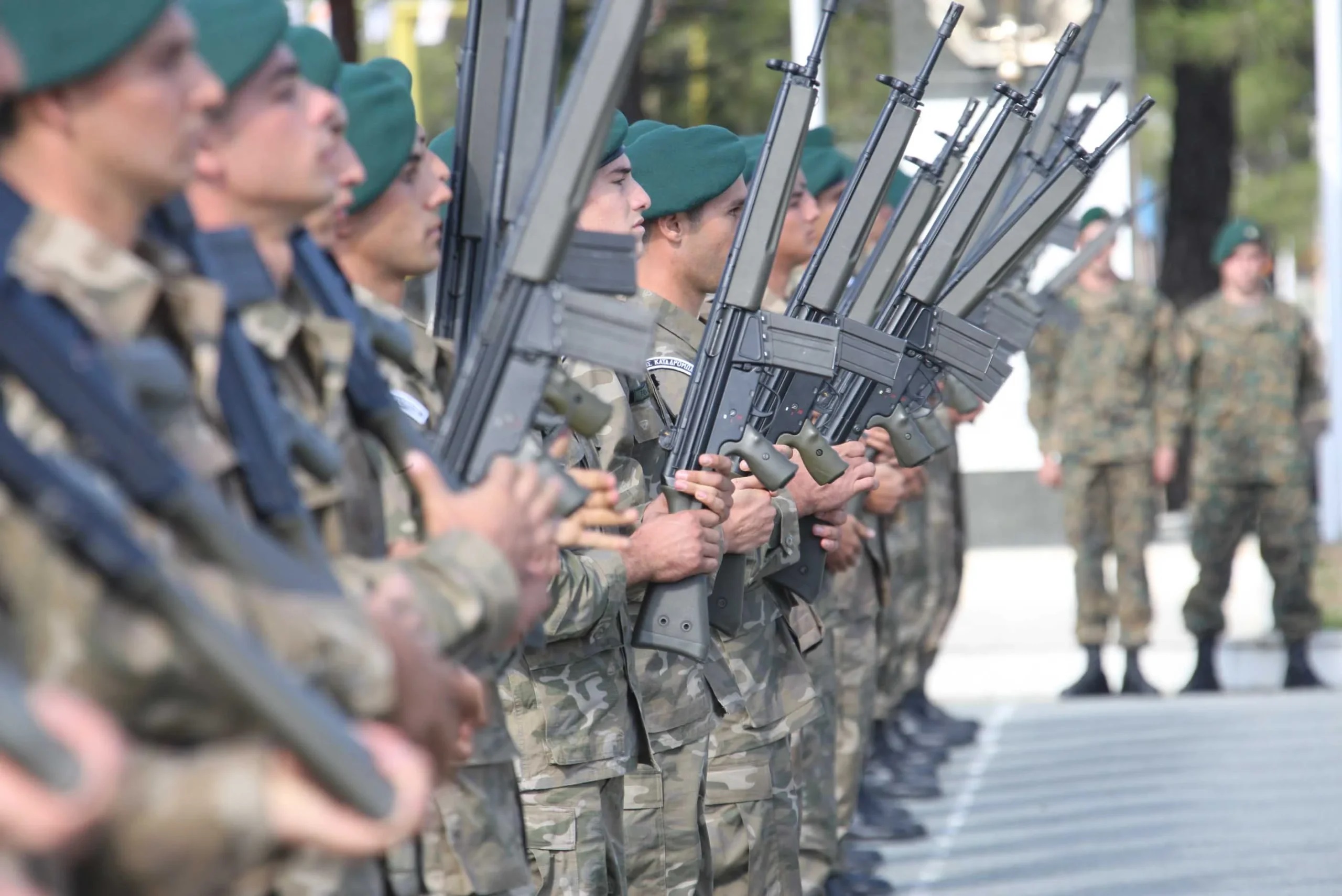
The issue of conscription into the National Guard of the Republic of Cyprus is one of the most sensitive for foreign investors and families planning to move to the island for permanent residence. In 2026, against the backdrop of the modernization of the armed forces and changes to naturalization rules, it is important to clearly distinguish between the obligations imposed by residency status and those arising from obtaining citizenship. The fundamental principle of Cypriot law remains unchanged: military service is inextricably linked to citizenship or ethnic origin, and not to the possession of a residence permit.

Permanent residence and military service: the main legal status in 2026

For foreign citizens residing in Cyprus on the basis of permanent residence (category 6.2, Category F or EU long-term resident status), military service is not required .

Permanent residency holders retain the citizenship of their home country (e.g., the UK, Israel, Germany, or the CIS) and are considered foreign residents by the Republic of Cyprus. According to the National Guard Law, foreigners without Cypriot roots who have not applied for a Cypriot passport are completely exempt from military service, conscription, and registration. This rule applies to both investors and their children, whether born on the island or arriving under the family reunification program.

When the Duty to Serve Arises: The Path to Citizenship

The situation changes radically if a child or their parents decide to naturalize. In 2026, obtaining Cypriot citizenship under the new rules (subject to application after four or five years of residence for highly qualified specialists, or eight years for other categories) will entail military service for males.

Terms of service for naturalized citizens in 2026

If a young man receives a passport of the Republic of Cyprus, the length of his service in the National Guard will depend on his age at the time of receiving citizenship and the time he has spent on the island.

  1. Citizenship is obtained between the ages of 18 and 26. In this case, the mandatory service period is six months. Conscripts must report for service within two years of naturalization. In the event of an unexcused delay, the period may be extended to eight months.
  2. Obtaining citizenship after age 26. The period of service is reduced to 3 months. If registration is not completed in a timely manner, the period is extended to 5 months.
  3. Persons with Cypriot roots. For those whose father or male grandfather is Cypriot, the standard period of service is 14 months, regardless of whether they hold a passport, provided they permanently reside on the island.

Rules for dual citizens and repatriates

In 2026, Cyprus continues to apply a differentiated approach to those who have lived a significant part of their lives abroad.

If a child of a foreign parent acquired citizenship by birth (for example, if one of the parents is Cypriot) but has lived outside of Cyprus for more than 10 years, they are entitled to a reduced period of service. The length of service will depend on the age at which the child returned to the island for permanent residence. If the child returned between the ages of 18 and 25, the service will be six months. If after the age of 26, the service will be three months.

Persons holding dual citizenship (Greece and Cyprus) may be exempt from military service in Cyprus if they have already completed full military service in the Hellenic Armed Forces and can prove this with relevant documents.

Exit Permits for Youth

An important detail for families whose children hold Cypriot citizenship (or are claiming it by descent) is the requirement to obtain an exit permit. In 2026, young men aged 16 to 26 who are subject to conscription are required to obtain this document from the Ministry of Defense or district military commissariats before departing the country.

Comparative table of military service statuses in 2026

Status of person (male) Duty to serve Service life (standard) Mandatory fees
Foreigner with permanent residence (without roots) No No
Naturalized citizen (18–26 years old) Yes 6 months Yes (reservist)
Naturalized citizen (26+ years) Yes 3 months Yes (reservist)
Citizen by origin (Cypriot father) Yes 14 months Yes (reservist)
Repatriate (lived abroad for 10+ years) Yes 3–6 months Yes (reservist)

Alternative service and health-related exemption

A 2026 Cypriot law provides for the possibility of alternative civilian service for individuals whose religious or ethical beliefs prohibit them from bearing arms. This service typically lasts 19 months and is performed in government institutions or social services.

A complete exemption from service (category I5) is granted only for medical reasons after passing an examination by a military medical commission. In 2026, the digitalization of medical records through the GHS system simplified the diagnosis verification process, making it more transparent and eliminating the possibility of corruption.

FAQ: Frequently Asked Questions

Will my son be drafted into the army if we received permanent residence through investment?

No. The Permanent Residence by Investment program (Category 6.2) grants permanent residency but does not impose military service obligations. As long as your son is a citizen of his own country only, he will not be subject to conscription.

What happens if a child receives citizenship at 17?

At 18, he will receive a summons to register. If by that time he is enrolled in a university (in Cyprus or abroad), he will be granted a deferment until completion of his studies. After completing his studies, he will be required to perform six months of military service as a naturalized citizen.

Is it possible to “buy off” military service in Cyprus?

There is no legal way to “buy” an exemption from military service. Draft evasion carries severe penalties: fines of up to €6,000, imprisonment for up to three years, and a ban on leaving the country. However, there are legal ways to reduce the term or obtain a deferment for family reasons or educational reasons.

Are girls required to serve in the army?

As of 2026, service in the Cyprus National Guard remains mandatory for men only. Women may enlist only on a voluntary basis as contract soldiers (SYOP). Recent reforms in 2026 increased pay and raised the age limit for contract soldiers to 35, making service an attractive career option for Cypriot women.

Do you need a certificate from the army to enter a university abroad?

Male Cypriot citizens require such a certificate to obtain a deferment. Foreign students with permanent residence permits applying to universities in Europe or the United States do not require any documents from the Cypriot Ministry of Defense, as they are not under the jurisdiction of the National Guard.


More articles

Elmira

Call or text me for advice

+357 95 117091

Leave your contact details. We will contact you shortly and provide a free consultation