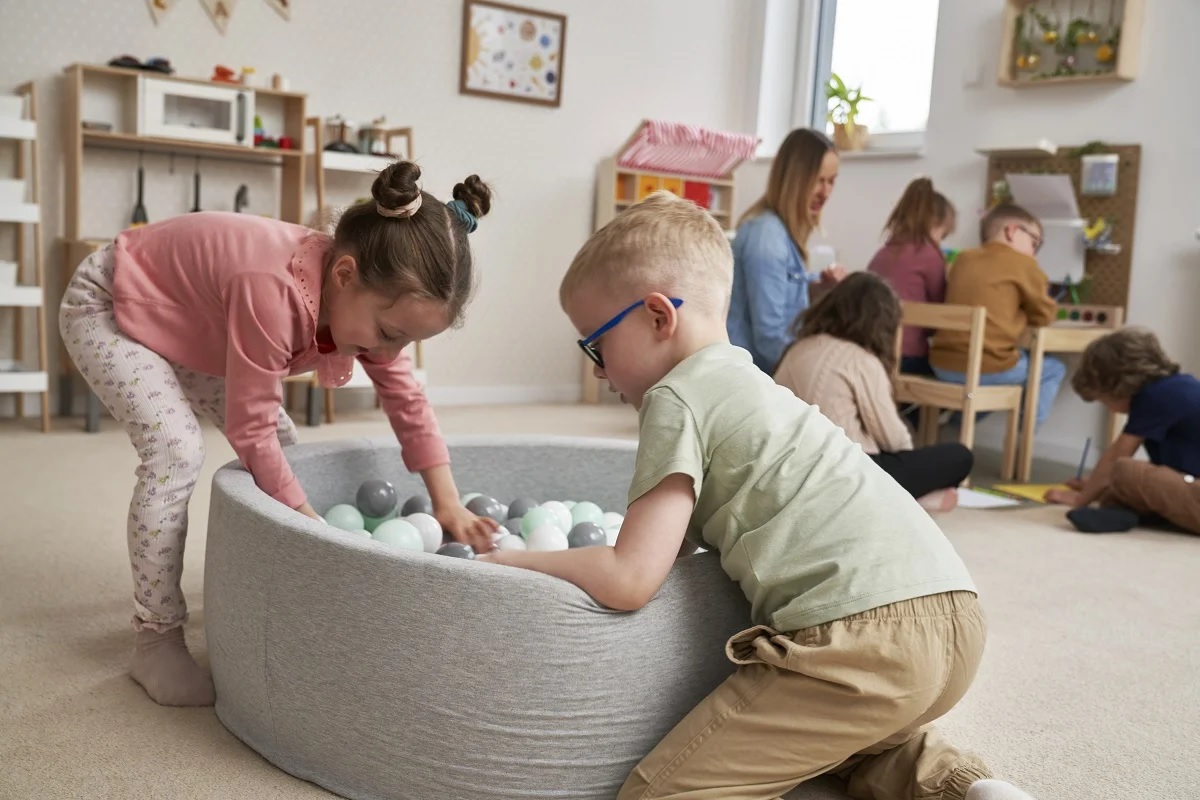
In 2026, the preschool education system in Cyprus underwent a series of changes aimed at increasing access to public institutions for children of foreign residents. For families planning to relocate or already living on the island, understanding the admissions process for public kindergartens (Public Kindergartens) is a critical step in integration. Unlike the private sector, public institutions offer instruction in Greek, ensuring natural immersion from an early age.
Contents
- 1 Preschool education system: age categories
- 2 Registration deadlines and procedures in 2026
- 3 Required documents for foreign citizens
- 4 Tuition and additional expenses
- 5 Opening hours and infrastructure
- 6 Language adaptation and support for foreign children
- 7 Territorial principle and choice of garden
- 8 FAQ: Frequently Asked Questions
Preschool education system: age categories
In Cyprus, public kindergartens are divided into levels based on the child’s age. In 2026, compulsory preschool education will begin at the age of 4 years and 8 months. A child must reach this age by September 1 of the current school year to qualify for a mandatory, free place in pre-primary education.
Children aged 3 to 4 years and 8 months can also attend public kindergartens, subject to availability. In this category, priority is given to children from low-income families, large families, and those living in close proximity to the school. Places are allocated through a competitive process, in accordance with the points system of the Ministry of Education, Sports, and Youth Affairs of Cyprus.
Registration deadlines and procedures in 2026
The main registration period for public kindergartens for the 2026–2027 school year begins in January 2026. This period typically lasts two weeks in the middle of the month. It is crucial to apply during this period, as vacancies in popular areas of Limassol, Nicosia, and Paphos fill up quickly.
Key stages of enrollment
- District Definition: The choice of a preschool is strictly tied to the family’s residential address. Each facility serves specific streets and neighborhoods.
- Online application: In 2026, most municipalities switched to online application through the Ministry of Education portal, but some regions still require an in-person visit to the chosen kindergarten.
- Provision of original documents: After preliminary approval of the application, parents are required to provide physical copies of the documents to the principal of the educational institution.
- Confirmation of Admission: Official lists of accepted children are usually published in May or June.
Required documents for foreign citizens
To successfully register a child, expats must prepare an extensive package of documents. All documents in foreign languages (except English) must be officially translated into Greek or English and certified with an apostille or the seal of a certified translator.
- Child’s birth certificate (original and certified copy).
- Passports of both parents and the child.
- Documents confirming legal residence status in Cyprus (Yellow Slip for EU citizens or Pink Slip/ARC for third-country nationals).
- Proof of residential address: 2 utility bills (usually electricity and water) and a lease agreement or title deed.
- A medical record showing vaccinations in accordance with the Cyprus National Vaccination Schedule.
- Certificate of attendance from previous educational institution (if applicable).
Tuition and additional expenses
Pre-primary education for children of compulsory school age in state kindergartens is free. However, parents are responsible for associated costs, which will remain fixed in 2026.
| Expense item | State Garden (2026) | Private Garden (2026) |
| Monthly payment | 0 – 100 euros (depending on income) | 450 – 900 euros |
| Registration fee | 10 – 20 euros | 150 – 300 euros |
| Food (per month) | Around 60 euros (optional) | Included or 100 – 150 euros |
| Child insurance | 15 – 20 euros per year | Included in the price |
| Uniform and textbooks | 30 – 50 euros per year | 100 – 200 euros per year |
For children under 4 years and 8 months, the cost of staying in a state kindergarten is approximately 70 – 130 euros per month, depending on opening hours and the availability of extended days.
Opening hours and infrastructure
Public kindergartens in Cyprus are typically open from 7:45 AM to 1:05 PM. In 2026, many cities expanded their network of optional all-day schools, which now run until 4:00 PM. The extended day program includes lunch and additional creative or sports activities.
The educational process is overseen by the Ministry of Education. The program focuses on developing social skills, basic literacy, and preparation for primary school. In 2026, special attention will be paid to digital literacy: many classrooms will be equipped with interactive panels and basic robotics kits.
Language adaptation and support for foreign children
The main challenge for children from expat families is the Greek language. State kindergartens do not offer separate classes in English or Russian. However, the Cypriot education system is renowned for its inclusiveness. Teachers have experience working with children who do not speak Greek and use visualization and play-based methods. Special “Greek as a Second Language” programs have been in effect since 2026, with teachers providing additional socialization classes for foreign students.
Territorial principle and choice of garden
It’s important to understand that you can’t choose any public kindergarten you like. Placement is based on your place of residence. If you rent in Limassol, your child will be assigned to a kindergarten in the same area. If you change residence during the school year, the transfer process requires new utility bills and can take up to 30 days.
FAQ: Frequently Asked Questions
Is it possible to enroll a child in kindergarten if Pink Slip is still under review?
Yes, in 2026, the rules allow you to apply for admission with a certificate from the migration service confirming the acceptance of your residence permit application (Receipt). However, by the time classes actually begin in September, you must provide valid residency status or proof of document renewal.
Do public kindergartens offer food for allergy sufferers?
Meals in public kindergartens are typically provided through catering companies or in-house kitchens. Parents are required to provide a medical certificate from an allergist with a clear list of prohibited foods. As of 2026, food safety standards in Cyprus will be strictly enforced, and schools are required to adapt menus or allow parents to bring certified lunchboxes for children with severe allergies.
Is a school uniform required in kindergarten?
Public kindergartens in Cyprus don’t have strict uniforms like secondary schools. Comfortable sportswear and shoes for active play are generally required. However, some institutions have a tradition of wearing T-shirts or sweatshirts with the kindergarten logo during official events or excursions, which cost no more than 15-20 euros.
What vaccinations are required for enrollment in 2026?
To attend kindergarten, a child must be vaccinated according to the national schedule of Cyprus. Mandatory vaccinations include diphtheria, tetanus, whooping cough, polio, measles, mumps, and rubella (MMR). If a child has missed a vaccination for medical reasons, an official certificate from a licensed Cypriot pediatrician is required.
How to transfer a child from a private to a public kindergarten in the middle of the year?
Transfers are only possible if there are available places at the preschool in your area. You must obtain a letter of absence from the private institution and submit an application to the District Education Office. In 2026, such transfers are most often approved at the beginning of the second semester (January) upon documented justification.