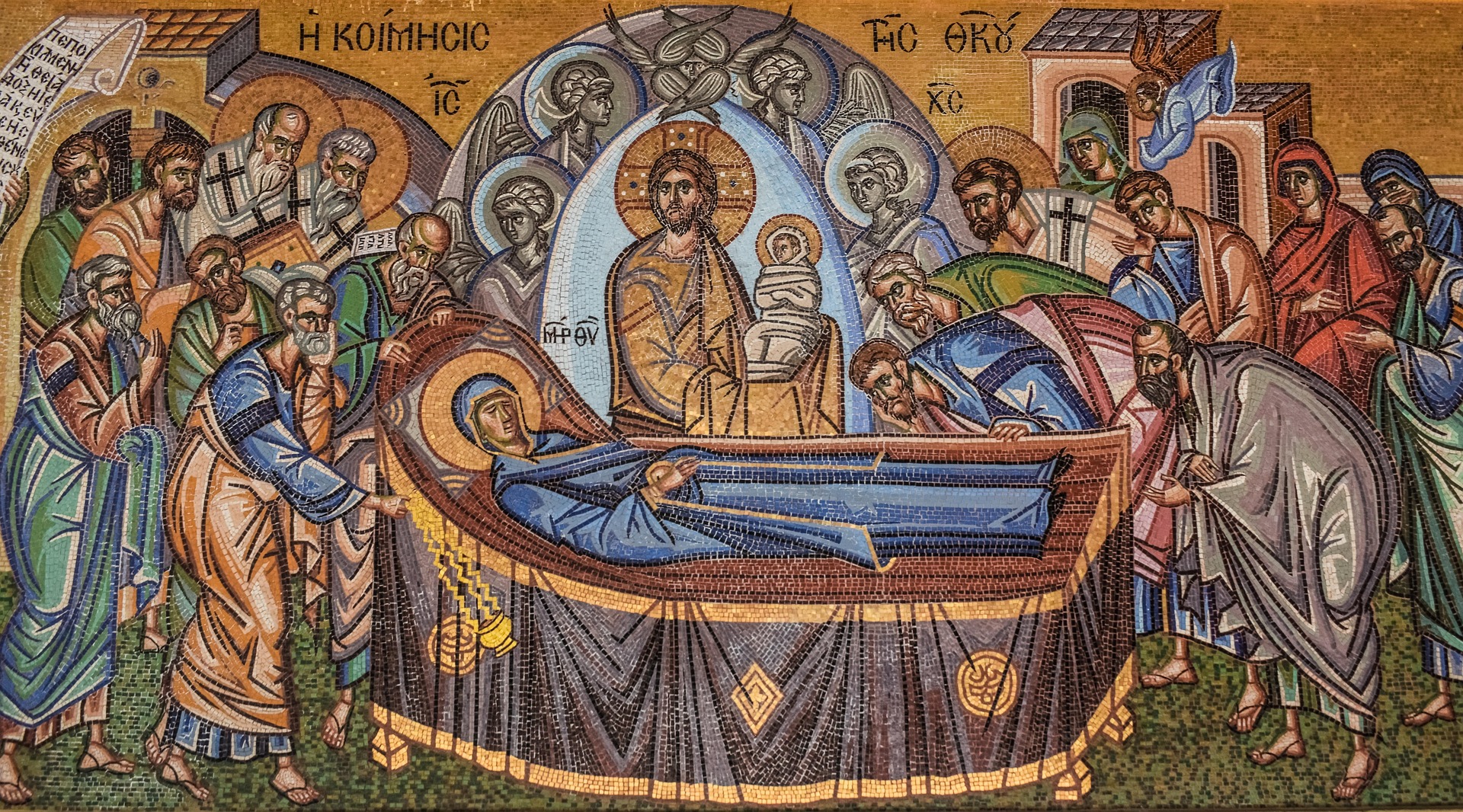
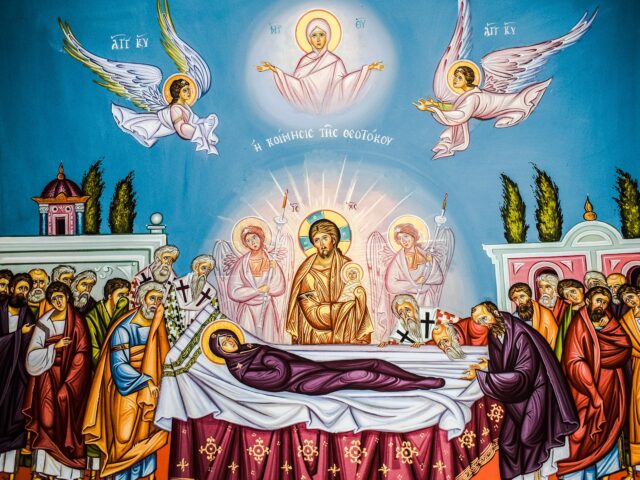
The Feast of the Dormition of the Blessed Virgin Mary occupies a special place in the spiritual and social life of Cyprus. August 15th is considered not just a religious date on the island, but a national day uniting faith, traditions, family values, and cultural memory. This day is celebrated in all regions of the country and is accompanied by religious services, mass pilgrimages, fairs, feasts, and public festivities.
The meaning of the holiday is connected with the earthly Dormition of the Virgin Mary and her Ascension into heavenly life. In the Orthodox tradition, this day is not perceived as a date of sorrow, but as a celebration of transition and spiritual victory.
Contents
- 1 The historical significance of the holiday
- 2 Preparations for the holiday and all-night vigils
- 3 Solemn liturgy and religious processions
- 4 Social and family significance of the holiday
- 5 Cultural events and festivals
- 6 Religious rituals and spiritual significance
- 7 Festive gastronomy
- 8 Educational aspect and preservation of traditions
The historical significance of the holiday
The history of the holiday on the island goes back a long way. Cyprus has been a center of the Orthodox faith since early centuries, and the veneration of the Mother of God there became particularly significant. According to legend, an icon of the Virgin Mary painted by the Apostle Luke arrived in Cyprus, imbuing local churches with a special sacredness . Consequently, the cult of the Dormition of the Blessed Virgin Mary became widespread. Many churches and monasteries on the island are dedicated to her, and individual icons are considered miraculous and venerated not only by believers but also by the general public.
Preparations for the holiday and all-night vigils
On the eve of August 14, all churches across the island hold all-night vigils, attracting thousands of believers. Lamps, the aroma of incense, church hymns, and the reading of Scripture create an atmosphere of solemnity and inner concentration. The all-night vigil is an important spiritual preparatory stage, allowing parishioners to tune in to prayer, reflect on their actions, and prepare their souls for the holiday. Many Cypriots travel from neighboring villages and towns to churches to participate in these ceremonies, and tourists have the opportunity to observe authentic religious rites.
Solemn liturgy and religious processions
On the morning of August 15, a festive liturgy is held. On this day, believers participate in religious processions through the streets of towns and villages, carrying icons and church banners. The processions are not only a religious event but also a cultural phenomenon, creating a sense of community cohesion. During the processions, special hymns are sung, prayers are read, and churches and homes where pilgrims reside are blessed. Participation in these ceremonies is seen as an opportunity to strengthen one’s spiritual life and as a sign of respect for ancestral traditions.
Social and family significance of the holiday
Beyond its religious aspect, the holiday has a distinctly social character. August 15th is a public holiday in Cyprus, so most government offices, schools, and private businesses close. This day is dedicated to family gatherings, making it important for maintaining social ties. People travel to their home villages, gather with relatives, exchange gifts, and organize festive meals. Sharing a meal becomes a symbol of unity and gratitude, reflecting a traditional Cypriot value: family well-being.
Main pilgrimage centers
Monasteries and churches dedicated to the Mother of God play a special role in the celebration of the Dormition. The central pilgrimage site is Kykkos Monastery , located in the Troodos Mountains . It houses one of the most venerated icons on the island—the icon of the Mother of God.
On the feast day, thousands of pilgrims from all regions of Cyprus flock here. Services are also held at other significant sites: Machairas Monastery , Trooditissa Monastery , the Church of Panagia Chrysoroyiatissa , and numerous parish churches. In rural areas, services often last from nightfall until dawn.
Cultural events and festivals
Various events and festivals accompany the holiday in almost every region of the island. Villages and towns host concerts, fairs, and exhibitions of folk crafts. Folk groups perform traditional dances and songs, creating a festive atmosphere accessible not only to believers but also to tourists. Such cultural events help preserve national traditions, engage the younger generation, and enhance the island’s tourist appeal.
Religious rituals and spiritual significance
Festive ceremonies are accompanied by special rituals in churches. Believers bring candles, bless their homes, and participate in the sacraments of confession and communion. Prayers said on this day for the health of the family, children, and well-being of the home are believed to possess special power. For many pilgrims, visiting a church on the Dormition of the Most Holy Theotokos is a spiritual necessity, a way to strengthen their faith and express gratitude for the past year.
Festive gastronomy
Festive events in Cyprus are accompanied by culinary traditions. The end of Lent falls on this day, so families prepare special dishes to share with relatives and neighbors. The meal includes meat dishes, fish, traditional meze , halloumi , homemade pastries, and seasonal fruits. Sharing meals enhances the sense of community, creates a space for family interaction and strengthens ties between generations.
A holiday through the eyes of a tourist
The festival coincides with the peak tourist season. Many travelers plan their trip to Cyprus specifically for August 15th to witness the solemn processions, visit monasteries, and participate in the festivities. This allows tourists to immerse themselves in the island’s culture and fully appreciate its religious traditions. The Dormition of the Blessed Virgin Mary becomes not only a spiritual event but also an important element of cultural tourism in Cyprus.
Educational aspect and preservation of traditions
It’s worth noting that the Feast of the Assumption has an educational impact on the younger generation. Children and adolescents participate in processions, listen to stories about events in the life of the Virgin Mary, and become familiar with chants and traditions, which contributes to the preservation of spiritual heritage. The holiday also fosters a sense of national identity and respect for the island’s cultural history.
In recent years, the August 15 celebration has combined traditional rituals with modern elements. Exhibitions and concerts, sporting events, and cultural programs have emerged, attracting young people and tourists. Despite this, the primary emphasis remains on the spiritual component, ensuring the celebration’s religious essence is preserved.
Thus, the Dormition of the Blessed Virgin Mary in Cyprus is a day that unites religion, culture, and family. The holiday combines spiritual perfection with folk traditions, family gatherings, and social events. It remains one of the most significant events of the year, helping to strengthen the spiritual, cultural, and social unity of Cypriot society. Visits to churches, participation in religious processions, family feasts, and cultural events create a festive atmosphere in which the past harmoniously blends with the present, and believers and tourists alike can experience the richness of the island’s spiritual and cultural life.