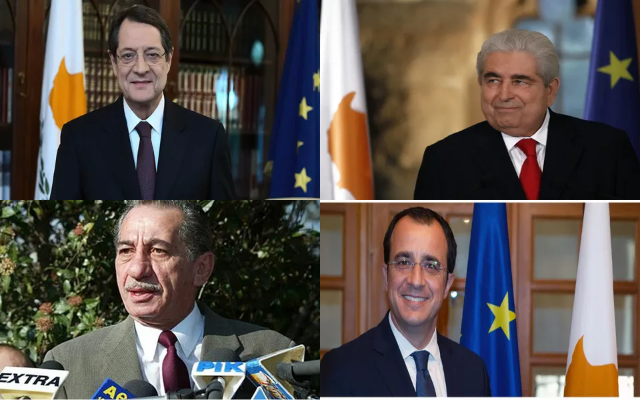
The institution of the presidency in Cyprus has been a key element of the country’s political system since independence in 1960. The Republic of Cyprus is a presidential republic, where the head of state also serves as head of government. The president represents the country internationally, directs foreign policy, appoints ministers, and is responsible for ensuring the stability and unity of the state. The history of Cyprus’s presidents reflects the political and social changes the island has experienced over more than six decades of independence.
Contents
- 1 Formation of the presidential system
- 2 Makarios III (1960–1977)
- 3 Spyros Kyprianou (1977–1988)
- 4 Georgios Vasiliou (1988–1993)
- 5 Glafkos Cleriadis (1993–2003)
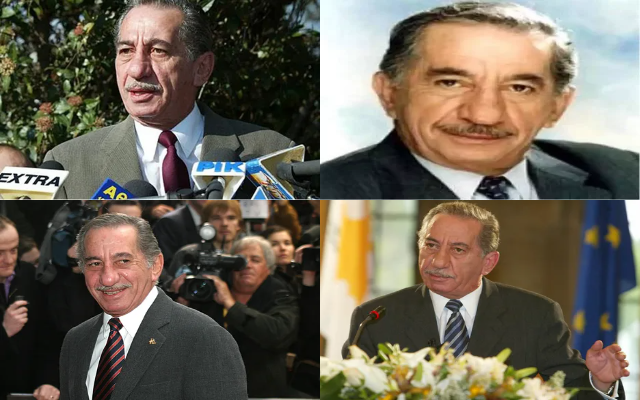
- 6 Tassos Papadopoulos (2003–2008)
- 7 Dimitris Christofias (2008–2013)
- 8 Nikos Anastasiadis (2013–2023)
- 9 Nikos Christodoulides (since 2023)
- 10 The role of the institution of the presidency
Formation of the presidential system
Following the signing of the Zurich-London Accords of 1959, Cyprus gained the status of an independent republic. The constitution, which came into force on August 16, 1960, established a unique model of governance: the president would be a Greek Cypriot, and the vice president would be a Turkish Cypriot, with veto power on key decisions. This structure was intended to ensure balance between the two communities, but it was the differences in the political structure that later became one of the causes of the political crisis of 1963.
The President is elected by popular vote for a five-year term and may serve no more than two consecutive terms.
Makarios III (1960–1977)
The first president of the Republic of Cyprus was Archbishop Makarios III, the spiritual leader of the Cypriots and a symbol of the struggle for independence. He played a decisive role in the transition from British colonial rule to an independent state.
At the beginning of his reign, Makarios sought to maintain unity between the Greek and Turkish communities. However, political disagreements and outbreaks of violence in 1963 led to a schism. The Turkish population effectively withdrew from state structures, violating the original constitutional principles.
In 1974, following a military coup orchestrated by supporters of enosis (unification with Greece), Makarios was forced into exile. Following the Turkish invasion and the partition of the island, he returned to power, but for the rest of his life he was unable to restore Cyprus’s territorial integrity. Makarios died in 1977, leaving behind a legacy of national leadership that combined religion and politics.
Spyros Kyprianou (1977–1988)
Following Makarios’ death, Spyros Kyprianou, previously the Minister of Foreign Affairs, became president. His tenure came at a time when Cyprus was seeking a peaceful resolution to the conflict and the restoration of negotiations with Turkey.
Kyprianou advocated a policy of non-alignment and maintained ties with the Third World movement. He actively worked to enhance Cyprus’s international status, seeking recognition at the UN level as an independent state rather than the object of territorial disputes.
However, domestic economic difficulties and the lack of progress in negotiations on the Cyprus issue gradually eroded his popularity. In 1988, Kyprianou gave way to a new president.
Georgios Vasiliou (1988–1993)
The 1988 elections marked the first time a spirit of political renewal had been established. Victory went to Georgios Vasiliou, an independent candidate with a pro-European orientation. He implemented liberal economic reforms aimed at developing the private sector and modernizing infrastructure.
Vasiliou was one of the first leaders to officially announce Cyprus’s intention to join the European Community. His policies contributed to the growth of investment and the stabilization of the financial system.
However, when it came to uniting the island, his proposals for a federal model were met with caution, and in 1993 he lost the election to a representative of the conservative DISY party.
Glafkos Cleriadis (1993–2003)
Glafkos Kleriades, leader of the DISY party, became the fourth president of Cyprus. His rule was characterized by pragmatism and an orientation toward Western institutions.
Clerides strengthened the economy, developing tourism and the financial sector, allowing Cyprus to become a regional business hub. He also played a key role in the country’s accession negotiations with the European Union, which began in 1998.
Despite the failure of negotiations on the island’s reunification and the referendum on the Annan Plan (2004), it was under Clerides that Cyprus became a full participant in the European political process.
Tassos Papadopoulos (2003–2008)
Tassos Papadopoulos, a lawyer and diplomat, came to power in 2003. His tenure marked a turning point: in 2004, Cyprus officially joined the European Union, but the president opposed the UN-proposed plan to unify the island, considering it unfair to Greek Cypriots.
In the referendum, the majority of the population supported Papadopoulos’s position, and the plan was rejected. Nevertheless, the Republic of Cyprus entered the EU as a divided state.
The president’s policies were aimed at strengthening independence, protecting national interests, and economic stability. His term ended in 2008.
Dimitris Christofias (2008–2013)
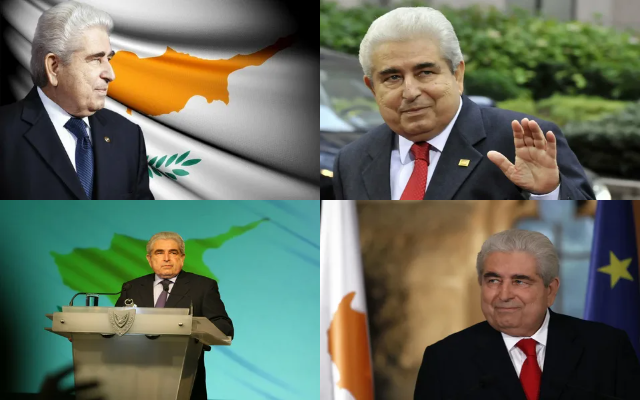
In 2008, Dimitris Christofias, leader of the Progressive Party of the Working People (AKEL ), became president. He became the first communist in the history of the European Union to lead a country.
Christofias pursued a socially oriented policy, increasing state support for education and healthcare. In international affairs, he sought to restore dialogue between the Greek and Turkish communities.
However, his reign was complicated by the 2012 financial crisis and the tragedy at the Mari naval base, where an explosion at an ammunition depot resulted in numerous casualties. These events undermined confidence in the government.
Nikos Anastasiadis (2013–2023)
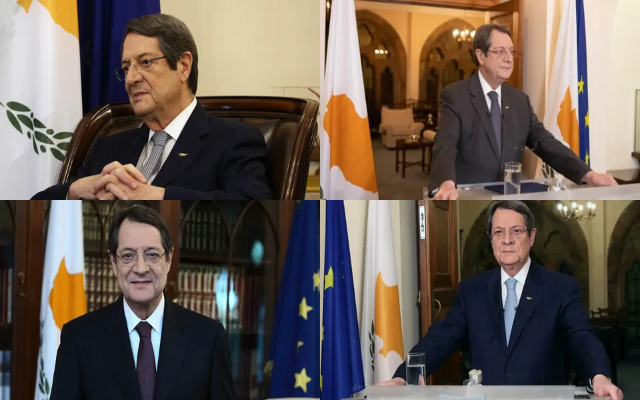
Nicos Anastasiades, a representative of the DISY party, served two consecutive terms as president. His tenure began amid a severe financial crisis: in 2013, Cyprus received aid from the EU and the IMF in exchange for restructuring the banking system.
Under Anastasiades’ leadership, the economy stabilized, tourism and the IT sector became leading industries, and the country returned to growth. The president focused on modernizing legislation, combating corruption, and attracting foreign investment.
On the international stage, he actively participated in negotiations on the Cyprus settlement, but failed to achieve a political breakthrough.
Nikos Christodoulides (since 2023)
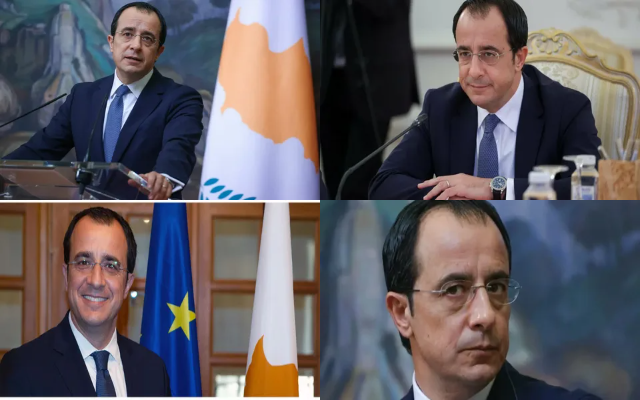
The current president, Nikos Christodoulides, a former foreign minister, took office in February 2023. He represents a generation of young politicians focused on pragmatic leadership and a balanced foreign policy.
Its main areas of activity include:
- promotion of energy projects in the Eastern Mediterranean;
- strengthening ties with the EU and the US;
- resumption of negotiations on the reunification of the island under the auspices of the UN;
- development of an innovative economy and green technologies.
Christodoulides emphasizes that Cyprus must play an active role in the region and remain a bridge between Europe, Asia and the Middle East.
The role of the institution of the presidency
Over more than 60 years of independence, the institution of the presidency has become the center of Cyprus’s political system. Each leader has contributed to the country’s development, from the struggle for independence and diplomatic recognition to economic integration with Europe.
The Presidency of Cyprus combines the characteristics of a strong executive and democratic principles, ensuring a balance between national interests and international cooperation.
The history of Cyprus’s presidents is the story of the formation of a state, one that has evolved from a colony to a full member of the European Union. Each president reflected the spirit of their times, shaping the country’s politics, economy, and international standing. Through their decisions and ideals, one can trace Cyprus’s journey—from the struggle for freedom to its confident participation in the European community.