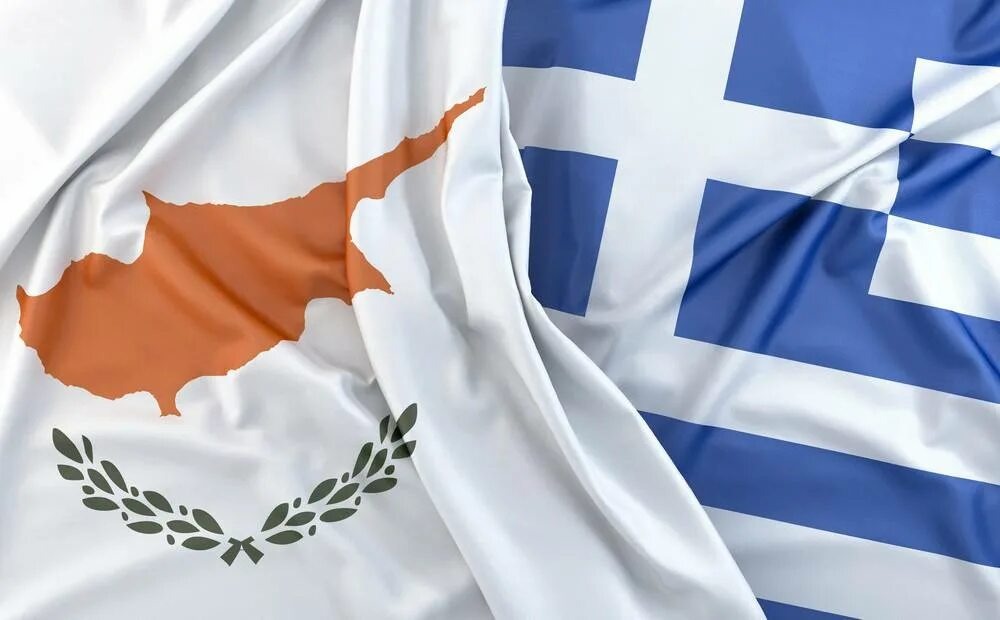
The Greek language in Cyprus occupies a unique position in the cultural, social, and educational life of the island. It is not only a means of communication but also an important element of identity for the majority of the population. Over the centuries, the language has evolved in close connection with historical processes, migrations, colonial and international influences, creating a distinctive local variant that differs from continental Greek while maintaining ties to ancient forms of the language.
Contents
Historical development
The roots of the Greek language in Cyprus date back to ancient times. Various dialects of Greek were already spoken on the island in ancient times, owing to Greek colonization and trade contacts with mainland Greece. Over time, the island became an important center of cultural exchange, and the language underwent changes under the influence of Byzantine rule, and later, Arab, Venetian, and Ottoman conquests. Each era left its mark on phonetics, vocabulary, and syntax, laying the foundation for the modern Cypriot dialect.
Medieval texts in Cyprus record a well-developed written tradition. For several centuries, the language was used in religious, administrative, and commercial documentation. At the same time, elements of colloquial Greek, which differed from the written canon of mainland Greece, were preserved. These differences laid the foundation for what is today called the Cypriot dialect of Greek, distinguished by pronunciation peculiarities, the use of archaisms, and loanwords from other languages with which Cypriots had historical contact.
Modern Cypriot Greek
Currently, two main varieties of Greek are distinguished in Cyprus: standard literary Modern Greek, used in official documents, education, and the media, and Cypriot Greek, which is common in everyday conversation. Cypriot Greek has a distinctive phonetic structure: the pronunciation of certain vowels and consonants resembles older forms of the language, and its intonation makes it easily recognizable. The vocabulary is also diverse, including both classical Greek words and loanwords from Turkish, English, and local Slavic sources.
Colloquial Cypriot Greek is used within the family, among friends, and in informal communication. In official correspondence, schools, and government institutions, Standard Greek, which is identical to the language of mainland Greece, is predominantly used. However, even in official settings, local expressions are present, underscoring the dialect’s deep integration into the public consciousness.
Use in society
Greek dominates everyday life in Cyprus. Most residents speak it as their native language. However, bilingualism is widespread, especially in urban areas and among young people: residents speak English fluently, serving as a means of international and business communication. In rural areas and on smaller islands, the dialect remains purer, and the influence of English is limited, preserving the authenticity of pronunciation and vocabulary.
The culture of Greek-speaking Cypriots preserves traditions of hospitality and respect for their interlocutors. There are established forms of politeness, as well as special forms of address for elders and officials, which are retained in everyday speech. This creates an additional layer of cultural identity linked to the language.
Studying Greek in Cyprus
For newcomers, learning Greek in Cyprus presents a number of unique challenges. Despite the inclusion of standard Greek in educational programs, most residents perceive colloquial Cypriot as the primary form of communication. Learning the language requires an understanding of the dialect’s phonetics, syntax, and specific vocabulary.
Modern technology makes learning significantly easier: mobile apps and online courses have emerged for both standard Greek and Cypriot Greek. They help learners master spoken language, understand intonation, and become familiar with common expressions and idioms. For international students and tourists, learning Cypriot Greek not only provides practical skills but also a way to immerse themselves more deeply in the island’s culture and traditions.
The role of language in culture and identity
The Greek language in Cyprus is an important vehicle of cultural heritage. Literary works, songs, folk tales, and rituals are conveyed in a language that simultaneously preserves archaic elements and adapts to modern times. The dialect allows Cypriots to distinguish themselves from mainland Greeks, emphasizing their local identity and historical distinctiveness.
In modern society, language also serves as a connecting link between generations. The older generation maintains the spoken dialect, passing it on to the younger generation. At the same time, educational programs, media, and books promote the development of standard Greek skills, creating a balance between tradition and modernity.
Problems and Prospects
On the one hand, the spread of English and globalization are putting pressure on the use of Cypriot Greek. Younger generations are increasingly using Anglicisms and simplifying grammar, which could lead to the gradual loss of the dialect’s unique features. On the other hand, the emergence of educational apps, online courses, and cultural initiatives is contributing to the preservation of the language and its active use in everyday life.
Language preservation programs include school education, cultural events, competitions, and festivals. Recent years have also seen a growing interest in dialect research among linguists and students of philology, creating a scientific basis for its systematization and popularization.
Practical aspects for tourists and migrants
For tourists and new residents, learning the Cypriot dialect of Greek simplifies everyday communication, including shopping, transportation, restaurants, and healthcare. Even a basic knowledge of the language allows for a deeper understanding of the island’s culture and strengthens interpersonal relationships. It’s important to keep in mind that the colloquial dialect differs from standard Greek, so it’s recommended to learn both forms: formal and colloquial.
Furthermore, knowledge of Greek provides access to local media: television, radio, newspapers, and social media, where the dialect is actively used. This allows one to stay informed about public life and participate in cultural events.
The Greek language in Cyprus is a complex and multilayered system, encompassing both a standard literary variety and a unique local dialect. It serves as a tool of communication, a vehicle of cultural identity, and an element of historical heritage. The language is actively developing, adapting to modern conditions, and remains vital for all residents of the island. Learning Cypriot Greek allows for a deeper understanding of the culture, traditions, and mentality of the local population, creating a solid foundation for communication and integration into public life.