Ensuring fire safety for a private home in Cyprus in 2026 has ceased to be a matter of personal choice and has become a matter of strict legislative regulation. With increasingly frequent heat waves and the updated National Forest Fire Prevention Strategy in effect, property owners face an expanded list of requirements. For an international investor, compliance with these standards is not only about asset protection but also a mandatory requirement for the validity of an insurance policy, the cost of which in 2026 directly correlates with the level of protection systems the property is equipped with.
Legal requirements and mandatory equipment
In 2026, Cyprus fully aligns its national safety standards with EU directives. The focus is on early fire detection and the availability of primary fire extinguishing equipment in every residential building.
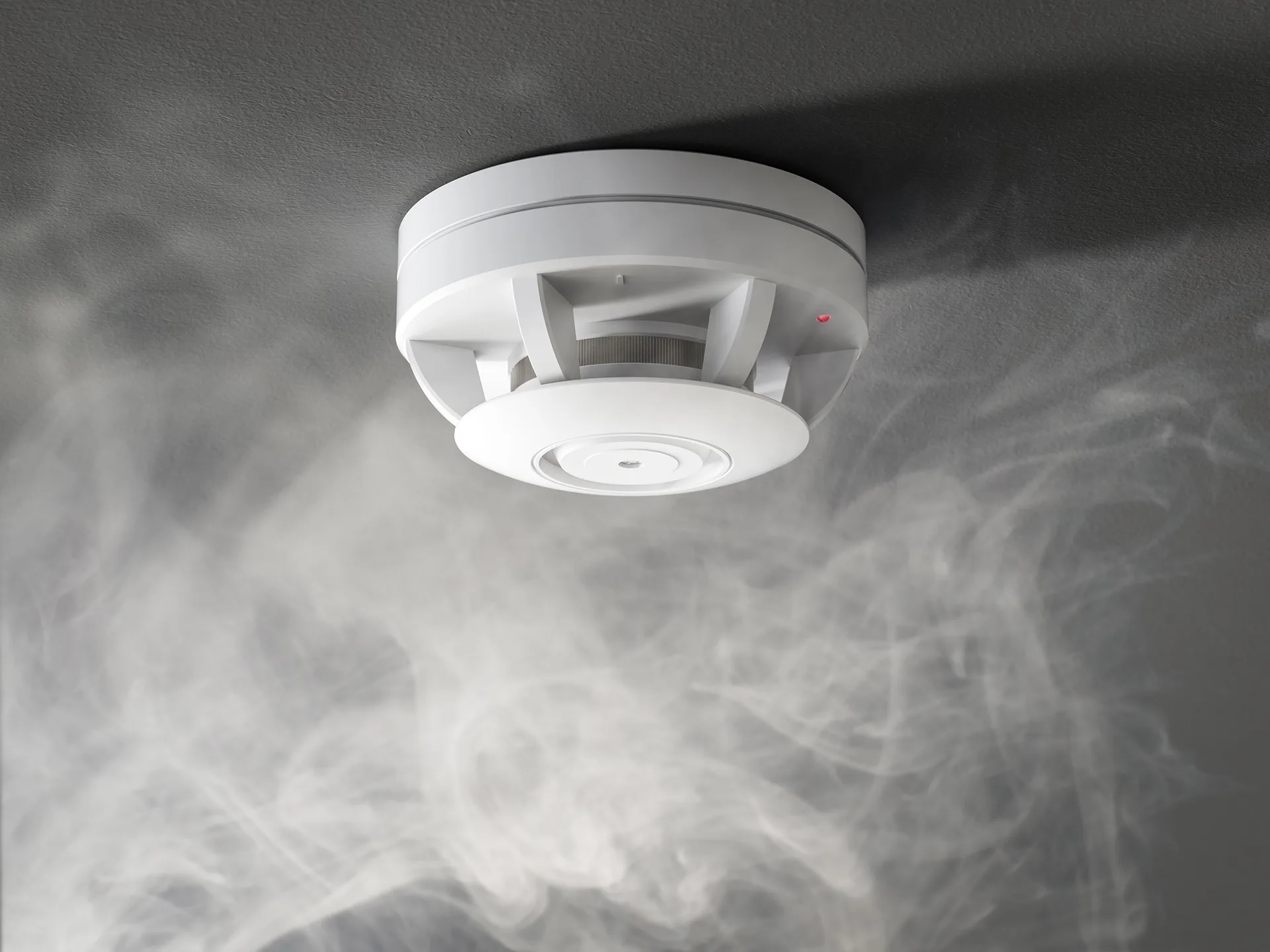
Smoke and gas detection systems
According to current building codes, all new residential properties commissioned in 2026 are required to have integrated smoke alarm systems. For existing properties, the installation of standalone detectors has become mandatory when renewing leases or obtaining certificates of conformity.
- Smoke alarms: Must be installed in each bedroom and in hallways leading to exits.
- Carbon monoxide (CO) detectors: Required for homes with fireplaces, gas stoves, or boilers.
Primary fire extinguishing equipment
Having a fire extinguisher in a private home in Cyprus is a legal requirement. A standard set for a 200 m² villa includes:
- Minimum 2 dry powder fire extinguishers (ABC) weighing 6 kg.
- Carbon dioxide (CO2) fire extinguisher weighing 2 kg for kitchen or server room.
- Fire blanket in the kitchen, compliant with EN 1869.
Protecting the local area: buffer zones
The Cyprus Fire Service (Πυροσβεστική Υπηρεσία) pays special attention to the condition of land, especially in areas adjacent to forests or fields (Peyia, Pisouri, suburbs of Limassol).
Clearing areas of dry vegetation
By May 31st of each year, property owners are required to clear their property of dry grass and flammable waste. In 2026, failure to comply with this requirement will result in fines of €500, issued automatically by the municipality through the JCC Smart system.
Creating a “protective perimeter”
For homes located in high-risk areas, experts recommend adhering to the 5-meter rule:
- There should be no coniferous trees or shrubs with a high resin content within a radius of 5 meters from the walls of the house.
- Tree branches must be cut at a height of at least 2 meters from the ground.
- Firewood for the fireplace must be stored in closed fire-resistant outbuildings at least 10 meters away from the main building.
Electrical Safety and EAC Certification
Statistics from 2026 show that more than 45% of fires in the private sector in Cyprus are caused by faulty electrical wiring or overloaded air conditioning systems.
All electrical work must be performed by certified professionals and registered with the Department of Electromechanical Services (EMS) or the Energy Accountability Commission (EAC). A functioning residual-current device (RCD) is a critical requirement. In 2026, insurance companies will have the right to refuse payment if an expert examination proves that a fire was caused by electrical modifications performed by an unlicensed professional.
Fire Safety and Insurance: How to Avoid Claim Denials
Property insurance in Cyprus has become more segmented in 2026. Companies conduct a detailed risk audit before issuing a policy.
Factors that reduce the cost of insurance
Homeowners who have implemented advanced security systems can expect a 10-20% discount on their insurance premiums. These factors include:
- Availability of an automatic sprinkler fire extinguishing system.
- Connecting the fire alarm to the central monitoring station.
- Use of fire-resistant materials in facade finishing (non-combustibility class A1 or A2).
Typical insurance cases and exclusions
It’s important to understand the difference between “fire” and “ignition due to negligence.” In 2026, insurers will actively implement the “gross negligence” clause.
| Situation | Payment status | Expert commentary |
| A forest fire spread to a house | Covers 100% | Subject to compliance with the site cleaning regulations. |
| Short circuit in a certified network | Covered | Annual inspection of the shield is required. |
| Fire caused by an abandoned candle or fireplace | Refusal is possible | Qualifies as gross negligence. |
| Fire of lithium batteries (scooters, inverters) | Partial coverage | A special rider is required in the contract. |
| Kitchen fire without fire extinguisher/canvas | Reducing payments by 30–50% | Violation of mandatory safety requirements. |
Maintenance of security systems: Regulation 2026
Equipment installation is just the first step. To maintain the validity of safety certificates, maintenance schedules must be followed.
- Fire extinguishers: Check pressure gauges and seal integrity monthly. Have them professionally serviced and recharged by a certified company once a year.
- Smoke alarms: Replace batteries (unless using a 10-year lithium battery) once a year. Test using the “Test” button monthly.
- Chimneys and fireplaces: Professional soot cleaning before the start of the heating season (October-November) with receipt of a certificate of completion.
FAQ: Frequently Asked Questions
Is it mandatory to install a fire alarm in a private home for personal use?
For private homes built before 2020 and used solely by the owner, there is no strict administrative obligation to install a sophisticated centralized alarm system. However, the installation of standalone smoke detectors is a mandatory requirement of insurance companies. Without them, obtaining full coverage for fire damage is virtually impossible. For homes rented out for short-term stays (through platforms like Airbnb), the presence of fire alarms, fire extinguishers, and evacuation plans is a strict requirement for obtaining a license under the auspices of the Cyprus Ministry of Tourism.
How does fire safety relate to solar panel installation?
In 2026, Cyprus introduced new regulations for the installation of photovoltaic (PV) systems. Owners are required to provide a “remote switch” (Rapid Shutdown), which allows firefighters to de-energize the panels during a fire. Furthermore, solar panels must be positioned a certain distance from roof edges and dormer windows to ensure access for rescuers. Failure to comply with these regulations will void insurance for the entire roof of the building.
Is special insurance required if the house is located next to a pine forest?
A standard home insurance policy covers fire risk, including wildfires. However, for high-risk zones (Red Zones), in 2026, insurers will apply higher deductibles (Excess)—the amount the owner pays out-of-pocket if an incident occurs. To reduce the deductible, it is recommended to provide the insurance company with photographs of the created mineralized strip around the property and a certificate from the municipality confirming annual cleanup of the area.
Who is responsible for fire safety in long-term rentals?
Responsibility is divided as follows: the owner is obligated to provide a home that meets regulations (such as working alarms and fresh fire extinguishers), while the tenant is obligated to maintain these in good working order and to comply with electrical appliance regulations. As of 2026, standard lease agreements in Cyprus will include a clause requiring the tenant to compensate for damages if a fire is caused by their direct fault (for example, by using a faulty electric car charger in a standard outlet).
Where can I get a fire safety certificate in Cyprus?
For a private home, an official inspection report (Fire Safety Certificate) is issued by privately licensed companies accredited by the Cyprus Fire Service. This document confirms that the quantity and type of equipment is appropriate for the building’s size and layout. Having such a report is a powerful argument in disputes with insurance companies and when selling premium real estate.