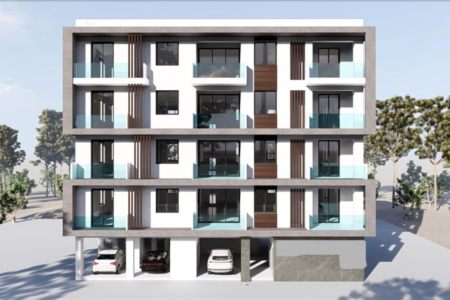
The Cyprus real estate market underwent a qualitative transformation in 2026. The spontaneous sales of properties at the foundation stage have been replaced by a strictly regulated system of financial guarantees. The main trend of the year was the widespread introduction of escrow accounts and the use of targeted project financing. For wealthy investors and families planning a move, this means an unprecedented level of security: the risk of losing funds due to developer bankruptcy or construction freezes is now virtually eliminated.
The evolution of financial security in Cyprus by 2026
Historically, Cyprus relied on a system of depositing the purchase agreement with the Land Registry. This procedure, known as “Specific Performance,” protects the buyer’s right to ownership of the property but does not guarantee a timely return of funds in the event of force majeure.
In 2026, leading developers in Limassol, Paphos, and Larnaca switched to the use of escrow accounts and performance bonds. This model was borrowed from Commonwealth law and adapted to the requirements of the EU Anti-Money Laundering Directive (AMLD6), making transactions transparent for European banks and regulators.
How an escrow account works when purchasing real estate
An escrow account is a special transit account opened by an independent agent (usually a licensed law firm or bank) to hold the buyer’s funds until the developer fulfills certain terms of the contract.
In 2026, the standard interaction scheme looks like this:
- Signing the sales agreement.
- The buyer transfers the down payment and subsequent payments to an escrow account, rather than to the developer’s operating account.
- Phased release of funds: the escrow bank or lawyer transfers funds to the developer only after documentary confirmation of the completion of a specific stage of construction (e.g., pouring the foundation, erecting the frame, finishing).
- The stages are verified by an independent certified architect or engineer who is personally responsible for the accuracy of the data.
This system eliminates the possibility of the developer using funds from the buyer of Project A to cover debts on Project B. Each project in 2026 will have a strictly separate budget.
Bank guarantee as an alternative and supplement
Despite the popularity of escrow, many major market players continue to use bank guarantees. In 2026, this is considered a hallmark of the development “major league,” as only developers with an impeccable credit history and a high level of equity can obtain such a guarantee.
With this arrangement, the buyer can transfer funds directly to the developer, but the bank provides the buyer with an unconditional guarantee to return the entire payment plus interest if the property is not completed on time. The cost of this guarantee (usually 1–2% of the transaction amount) is increasingly being included in the base price of the property in 2026, providing the investor with psychological comfort.
Comparison of methods for protecting buyer interests in 2026
To objectively assess the risks when choosing a developer, it is necessary to understand the differences between existing financial instruments.
| Characteristic | Escrow account | Bank guarantee | Direct payment (traditional) |
| Who controls the money? | Independent agent (lawyer/bank) | The developer is under the supervision of the bank | Developer |
| Terms of funds issuance | Upon completion of the work stages | Immediately after the transaction | Immediately after the transaction |
| Risk of misuse | Null | Minimum | High |
| Money-back guarantee | Yes (refund of the balance on the account) | Yes (full refund by the bank) | Only through the courts |
| Popularity in 2026 | 65% of transactions are in the premium segment | 25% of transactions (large holdings) | 10% (economy segment/secondary) |
The Role of the Land Department and the Specific Performance System
In 2026, registration of the deed with the Department of Lands and Surveys remains a mandatory step prior to any payments. According to the Law on Alienation of Real Estate, a deposited deed blocks any further transactions with the land without the buyer’s consent.
A significant innovation in 2026 was the introduction of digital title deeds and smart contracts based on the Cyprus government’s blockchain. Now, information about encumbrances (for example, if the developer has a mortgage on the land) is updated in real time. The buyer cannot transfer funds to the escrow account until the developer’s bank provides a “waiver”—an official waiver of claims to a specific apartment in favor of the future owner.
Stages of real estate payment using an escrow account
The standard payment schedule for 2026 is tied to physical progress on the construction site. This disciplines developers and guarantees the project’s liquidity.
- Reservation fee: from €5,000 to €15,000. Held in the law firm’s account until due diligence is completed.
- First stage (30-35%): Transferred after registration of the contract with the Land Department and payment of the stamp duty.
- Intermediate stages (40-50%): Divided into 3-5 tranches (foundation, walls, roof, windows). Each tranche is released from the escrow account only after the work is certified.
- Final stage (15-20%): Paid after receiving the Certificate of Final Completion and handing over the keys.
Legal support and due diligence in 2026
The role of an independent attorney in escrow account transactions has become crucial. In 2026, due diligence will include not only an audit of title documents but also a financial analysis of the developer’s sustainability.
Experts check:
- A planning permit and a building permit are required. Opening an escrow account with a Cypriot bank is not possible without these.
- The developer has no outstanding tax arrears, which could lead to the seizure of accounts.
- Compliance of the escrow agreement with the standards of the Cyprus Bar Association.
Using escrow accounts also simplifies the Source of Funds verification process. Escrow banks perform a compliance check once upon account opening, eliminating the need for the buyer to explain the nature of the funds with each interim payment.
FAQ: Frequently Asked Questions
Who pays for escrow agent services in 2026?
Typically, the buyer, as the party seeking security, bears the costs of opening and maintaining an escrow account. The cost ranges from €500 to €2,000, depending on the complexity of the transaction structure and the volume of transactions. Some developers cover these costs as part of marketing promotions.
What happens to the money in the escrow account if the developer delays the completion of the project?
The 2026 escrow agreement clearly outlines penalties. If the delay exceeds the established grace period (usually 3-6 months), payments to the developer are suspended, and the buyer is entitled to reimbursement from the undistributed balance of funds or to initiate the full foreclosure process.
Can I use an escrow account when purchasing real estate on the secondary market?
Yes, this is becoming standard for transactions over €500,000. The escrow agent holds the entire amount until confirmation is received from the Land Department that the property has been transferred to new owner and free from all encumbrances.
Are funds in an escrow account protected in the event of a bank failure?
Cyprus, as an EU member, has a state-run deposit guarantee system that covers depositors up to €100,000 per bank. However, law firms’ escrow accounts often have the special status of “client accounts,” where client funds are segregated from the firm’s and bank’s balance sheets, providing an additional layer of protection during liquidation proceedings.
Do banks require proof of VAT payment to release funds from escrow?
Yes, in 2026, banks will strictly monitor the tax compliance of transactions. Each stage of the funds unfreezing is accompanied by a review of issued invoices, including VAT at a rate of 19% or a reduced rate of 5% (if applicable), to ensure there are no future tax claims against the property.