In Cyprus’s Mediterranean climate, having a private, independent water source on a property is not only a convenience but also a strategic asset for any property owner. In 2026, against the backdrop of global climate change and stricter water consumption standards, a legal well significantly increases the market value of a villa and ensures independence in garden maintenance and pool maintenance. However, the drilling process is strictly regulated by Cypriot law, and ignoring established regulations entails serious financial and legal consequences.
The legal status of water resources in Cyprus in 2026
According to current legislation, all groundwater on the island is state property. These resources are managed by the Water Development Department (WDD). In 2026, water extraction monitoring became even more digital: most new wells are required to be equipped with smart meters that transmit consumption data to regulatory authorities in real time.
Unauthorized drilling without prior permission will be classified as a serious offense in 2026. Fines for illegal well drilling start at €5,000 and can reach €15,000. Equipment is subject to confiscation, and the well itself is subject to forced plugging at the owner’s expense. For investors planning to obtain permanent residence or citizenship in the future, such violations may be a negative factor during due diligence.
Well Legalization Algorithm: A Step-by-Step Guide
The process for obtaining a drilling permit in 2026 has been streamlined, but it still requires strict adherence to a specific sequence of actions. It’s important to understand that obtaining a drilling license does not automatically guarantee the right to unlimited water use.
Step 1: Obtaining a Drilling Permit
The landowner or their authorized representative submits an application to the WDD district office. The application must be accompanied by:
- Copy of Title Deed.
- Topographic plan of the site indicating the proposed drilling point.
- Justification for the need for a well (for example, calculation of the area to be irrigated in a garden or the presence of a swimming pool).
- A hydrogeologist’s report (in 2026, this requirement became mandatory for sites in aquifer protection zones).
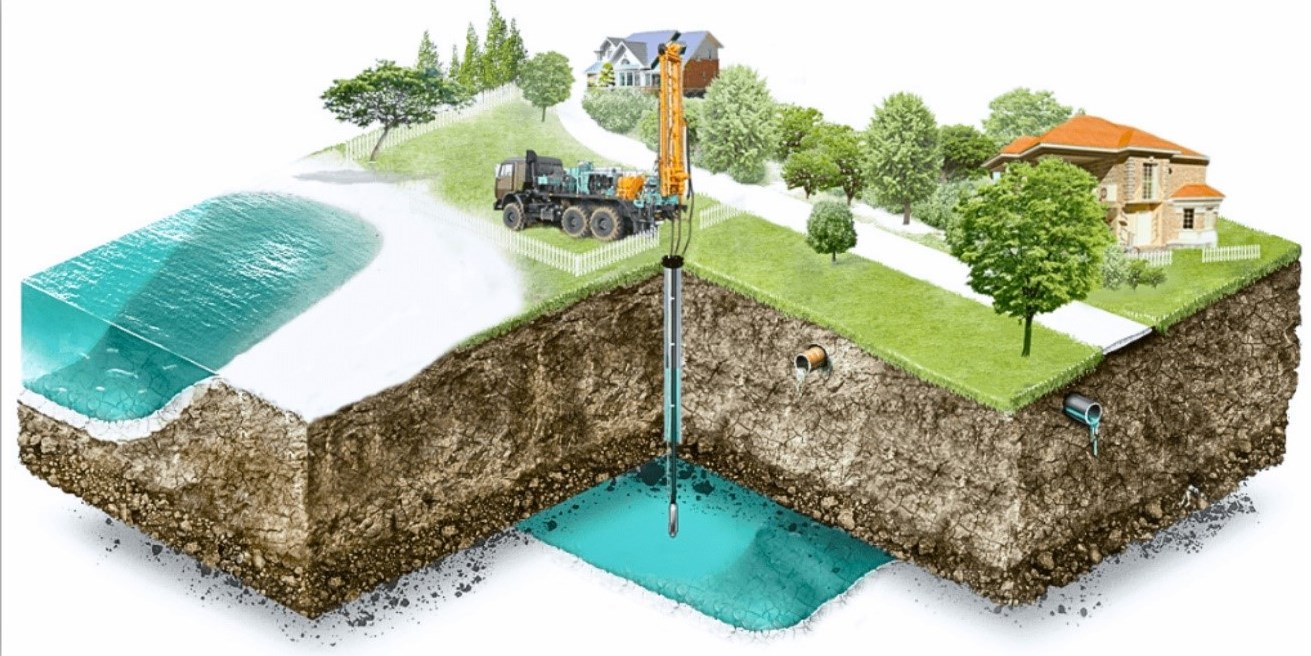
Stage 2: Physical drilling and equipment installation
Once you receive the permit, you can hire a licensed drilling company. Using contractors without a state license will deprive you of the opportunity to legalize the site. Drilling typically takes 2 to 5 days, depending on the soil type and the depth of the aquifer.
Step 3: Obtaining a Water Abstraction License
After completion of the work and well flow testing, WDD issues a final document defining the maximum allowable annual water withdrawal volume. In 2026, the average limit for a private villa is 1,500 to 3,000 cubic meters per year, which is sufficient to support a mature garden of 500–800 square meters.
The cost of drilling and equipping a well in 2026
The cost of a private well consists of administrative fees, the cost of drilling, and the cost of water-lifting equipment. Prices are updated to reflect inflation and energy costs in 2026.
| Expense item | Description / Specifications | Estimated price (EUR) |
| Administrative fees | Application and issuance of WDD permits | 150 – 300 |
| Hydrogeologist services | Research and preparation of a technical report | 400 – 800 |
| Drilling (linear meter) | Including casing pipe (steel or PVC) | 40 – 65 |
| Submersible pump | Power 1.5 – 3 kW (European brands) | 800 – 1,500 |
| Smart meter and automation | Data transmission and pressure control system | 350 – 600 |
| Filtration system (RO) | Reverse osmosis system for salt removal | 1,200 – 3,500 |
The average well depth in the coastal areas of Limassol and Paphos ranges from 40 to 80 meters. In the Troodos foothills, the depth can reach 120–150 meters, significantly increasing the project’s final budget.
Technical nuances and water quality
The quality of groundwater in Cyprus varies. Coastal areas (up to 2-3 km from the sea) often experience elevated salinity due to seawater intrusion into aquifers. As of 2026, using such water for irrigating sensitive plants without prior treatment is not recommended.
- Reverse Osmosis (RO) Systems: To use well water for household purposes or for premium lawn watering, homeowners install industrial RO systems. They remove up to 98% of dissolved salts, making the water virtually distilled.
- Energy supply: Modern borehole pumps in 2026 are often integrated with solar photovoltaic systems (Net Billing). This allows for water to be pumped during daylight hours virtually free of charge, storing it in underground reservoirs (Water Tanks).
- Maintenance: The well requires annual service, which includes checking the pump integrity, cleaning the filters, and analyzing the water chemistry for nitrates and chlorides.
Economic benefits and impact on property values
An investment in a private well pays for itself within 3-5 years, provided you have a large garden and a swimming pool. Municipal water rates in 2026 will be progressive: the more you consume, the more expensive each cubic meter. Using industrial water from a well allows you to stay within the minimum tariff range of the municipal water utility.
In terms of resale value, a villa with a legalized well and automatic irrigation system is valued 5-7% higher than similar properties without independent water supply. In the premium real estate segment of Cyprus, the presence of a “Water Well” is included in the standard checklist of requirements for wealthy buyers in 2026, along with the building’s energy efficiency rating.
FAQ: Frequently Asked Questions
Can well water be used as drinking water?
In most cases, well water in Cyprus requires multi-stage purification to meet drinking water standards. Despite the purity of artesian aquifers in the mountains, mineral and salt content in coastal areas exceeds WHO standards. By 2026, it is recommended to install additional mineralization systems after reverse osmosis filters if you plan to drink this water.
What happens if drilling is prohibited on my property?
There are areas (so-called “red zones”) where groundwater levels are critically depleted. In these areas, the WDD does not issue new drilling permits. As an alternative, rainwater harvesting systems and greywater treatment systems for showers and sinks for subsequent gardening will be actively used in 2026.
How long does the entire turnkey process take?
Taking into account bureaucratic procedures, preparing documents and obtaining a permit takes 2 to 4 months. The drilling and equipment installation itself are completed within one working week. In 2026, there will be high demand for licensed drillers, so it is recommended to schedule work 3 to 6 months before the start of the active irrigation season.
Do I have to pay taxes for using water from my own well?
In 2026, a number of municipalities introduced a fixed annual fee for water resource monitoring system maintenance (Green Tax), amounting to approximately €50–100 per year. However, the volume of water extracted within the established limit is typically not charged if the water is used exclusively for household needs.
Does a well affect the foundation of a house?
Provided technical standards are observed and a minimum distance from the foundation (usually at least 3–5 meters) is maintained, drilling a borehole poses no threat to the structural integrity of the building. Professional companies in 2026 use rotary percussion drilling methods with minimal vibration, making them completely safe for existing structures.