In 2026, Cyprus firmly established itself as the leading technology hub of the Eastern Mediterranean. Thanks to the extension of the talent attraction program and tax incentives under the IP Box regime, demand for high-quality office space from international IT corporations and fintech companies reached an all-time high. Investments in Class A commercial real estate are now the most stable strategy for preserving and growing capital, with returns exceeding those of the residential sector.
Contents
- 1 The State of the Cyprus Commercial Real Estate Market in 2026
- 2 Class A Office Characteristics: IT Tenant Requirements in 2026
- 3 Comparative analysis of investment attractiveness of regions
- 4 Financial and tax aspects of commercial real estate ownership
- 5 Management strategies and risk minimization
- 6 Legal support for transactions in 2026
- 7 FAQ: Frequently Asked Questions
The State of the Cyprus Commercial Real Estate Market in 2026
The office real estate market in 2026 is characterized by a severe shortage of quality space. Companies relocating their headquarters are demanding not just workspaces, but full-fledged ecosystems. Demand is concentrated primarily in Limassol, but Nicosia and Larnaca are showing rapid growth due to the development of new business districts.
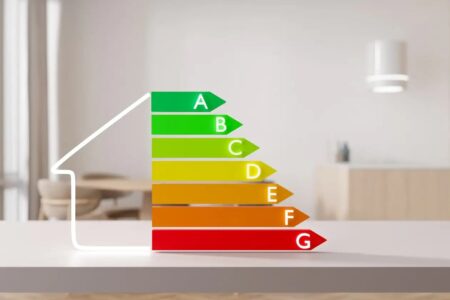
Modern tenants, represented by IT giants, are focusing on ESG (Environmental, Social, and Governance) standards. By 2026, a building without a Level A energy efficiency certificate or international certifications like BREEAM and LEED is considered by investors to be at high risk of future discounting.
Class A Office Characteristics: IT Tenant Requirements in 2026
To ensure high rental rates and minimal downtime, a facility must meet strict technical specifications. In 2026, IT companies will be focusing on the following aspects:
- Energy independence and sustainability: The building has its own solar panels on the roof and powerful uninterruptible power systems (UPS).
- High-speed infrastructure: At least 2 independent fiber-optic lines from different providers and dedicated server rooms with precision air conditioning.
- Climate control: VRV 4th or 5th generation systems with air recovery function and the ability to individually adjust the temperature in different areas of the office.
- Parking coefficient: In 2026, the standard is 1 parking space for every 30-40 square meters of rented area, which is significantly higher than the market norms of previous years.
- Layout solutions: A shift from classic open-plan spaces to hybrid spaces with a large number of soundproof booths for video calls and relaxation areas.
Comparative analysis of investment attractiveness of regions
To make an informed investment decision, it’s important to consider the specifics of Cyprus’s cities. As of 2026, each region offers its own entry costs and potential ROI.
| Parameter | Limassol (Center/Zakaki) | Nicosia (Business Center) | Larnaca (New Marina) |
| Average purchase price (€/m²) | 7,500 – 11,000 | 4,500 – 6,500 | 4,000 – 5,500 |
| Rental rate (€/m²/month) | 45 – 75 | 25 – 40 | 22 – 35 |
| Average yield | 6.5% – 8.5% | 5.5% – 7.0% | 6.0% – 7.5% |
| Vacancy rate (%) | < 3% | ~ 7% | ~ 10% |
| Main tenant profile | Fintech, Forex, Gamedev | Lawyers, Consulting, Government Agencies | Logistics, IT startups |
Limassol remains the undisputed leader in rental rates. The Zakaki district, adjacent to Europe’s largest integrated casino resort, became a new hotspot for office development in 2026, offering investors potential for capital appreciation of up to 15% per year.
Financial and tax aspects of commercial real estate ownership
Investing in Class A offices requires an understanding of the Cyprus tax structure as of 2026. When purchasing a new commercial property, the investor is required to pay VAT at a rate of 19%. However, if the property is purchased by a company for subsequent leasing to another VAT-registered company, the tax amount can be refunded or offset, significantly reducing the initial costs.
Main taxes and fees:
- Rental income tax: For individuals, a progressive rate; for legal entities, a 15% profit tax (current rate for 2026).
- Special Contribution to Defense (SDC): A 17% tax on rental income for Cyprus residents. Non-domiciled individuals are completely exempt from this tax for up to 17 years.
- National Health System (GHS) contribution: 65% of rental income.
- Capital gains tax: 20% of the profit on sale of the property, less inflation adjustments and maintenance/repair costs.
Management strategies and risk minimization
In 2026, professional commercial property management will become mandatory for maintaining Class A status. IT companies prefer Triple Net Lease (NNN) leases, where the tenant covers all operating costs, insurance, and property taxes. This ensures a clean cash flow for the investor and minimizes operational involvement.
When choosing a property at the off-plan stage in 2026, it is critical to verify the developer’s bank guarantees and the work schedule is on track. It is recommended to invest in projects with a final planning permit to avoid delays in title deeds.
Legal support for transactions in 2026
The commercial asset acquisition process involves a thorough technical and legal due diligence. It’s important to ensure the building meets the stated energy efficiency standards, as new EU directives came into effect in 2026, restricting the leasing of premises with low energy efficiency ratings. Lease agreements with large IT companies are typically concluded for terms of 5 to 10 years with specified rate indexation, protecting capital from inflation.
FAQ: Frequently Asked Questions
What is the minimum office space required by IT companies in 2026?
To accommodate a full-fledged headquarters, international companies seek space of at least 500 square meters. However, for private investors, modular offices of 150 to 250 square meters offer a liquid entry point. These can be easily combined to suit the needs of a large tenant or leased to mid-sized tech companies.
Is it possible to obtain permanent residence in Cyprus by purchasing commercial real estate?
Yes, investments in commercial real estate worth at least €300,000 plus VAT qualify for a permanent residence permit through an accelerated process. This rule will apply to new properties starting in 2026, and investors must demonstrate annual income outside of Cyprus.
What are the advantages of Class A offices over residential real estate for investors?
Commercial real estate offers higher yields (6-8% versus 3-5% in residential) and long-term contracts. IT companies invest heavily in their own office fit-out and equipment, making them anchor tenants who are less likely to frequently relocate.
What hidden costs should an office owner consider?
The main expenses include building management fees (Common Expenses), which in Class A offices can reach €5–8 per square meter per month. Annual council tax and mandatory building structure insurance must also be factored in.
How will remote work affect office demand in 2026?
Despite the popularity of hybrid models, IT companies in Cyprus in 2026 will continue to need physical offices to maintain corporate culture and comply with tax residency requirements (Substance). The office has become a place for collaboration, which has only increased the demands on the quality and infrastructure of the space.
In 2026, investing in the commercial sector of Cyprus requires an expert approach, but remains the most reliable tool for generating passive income in the eurozone.
You can explore current offers of Class A offices in our catalog of properties.