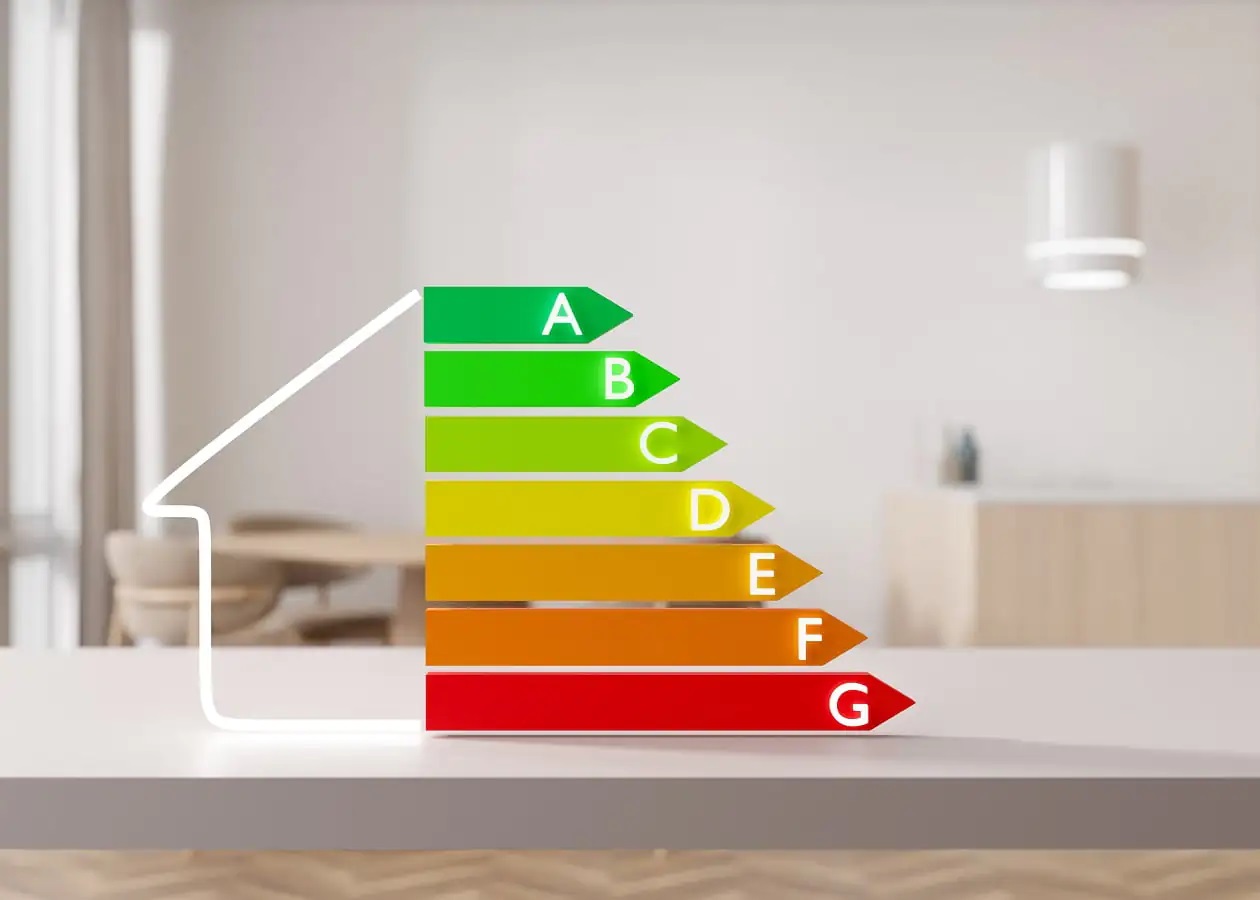
In 2026, energy efficiency in Cyprus moved from a marketing gimmick to a mandatory requirement for maintaining property marketability. According to updated EU directives and national building codes, all new properties must comply with Class A. For wealthy investors and families planning a move, this means not only environmental sustainability but also a significant reduction in operating costs in a context of high energy prices. This article presents a professional audit of the key components that transform an ordinary home into a high-tech, energy-efficient property.
Contents
- 1 Wall construction and thermal insulation: a barrier against extreme temperatures
- 2 Glazing: Thermal Break Technologies and Selective Coatings
- 3 Photovoltaic systems: the path to energy independence
- 4 Engineering systems and automation: Smart Home Class A
- 5 Economic benefit and impact on asset value
- 6 FAQ: Frequently Asked Questions
Wall construction and thermal insulation: a barrier against extreme temperatures
The foundation of Class A energy efficiency is a building’s ability to minimize heat exchange with the external environment. Given the climatic conditions of Cyprus in 2026, the primary objective is to prevent overheating during the summer months, when temperatures consistently exceed 40°C, and to conserve heat during the winter.
Modern materials for wall construction
In the construction of the premium segment in Cyprus, two main technologies are used:
- High-porosity ceramic bricks (Thermo-bricks): These bricks are 250 mm or 300 mm thick. Due to their air-filled honeycomb structure, they have a low thermal conductivity coefficient.
- Externally Concrete Insulated Concrete System (ETICS): This is the most effective method for achieving Class A thermal insulation. The monolithic frame provides strength, and the external insulation layer eliminates thermal bridges.
Thermal insulation materials and their characteristics
By 2026, to achieve Class A, developers will be required to use insulation at least 80 mm thick, and more often 100 mm.
- Extruded polystyrene foam (XPS): Has high density and virtually zero water absorption. Its thermal conductivity is approximately 0.033-0.035 W/mK.
- Stone (basalt) wool: The preferred option for luxury properties. It not only provides thermal insulation but also boasts excellent soundproofing properties and a Class A1 fire rating.
The most important indicator is the wall’s thermal transmittance coefficient (U-value). For Class A buildings, it must not exceed 0.40 W/m²K by 2026. In advanced projects in Limassol and Paphos, this figure is being increased to 0.25 W/m²K.
Glazing: Thermal Break Technologies and Selective Coatings
Windows are the most vulnerable part of a building’s thermal envelope. In Class A buildings, the glazing area often exceeds 40% of the façade surface, requiring high-tech solutions.
Aluminum profiles with thermal break
In 2026, thermal break systems made of polyamide with a width of 24 mm, 34 mm, or even 50 mm will be the standard. This layer separates the outer and inner sections of the profile, preventing heat from penetrating through the metal. Popular brands in Cyprus, such as Muskita, Alumil, and Rabel, offer series specifically designed for Class A.
Characteristics of double-glazed windows
To comply with class A, double or triple glazing units are used, with the chambers filled with inert argon gas (90% concentration).
- Energy-saving glass (Low-E): Has an invisible coating of metal oxides that reflects infrared radiation.
- Solar Control Glass: Critically important for south-facing façades. It allows visible light to pass through but blocks up to 70% of the sun’s heat energy.
- Spacers: Instead of aluminum frames, composite ones (“warm edge”) are used inside the glass unit, which prevents condensation and freezing of the glass edges.
Photovoltaic systems: the path to energy independence
It is impossible to achieve Class A without the use of renewable energy sources (RES). In 2026, the installation of photovoltaic panels will be mandatory for all new private homes and apartment buildings in Cyprus.
Power and efficiency of panels
The average system capacity for a three-bedroom home is 4-6 kW. For premium villas, systems with capacities ranging from 10 kW to 15 kW are installed. Modern monocrystalline panels will have an efficiency of 22-24% in 2026.
Hybrid inverters and storage systems
In 2026, investors will increasingly choose hybrid systems that incorporate lithium iron phosphate (LiFePO4) batteries. This allows:
- Accumulate energy during the day and use it at night to operate air conditioning systems.
- Provide uninterruptible power supply during short-term network outages.
- Operate according to the Net Billing scheme, selling surplus electricity to the general grid at the market price.
Comparative analysis of housing characteristics by energy efficiency classes
| Parameter | Class A (Standard 2026) | Class B / B+ (2015-2020) | Old housing (before 2010) |
| Thickness of wall insulation | 80–100 mm | 30–50 mm | Absent |
| Glazing type | Energy-saving package with argon | Regular double bag | Single glass |
| U-value of windows | 1.1–1.3 W/m²K | 2.5–3.0 W/m²K | 5.0+ W/m²K |
| Solar panels (PV) | Required (3-10 kW) | Optional | None |
| Average electricity bill (month) | 50–120 euros | 250–450 euros | 600–900 euros |
Engineering systems and automation: Smart Home Class A
Class A energy efficiency is supported by intelligent controls. By 2026, smart home systems will integrate with VRV air conditioning and heat pumps to optimize energy consumption.
- Air-to-Water Heat Pumps: Used to heat water and underfloor heating systems. They are 4 times more efficient than conventional electric boilers.
- VRV/VRF systems: Variable Refrigerant Flow (VRF) air conditioning. Allows precise temperature control in each room, consuming only the energy needed at any given moment.
- Automatic blinds and roller shutters: Integrated with light sensors, they automatically close when the sun begins to actively heat the room, reducing the load on air conditioners.
Economic benefit and impact on asset value
Investing in Class A properties in 2026 is justified not only by savings on monthly bills. The liquidity of such properties is 25-30% higher than that of lower-class properties. When reselling, having a Class A energy efficiency certificate is a key factor for European buyers and banks when issuing mortgages.
Furthermore, the Cypriot government will provide tax deductions and subsidies for the installation of photovoltaic systems in 2026 (as part of existing support programs). Owning Class A property exempts owners from a number of planned environmental charges that the EU plans to introduce by 2027 for owners of “inefficient” buildings.
FAQ: Frequently Asked Questions
What is the difference in construction costs between Class A and Class B?
In 2026, the difference in construction costs is approximately 10-15%. The main costs include high-quality aluminum profiles, thicker façade and roof insulation, and the photovoltaic system itself. However, these investments pay for themselves within 5-7 years through savings on electricity bills alone, not counting the increase in the building’s capitalization.
Is it possible to upgrade an old house to class A?
Yes, this is possible through the Deep Renovation procedure. This includes insulating external walls using the ETICS system, replacing all window units with thermally broken systems, and installing a heat pump and solar panels. As of 2026, Cyprus will offer government grants covering up to 60% of the costs of such renovations for permanent residents.
Do solar panels need maintenance and how often?
To maintain Class A system efficiency in Cyprus, it is recommended to clean the panels of dust and sand 2-3 times a year. Also, the inverter should be inspected and the fastenings checked once a year. The cost of this service in 2026 is approximately €150-250 per year.
Does Class A affect the ability to obtain permanent residence status or citizenship?
Energy efficiency class is not directly specified in the requirements of immigration programs. However, according to the 2026 regulations, only new properties are eligible for participation in the permanent residency program (residence by investment). Most developers offering properties eligible for permanent residency (from €300,000 plus VAT) build to Class A standards by default, which guarantees investors high-quality properties and their compliance with modern EU standards.
What is the service life of thermal insulation materials in Cyprus?
With proper installation and the use of certified systems (such as those based on mineral wool or high-quality XPS), the service life of façade insulation is at least 25-30 years. Modern plaster compositions from 2026 have increased resistance to intense ultraviolet radiation, preventing cracking and fading of the façade.