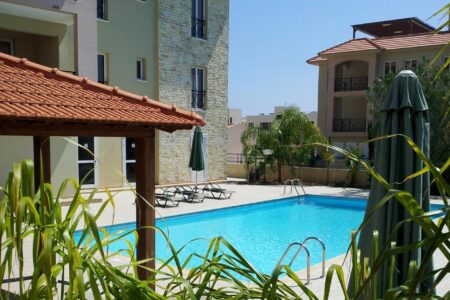
In 2026, the Cyprus real estate market is demonstrating steady growth in demand for commercial and residential space in city centers. For many investors, acquiring land and subsequently changing its intended use (Change of Use) is becoming a strategic tool for maximizing returns. The process of changing the land use category is regulated by the Town and Country Planning Law and requires a thorough understanding of urban planning regulations, which have undergone significant digital transformation in the past two years.
Contents
Legal basis for changing the purpose of land in Cyprus
The intended use of each plot of land in Cyprus is determined by Local Plans or Statements of Policy for rural areas. These documents are updated by the Town Planning and Housing Department and determine what exactly can be built on a given site, from private villas to industrial warehouses.
Change of Use may be required in two cases:
- Changing the zoning of a site: For example, transferring land from agricultural to residential or tourist categories.
- Change of building function: Conversion of an existing residential building into an office, medical center or kindergarten.
In 2026, a key factor in the consideration of applications will be the project’s compliance with the EU Green Agenda and the Cyprus Sustainable Urban Development Strategy.
Zoning classification and development coefficients 2026
To successfully plan investments, it’s essential to understand the main types of zones and their characteristics. The Cypriot government is actively encouraging land consolidation in 2026, offering density bonuses for projects that meet high energy efficiency standards.
Characteristics of the main development zones in Cyprus
| Zone type | Designation | Main purpose | Permissible building density (average) | Maximum number of floors |
| Residential | Κα / Kβ | Private houses, apartments | 60% – 140% | 2 – 4 floors |
| Commercial | Eβ | Offices, shops, banks | 120% – 160% | 3-6 floors |
| Tourist | T | Hotels, tourist villages | 30% – 50% | 2 – 3 floors |
| Agricultural | Γα / Γβ | Farming, warehouses | 10% | 2 floors |
| Industrial | Βα / Βδ | Factories, production | 60% – 100% | 2 floors |
Step-by-step Change of Use procedure in 2026
The process of changing land use has become more transparent thanks to the complete transition to the Ippodamos digital platform. This eliminated the need for physical visits to departments during the initial stages.
1. Preliminary analysis (Due Diligence)
Before submitting a formal application, a planning audit is required. A lawyer or licensed architect will request information on current zoning and verify whether the 2026 Local Plans allow for changes in the area. For example, rezoning land in strictly residential areas without direct access to major roads is not possible.
2. Submitting an application through the Ippodamos system
An application for a planning permit is submitted electronically. The following documents must be attached to the application:
- Title Deed.
- Topographic plan of the site.
- Architectural plans and justification for the need to change the purpose.
- Environmental Impact Assessment Report (for large or industrial projects).
- Confirmation of payment of state duty.
3. Public notices and consultations
For significant changes to land use, the law requires public notification. In 2026, this will be accomplished through the publication of notices in two daily newspapers and the placement of a notice on the property itself. Owners of adjacent properties have the right to file objections within 21 days.
4. Consideration and decision of the Committee
The Department of Urban Development analyzes the application, taking into account population density, infrastructure load, and parking availability. In 2026, the average review period is 6 to 12 months, depending on the complexity of the application. If approved, a Planning Permit is issued, along with a list of conditions that must be met.
Factors influencing application approval
In 2026, Cypriot authorities will be guided by strict criteria when making designation decisions. The chances of success are significantly higher if the project addresses the following aspects:
- Infrastructure accessibility: Availability of roads, water supply and electricity networks of the required capacity.
- Parking spaces: In Limassol and Nicosia, requirements for the number of parking spaces for commercial properties will become more stringent in 2026.
- Ecological value: Sites with rare flora or near Natura 2000 zones are practically not subject to change of use to residential or industrial use.
- Social significance: Projects that create jobs or address the shortage of affordable housing are considered a priority.
Cost and taxes when changing the destination
Changing the land category automatically increases its market value, which entails certain financial obligations.
- Government fees: The amount depends on the plot size and the type of zone requested. In 2026, fees for changing the land use to commercial start at €1,500.
- Infrastructure contribution: Often, when changing the use of a property, city authorities require payment of a contribution to widen roads or create public green spaces.
- Capital Gains Tax: Payable only upon subsequent sale of the property. However, it’s important to remember that the increase in land value due to rezoning (Betterment Levy) may be subject to a separate 20% tax, if such a rate is provided by the specific municipality.
FAQ: Frequently Asked Questions
Is it possible to convert agricultural land into residential land for the construction of a house?
Yes, this is possible if the site is located in an area adjacent to residential development boundaries and its area exceeds the minimum established standards (usually 2,500 square meters for rural areas). However, in 2026, authorities will prioritize development within existing residential zones to prevent chaotic urban expansion.
How long does the entire Change of Use process take in 2026?
Thanks to the Ippodamos system, processing times have been reduced, but bureaucratic review remains extensive. The entire process—from application to final approval—takes between 8 and 15 months. For strategically important investment projects, an accelerated procedure is available through the Fast-Track mechanism.
Can neighbors block a change in the use of my land?
Neighbors can file a formal complaint if they can prove that a change of use (for example, to a noisy industrial site or a tall shopping center) would violate their privacy or reduce the value of their property. The Department of Urban Development is obligated to consider all reasonable objections, but the final decision rests with the state committee.
What should I do if my application for a change of appointment is rejected?
If the application is rejected, the applicant has 30 days to appeal to the Ministry of the Interior or the Hierarchy Committee. The decision can also be challenged in the Administrative Court of Cyprus if procedural violations by officials were detected.
Is it necessary to change the title deed after a change of use?
Once construction is completed and a Certificate of Final Approval is received, the changes are entered into the Land Registry. This results in the issuance of a new Title Deed, which will indicate the new intended use of the property and updated development specifications.