Purchasing off-plan property in 2026 remains one of the most effective tools for investors seeking to maximize their asset capitalization. The price difference between a property at the foundation stage and a completed home in Cyprus currently ranges from 20% to 35%. However, high returns come with risks, which, given the current global economic turbulence, require buyers to professionally assess the developer. In this article, you’ll learn which financial and legal indicators to pay attention to to ensure your investments in 2026 are protected by law and market mechanisms.
Contents
- 1 Legislative changes in 2026 in the field of equity holders’ protection
- 2 Financial indicators of developer sustainability
- 3 Reputation and Portfolio Checking in the Digital Environment of 2026
- 4 The Role of an Independent Lawyer in an Off-Plan Purchase
- 5 Real-time monitoring of construction progress
- 6 FAQ: Frequently Asked Questions
Legislative changes in 2026 in the field of equity holders’ protection
In 2026, new regulatory standards for the construction industry were finally enacted in Cyprus, aimed at minimizing project freezes. The main change was the mandatory use of escrow accounts for large projects. Now, buyers’ funds do not go directly into the developer’s working capital, but are accumulated in special accounts and released by the bank in stages—only after confirmation of the completion of specific work cycles by an independent architect.
Key documents for initial analysis
Before signing a reservation agreement, you must request a package of permitting documentation from the developer or their lawyers. The absence of any of these documents in 2026 is a critical signal to cancel the deal:
- Land Title Deed (Clear Title): The development site must be owned by a company or subject to a formal joint venture agreement. Check for any encumbrances (memos) or bank liens. As of 2026, a current land registry extract must be dated no later than 7 days before the transaction.
- Town Planning Permit: This document confirms that the architectural design complies with zoning regulations (density, number of floors, land use).
- Building Permit: The most important document for the excavation stage. Without it, any work on the site is illegal, and future connections to electricity and water supply will be impossible.
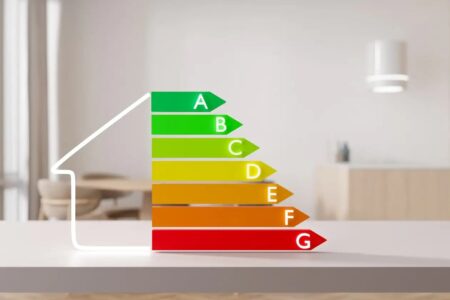
- Energy Performance Class A: According to EU directives valid in 2026, all new buildings in Cyprus must meet the highest energy performance standards.
Financial indicators of developer sustainability
A developer’s financial health in 2026 is determined not by the number of apartments sold, but by the quality of its loan portfolio and the liquidity of its assets. You can conduct an independent or professional scoring based on the following parameters.
Debt burden analysis
Large developers often use project financing. It’s important to understand the company’s equity-to-borrowed ratio. In 2026, a healthy ratio is considered to be bank participation of no more than 50-60% of the total project cost. If a project is built solely with “buyer funds” without the participation of the banking sector, this increases the risk of work being halted if sales temporarily slow down.
Bank guarantees (Performance Bonds)
One of the most reliable ways to protect your interests in 2026 is for the developer to provide a bank guarantee for the repayment of funds. In the event of the company’s bankruptcy or a delay of more than 12 months, the bank undertakes to repay you the deposited amount. The cost of such a guarantee (usually 1-2% of the transaction amount) can be split between the parties, but its presence is the ultimate indicator of trust.
Comparative risk assessment at various stages in 2026
| Construction stage | Financial risk level | Expected price increase | Possibility of customization |
| Pre-launch (Pre-order) | Very tall | 30–35% | Maximum (layouts, finishing) |
| Foundation | High | 20–25% | High (choice of materials) |
| Frame (Structure) | Average | 10–15% | Limited |
| Finishing | Short | 5–7% | Only cosmetic changes |
| Key-ready object | Null | 0% | Absent |
Reputation and Portfolio Checking in the Digital Environment of 2026
In 2026, simply looking at “pretty renders” isn’t enough. Modern tools allow for a thorough audit of a company’s performance over the past 10–15 years.
- Completion History: Review the developer’s completed projects between 2020 and 2024. Were there any delays in issuing final titles (Final Certificates)? This is a key indicator of the quality of the company’s legal work.
- Legal Actions: Through the public registers of legal services in Cyprus, you can check whether a company is involved in protracted disputes with contractors or customers.
- Own fleet of equipment: Full-cycle companies with their own construction equipment and permanent crews will be more resilient to rising subcontracting costs and labor shortages on the island in 2026.
The Role of an Independent Lawyer in an Off-Plan Purchase
You should not use a lawyer provided by the developer. This creates a conflict of interest. As of 2026, the standard due diligence procedure by an independent lawyer includes:
- Checking the developer’s license with the License of Building Contractors.
- Review the contract for the presence of clear penalties for late delivery of the project.
- Deposit the purchase agreement with the Land Registry within 30 days. This action prevents the resale of your property to a third party and grants you the right to specific performance of the developer’s obligations.
Real-time monitoring of construction progress
Many progressive developers in Cyprus in 2026 are providing investors with access to personal accounts with live streaming from the construction site and monthly reports certified by independent surveyors. If a company conceals progress or restricts access to the site, this is grounds for an unscheduled audit.
In 2026, the market became more transparent, but the complexity of engineering systems and environmental performance standards (ESG standards) increased construction costs. Ensure that the price of the project isn’t suspiciously low: dumping in 2026 often indicates a liquidity shortage on the part of the developer and an attempt to cover existing debts with new revenue.
FAQ: Frequently Asked Questions
What should I do if the developer delays the completion of a project for more than 6 months?
Standard contracts from 2026 include a “grace period”—usually three or six months. If the delay exceeds this period, you are entitled to monthly compensation equivalent to the market rent for similar housing. If the delay exceeds 12 months, you have the right to initiate termination proceedings with a refund, if your contract so provides.
How can I check if the land under my future home is mortgaged to a bank?
This is done through an official Land Registry Search. If there is a mortgage on the land, you should receive a Waiver from the bank. This document guarantees that, provided you pay the full price of the apartment, the bank will release your property from the mortgage and will not claim it in the event of the developer’s bankruptcy.
Is it possible to resell an apartment at the foundation pit stage before construction is completed?
Yes, resale via an Assignment of Rights agreement is a popular strategy in 2026. However, make sure your original contract doesn’t prohibit such a transaction or impose prohibitive fees on the developer for re-registration of the documents (usually between €2,000 and €5,000).
What taxes do I have to pay when purchasing at the excavation stage in 2026?
When purchasing a new home, you pay VAT. The standard rate is 19%. However, if this is your first home in Cyprus for your own use, you may qualify for a reduced rate of 5% on the first 130 m² (provided the total area does not exceed 190 m² and the value is €475,000, according to the latest amendments from 2026).
How to check the financial statements of a Cypriot development company?
Private companies are not required to make their financial statements publicly available. However, your lawyer can request information from the Registrar of Companies to verify the current composition of directors, shareholders, and the presence of registered liens on the company’s assets. Established developers voluntarily provide Bank Reference Letters to their major investors in 2026.