In 2026, the issue of autonomous sewage systems for private homes in Cyprus moved from a technical detail to a matter of strategic budget planning and environmental compliance. Against the backdrop of an official 33% reduction in irrigation water quotas and rising tariffs, bio-sewage systems became the only legal and cost-effective way to maintain the landscape of country villas. For investors and expats building homes in rural areas, where a centralized sewage network will not be available until 2027–2033, installing a modern treatment plant is a mandatory requirement for obtaining a Certificate of Final Approval.
Contents
- 1 Legislative framework and administrative reform of 2026
- 2 Bio-Sewage Technologies: Choosing Between SBR and MBR
- 3 Comparative analysis of cleaning systems for a villa for 4-6 people
- 4 The process of installation and integration into the site infrastructure
- 5 Cost-effectiveness and return on investment
- 6 Environmental regulations and quality control
- 7 FAQ: Frequently Asked Questions
Legislative framework and administrative reform of 2026
From July 2024 until 2026, wastewater management authority was transferred from individual municipal councils to District Local Government Organisations (EOAs). Now, the EOAs of Limassol, Larnaca, Paphos, and Nicosia issue permits for the installation of private wastewater treatment plants and oversee their operation.
Key regulatory requirements for 2026:
- Ban on absorption pits: The construction of traditional septic tanks without a bottom is completely prohibited. Any new construction in rural areas requires a sealed, deep biological treatment system.
- Discharge Permit: The owner must obtain permission from the Department of Environment to use the reclaimed water.
- Tertiary purification standards: for water to be used in automatic garden irrigation systems, it must undergo disinfection (UV sterilization or chlorination) and fine filtration.
Bio-Sewage Technologies: Choosing Between SBR and MBR
In 2026, the Cyprus market offers two main technologies that meet strict standards for treating wastewater to process water.
SBR (Sequencing Batch Reactor) — Cyclic reactors
This is the most popular solution for private villas. Purification occurs in batches in one or two tanks. The process includes filling, aeration, settling, and decanting (draining the clean water).
- Advantages: High adaptability to uneven wastewater inflow (relevant for houses where people live intermittently), ease of maintenance and moderate cost.
- Disadvantages: requires slightly more space than membrane analogs.
MBR (Membrane Bioreactor)
The gold standard technology for the premium segment. Combines biological purification with ultrafiltration through membranes with pores smaller than 0.1 microns.
- Advantages: Ideal water quality at the outlet, removal of 99% of bacteria and viruses without excess chemicals, compact.
- Disadvantages: High cost of membranes (replacement every 5–7 years) and increased energy consumption.
Comparative analysis of cleaning systems for a villa for 4-6 people
| Characteristic | SBR system (Standard 2026) | MBR System (Premium) | MBBR (Biofilm) |
| Water quality | Technical (BOD < 10 mg/l) | Crystal clear (BOD < 5 mg/l) | Average (BOD < 20 mg/l) |
| Possibility of watering | Drip irrigation only | Any watering, including spraying | Limited watering |
| Installation area | 4–6 m² | 3–4 m² | 5–7 m² |
| System cost (2026) | €3,800 – €5,500 | €7,500 – €11,000 | €3,000 – €4,500 |
| Maintenance (per year) | €250 – €400 | €500 – €800 | €200 – €350 |
| Noise level | Low (up to 35 dB) | Moderate (up to 45 dB) | Low (up to 35 dB) |
The process of installation and integration into the site infrastructure
Installing a Bio-Sewage system in 2026 is not just burying a tank, but a full-fledged engineering process integrated into the Smart Home system.
Project implementation stages:
- Design: Calculate wastewater volume based on the number of bedrooms and plumbing fixtures. For a three-bedroom villa, the standard volume is 1,200–1,500 liters per day.
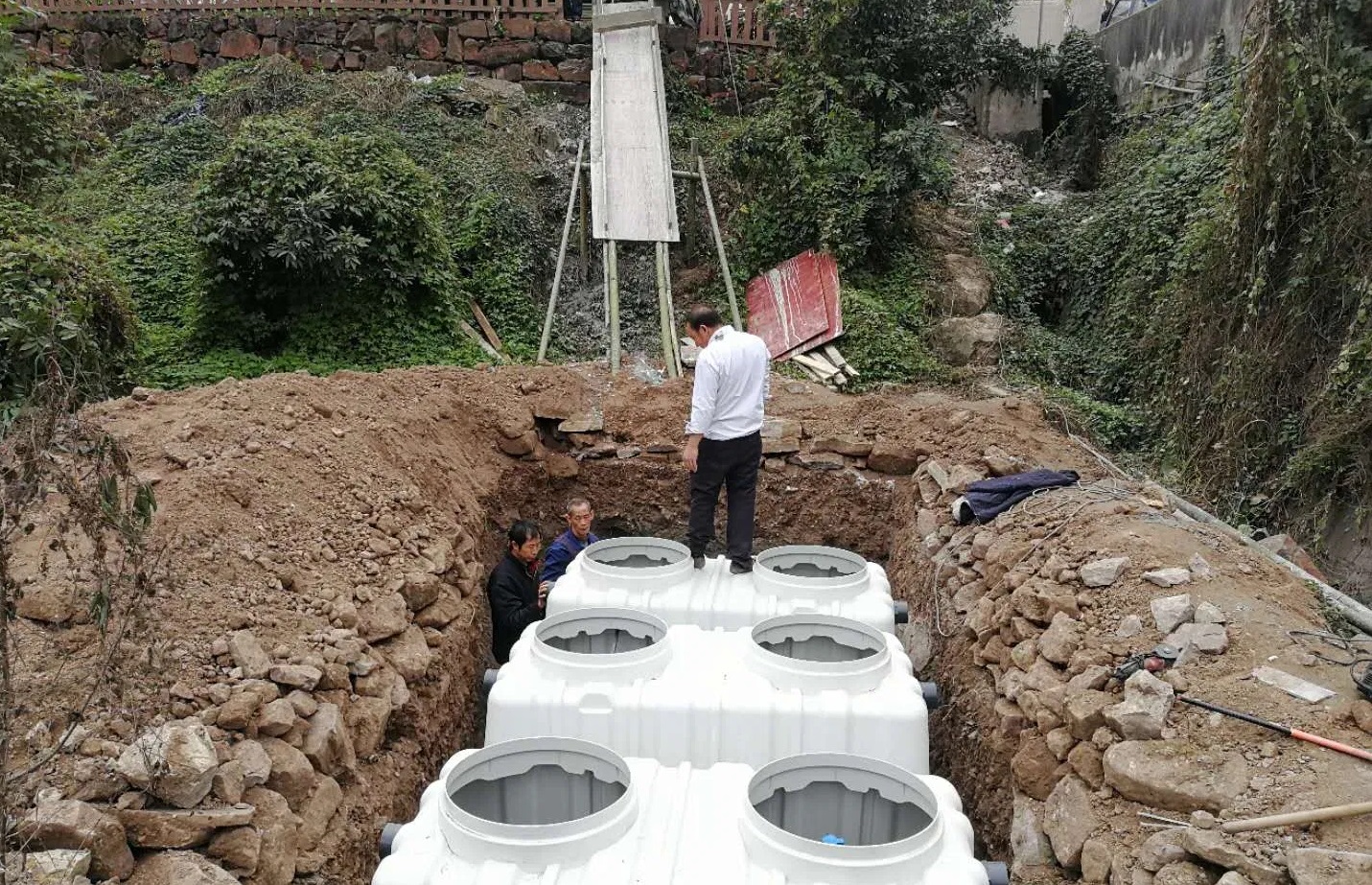
- Excavation work: Preparation of a pit with a concrete foundation to prevent the empty tank from floating up when groundwater rises (critical for the coastal areas of Larnaca and Paphos).
- Equipment installation: Installation of compressors, pumps, and control systems. A GSM module for remote emergency monitoring will become mandatory in 2026.
- Commissioning: Activated sludge (bacteria) seeding. The process of reaching operational mode takes 14 to 21 days.
Cost-effectiveness and return on investment
In 2026, the cost of a cubic meter of water from the central network for irrigating large areas (over 500 square meters), including all environmental fees, could reach €3.50–€4.50. A villa with a garden consumes an average of 300–500 cubic meters of water per year for irrigation.
Using the Bio-Sewage system allows you to:
- Save on water: up to 100% of the water consumed inside the home is returned to the garden as a free resource for irrigation.
- Reduce taxes: In some municipalities, having your own treatment system allows you to receive a discount on the annual Sewerage Tax, which in 2026 is calculated at a rate of €0.63 to €3.0 per thousand euros of assessed property value.
- Increase liquidity: A house with an autonomous system and a lush garden is worth 10-12% more during dry periods than similar houses with yellowed grass and high water bills.
Environmental regulations and quality control
In 2026, the Cypriot government tightened controls over the quality of purified water. System owners are required to enter into service contracts with authorized companies.
The control regulations include:
- Sample Analysis: Every six months, a sample of purified water must be submitted to a certified laboratory for testing of BOD, suspended solids and E. coli.
- Sludge pumping: Every 12-18 months, it is necessary to call a sewage truck to remove excess activated sludge.
- Maintenance Log: Maintain an electronic or paper inspection log that may be requested by the EOA inspector during a scheduled site visit.
Failure to comply with these rules in 2026 will result in administrative fines of €1,500 and an order to immediately modernise the system.
FAQ: Frequently Asked Questions
Is it possible to discharge pool water into a bio-sewage system?
Absolutely not. Chlorine and other chemicals used in pools instantly kill active bacteria in the Bio-sewage system, which stops the cleaning process and creates an unpleasant odor. Pool water should be drained into a separate drainage system or used for technical purposes after dechlorination.
Does a modern wastewater treatment plant produce an odor on-site?
With a properly designed ventilation system and regular compressor operation, there is no odor at all. Modern systems from 2026 operate on the principles of aerobic oxidation, which eliminates putrefaction. The appearance of an odor is the first sign of equipment malfunction or bacterial flora death.
What happens to the system during a power outage?
Bio-Sewage systems are power-dependent. If the power goes out, the aeration process stops. Most 2026 systems have a built-in buffer capacity for 12-24 hours of operation in a standard septic tank mode. For villas in remote areas, installing an uninterruptible power supply (UPS) or integration with solar panels is recommended.
Can I use regular household chemicals?
For the bio-cleaning system to function properly, it’s necessary to use products labeled “Bio-safe” or “Septic-friendly.” As of 2026, such products are widely available in all supermarkets in Cyprus. Excessive use of chlorine bleaches or harsh acids may require repopulation of the system with bacteria.
Do I need to connect to the central sewerage system if it’s installed later?
According to Cypriot law, if the central sewerage system runs along the boundary of your property, you must connect to it within six months of the publication of the Notice of Connection in the Government Gazette. However, you can retain your bio-system as a backup for water treatment exclusively for irrigation purposes, if this is provided for in the design and approved by the local EOA.