Amathus is one of the most significant archaeological sites in Cyprus, located southeast of modern-day Limassol, near the Mediterranean coast. This ancient city-state existed for over a thousand years and played a key role in shaping the island’s political, cultural, and religious life. Today, Amathus is an open-air museum, where the ruins of temples, basilicas, and an acropolis preserve the memory of Cyprus’s great eras.
Contents
- 1 Origins and mythological roots
- 2 Early periods and formation of the city-state
- 3 Amathus during the Persian and Hellenistic periods
- 4 Roman and Byzantine periods
- 5 Archaeological excavations
- 6 Temple of Aphrodite and the cult of the goddess
- 7 Architecture and planning
- 8 Finds and museum collections
- 9 Amathus today
- 10 The importance of Amathus for the history of Cyprus
Origins and mythological roots
The history of Amathus goes back centuries—according to archaeologists, the first settlements on this site appeared as early as the late Bronze Age, around the 12th century BC. According to legend, the city was founded by Amata, the mother of Queen Ariadne, whom Theseus abandoned on the island after returning from Crete. The city was named in her honor.
Amathus is also associated with the cult of the goddess Aphrodite, whose veneration held particular significance here. According to legend, it was on the hills of Amathus that the first temple to the goddess of love and fertility was built, making the city one of the oldest centers of Aphrodite worship in Cyprus.
Early periods and formation of the city-state
In the 8th and 7th centuries BC, Amathus became a thriving trade and craft center. Its favorable seaside location provided links with Phoenicia, Egypt, and mainland Greece. The city minted its own coins and had fortified walls and a port, testament to its independence and wealth.
In the sixth century BC, Amathus became one of the ten city-states of Cyprus. Metallurgy, copper processing, pottery, and maritime trade developed here. The city remained faithful to traditional Eastern culture and long resisted the influence of Greek colonists, preserving Phoenician elements in its architecture and religion.
Amathus during the Persian and Hellenistic periods
During the Persian occupation (6th–4th centuries BC), Amathus was one of the most loyal Cypriot cities. During the revolt of Kition and Salamis against Darius I, Amathus remained loyal to the Persian Empire, for which it was later awarded autonomy.
Following the conquests of Alexander the Great, the city became part of the Hellenistic world. Greek culture became firmly established here, new architectural forms and sanctuaries appeared, and the old temples of Aphrodite were rebuilt in the spirit of Hellenic tradition.
Roman and Byzantine periods
Under the Romans (1st century BC – 4th century AD), Amathus reached its peak. The city boasted well-planned streets, forums, public buildings, baths, and a theater. During this period, monumental temples were built, and the cult of Aphrodite received state patronage.
Later, during the Byzantine era, early Christian basilicas arose on the site of the ancient structures. However, frequent earthquakes and Arab raids led to the city’s gradual decline. By the 7th century CE, Amathus was abandoned, and its inhabitants moved to more protected areas—the site of modern-day Limassol.
Archaeological excavations
The first systematic excavations of Amathus began in the 19th century, and since 1975 they have been led by Cypriot and French archaeologists. Several cultural layers have been discovered, spanning the period from the Bronze Age to the early Middle Ages.
The key findings were:
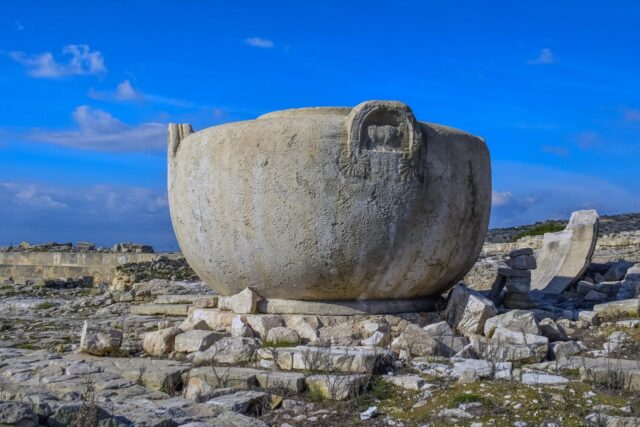
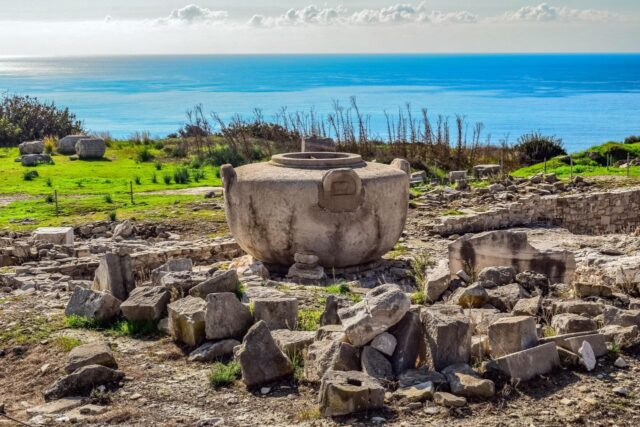
- The Acropolis with the ruins of the Temple of Aphrodite and a monumental stone vessel weighing about 13 tons, probably used for fertility rituals.
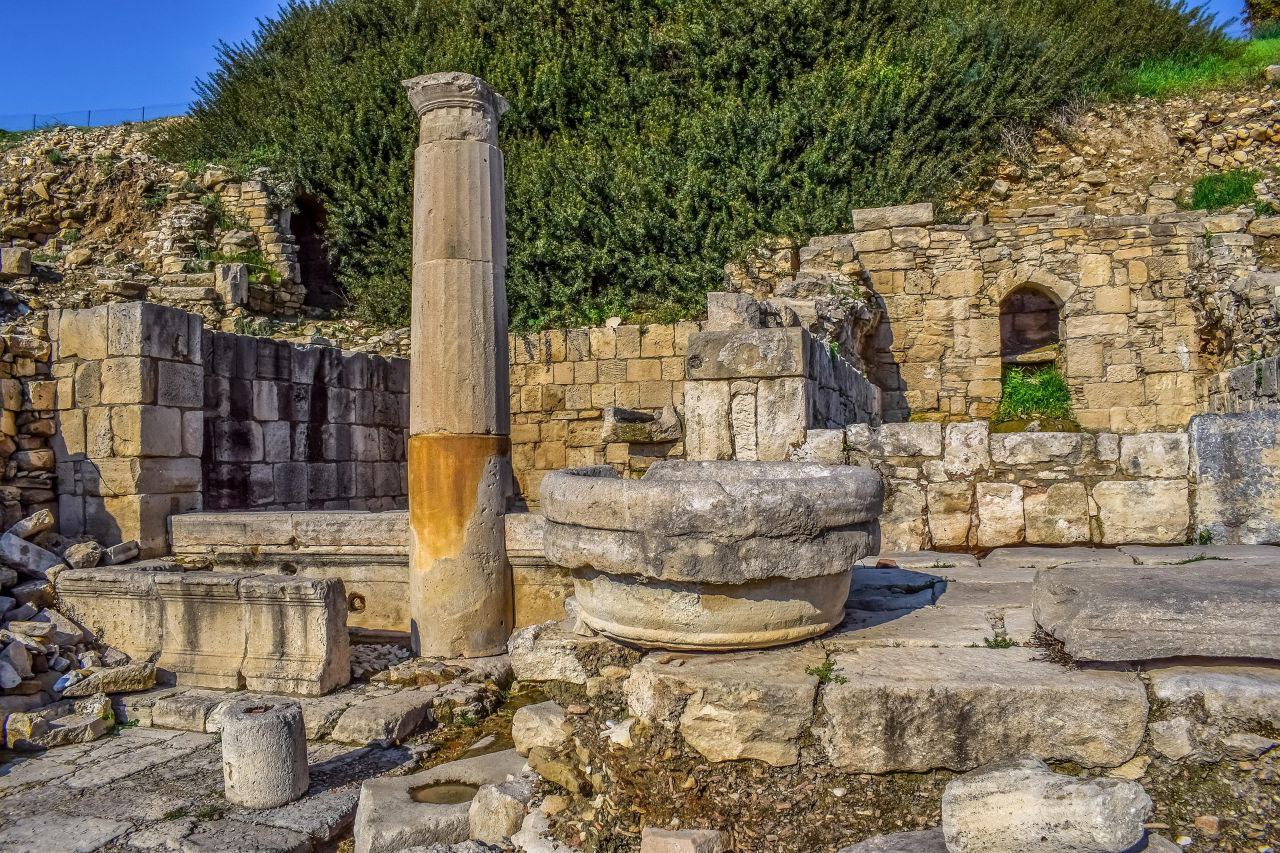
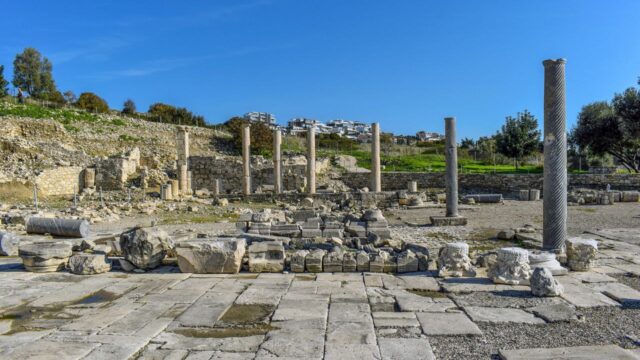
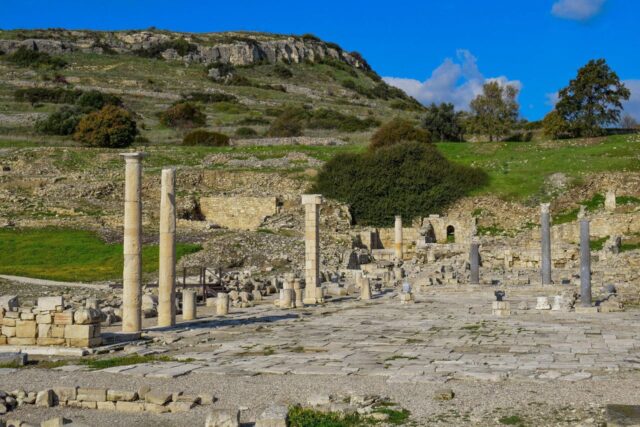
- The agora (marketplace), where colonnades and public buildings were located, including a bathhouse and porticoes, or stoa, covered galleries with columns.
- The city walls and gates remain at the bottom of the hill.
- A necropolis in which archaeologists found burial chambers decorated with vases, jewelry and coins.
These findings confirmed the high level of development of the urban culture of Amathus and its close ties with the Aegean and Middle Eastern regions.
Temple of Aphrodite and the cult of the goddess
The city’s main shrine was the Temple of Aphrodite of Amathus, standing atop the acropolis. The Cypriot goddess was revered here not only as the patroness of love, but also as the protector of the harvest, sailors, and mothers. Her cult combined features of the Greek Aphrodite and the Eastern goddess Astarte.
Rituals included sacrifices, musical processions, and symbolic actions associated with the renewal of life. Altars and stone vessels used in religious ceremonies were located around the temple.
Architecture and planning
Amathus was distinguished by its precise layout. The city consisted of an upper city—an acropolis with temples—and a lower city—residential and commercial quarters. Houses were built of limestone, and the streets were paved with stone. Water canals and rainwater reservoirs ran along the roads.
Roman buildings were distinguished by their scale: the remains of the baths, forum, and basilica are still visible within the archaeological park. Particular attention was paid to public spaces, decorated with columns and statues.
Finds and museum collections
Most of the finds from Amathus are housed in the Limassol Archaeological Museum. Statues of Aphrodite, pottery, jewelry, coins, and fragments of mosaics are on display here. Some artifacts, including monumental vessels and inscriptions, are on display directly at the excavation site.
Of particular interest are the inscriptions in Cypro-Minoan and Cypro-syllabic scripts, which help researchers to reconstruct the island’s ancient linguistic connections with the Aegean world.
Amathus today
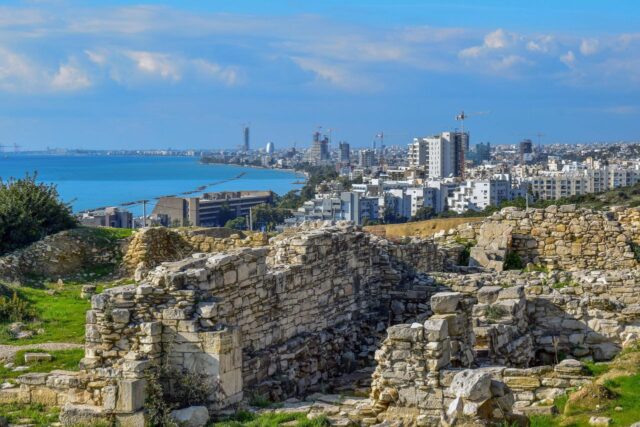
Today, the site of the ancient city has been transformed into the Amathus Archaeological Park, open to visitors year-round. The routes are marked with descriptive signs, and from the top of the acropolis, a panoramic view of the sea and modern Limassol opens. In the evening, the ruins are illuminated, creating an atmosphere of antiquity and grandeur.
The park is part of the “Ancient City-Kingdoms of Cyprus” cultural route, along with Kourion and Salamis. Guided tours and self-guided walks along marked paths are available.
The importance of Amathus for the history of Cyprus
Amathus is more than just an archaeological site; it symbolizes the multilayered nature of Cypriot history. It traces the journey from Bronze Age myths to the Christian era, preserving traces of all the cultures that passed through the island.
The city demonstrates how Eastern and Western traditions intertwined, how the cult of Aphrodite developed, and how art flourished. Amathus was a vibrant center of religion, trade, and culture, influencing neighboring cities and remaining in Cypriot memory as one of the cradles of their civilization.
Ancient Amathus is one of those places where the past is literally beneath your feet. Here, every column, every slab, recalls millennia of human history. The seaside landscape, sun-drenched ruins, and the silence of the ancient acropolis create a sense of touching the origins of civilization.
This city has become a symbol of the stability of Cypriot culture, capable of surviving conquests, catastrophes, and time. Amathus is a living chronicle of the island, a place where past and present merge in a single breath.