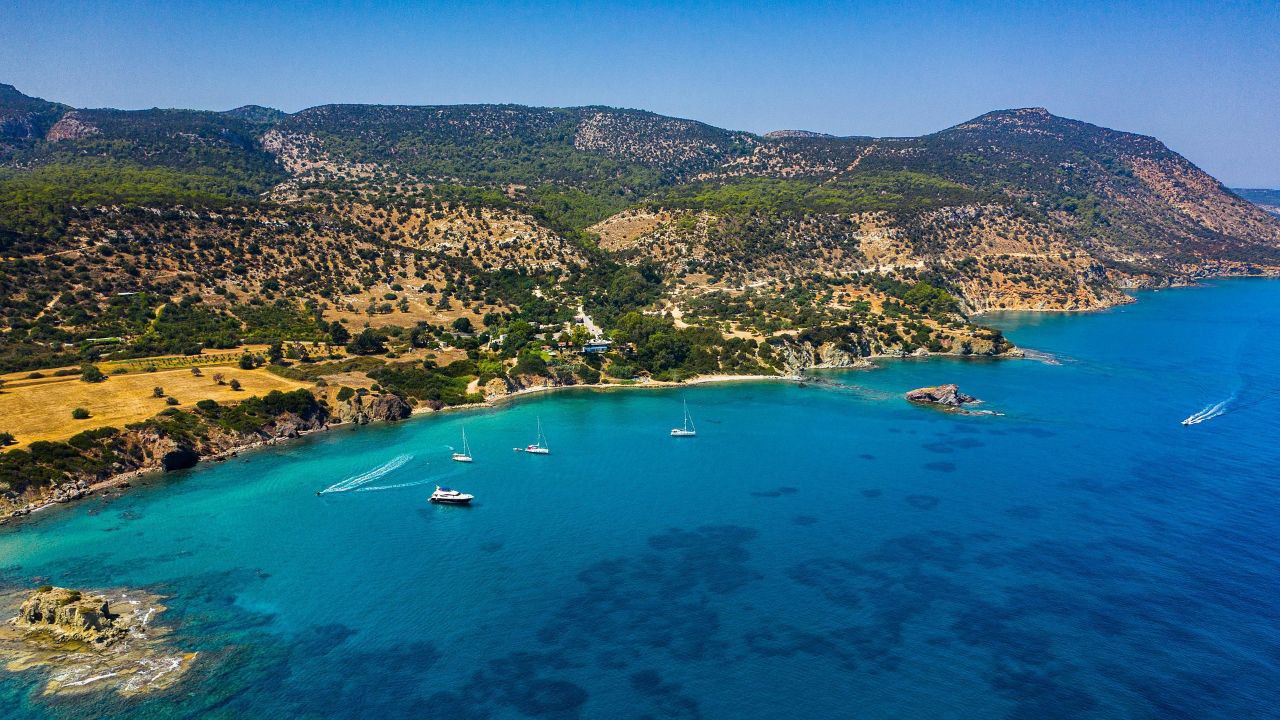
Akamas National Park is the largest nature reserve in Cyprus, located in the northwest of the island, in the Paphos district. This region is considered the most picturesque and ecologically pristine corner of the country. It boasts rare plants, crystal-clear seas, mountain trails, gorges, and bays where nature remains virtually untouched. Akamas is called the heart of Cyprus’s wild nature—a place where you can see the island as it was thousands of years ago.
Contents
Geography and general characteristics
The park covers an area of approximately 230 square kilometers, stretching from Cape Akamas to Latchi Bay and the villages of Neo Chorio and Androtas. The terrain combines mountain ranges, deep gorges, hills, and coastal valleys. The park’s highest point reaches 670 meters above sea level.
Akamas is included in the European network of Natura 2000 protected areas, guaranteeing biodiversity conservation and the control of economic activity. Unlike most regions of Cyprus, there is no mass development here, and infrastructure is limited to the bare minimum of roads and signposts.
Historical and cultural significance
The name Akamas is linked to an ancient Greek myth. According to legend, this peninsula was named after the hero Acamas, son of Theseus, who arrived in Cyprus after the Trojan War and founded one of the first settlements here. In ancient times, this region was considered sacred and dedicated to the goddess Aphrodite, who, according to legend, loved to relax in the local mountains and bathe in the famous Baths of Aphrodite.
The Byzantine and medieval periods left their mark in the form of monasteries, stone churches, and the ruins of ancient settlements hidden among the forests. Thus, Akamas is not only an island of natural but also cultural value.
Landscape and natural features
The park’s main feature is its diverse landscapes. Dense forests, rocky gorges, sandy bays, and coastal dunes are found here. Among the most famous natural formations are the Avgas Gorge, the Fontana Amorosa mountain pass, Cape Aramtis, and Lara Bay beach.
The peninsula is bordered by Chrysochous Bay to the north and the open Mediterranean Sea to the west. The seawater is exceptionally clear, making the Akamas coast a popular destination for diving and underwater excursions.
Flora and fauna
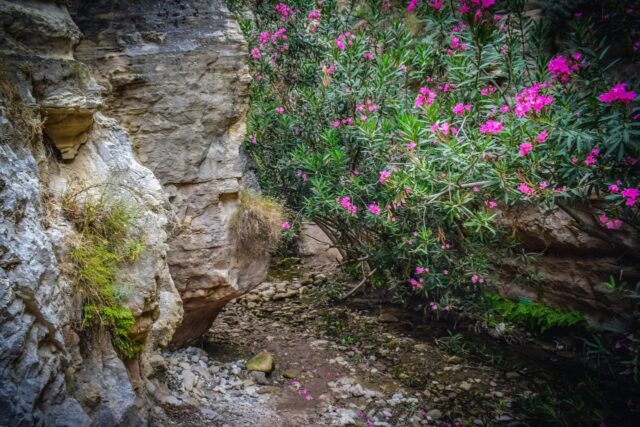
The biodiversity of Akamas is unique. More than 530 plant species have been recorded in the park, of which approximately forty are endemic, meaning they grow only in Cyprus. Among them are the Cyprus orchid, lavender, mastic tree, and the rare Halepa pine. In spring, the hills are covered in a carpet of poppies, cyclamen, and wild lilies.
The park’s fauna is no less diverse. It is home to foxes, hedgehogs, chameleons, owls, hawks, and a variety of migratory birds. Green and loggerhead sea turtles are found in the coastal areas, laying eggs on Lara Bay beach. These species are listed in the Red Book and are under special protection by environmental authorities.
Main natural attractions
- The Baths of Aphrodite are a small natural cave with a freshwater spring, surrounded by lush greenery. It is believed that this is where the goddess of love met her lover, Adonis.
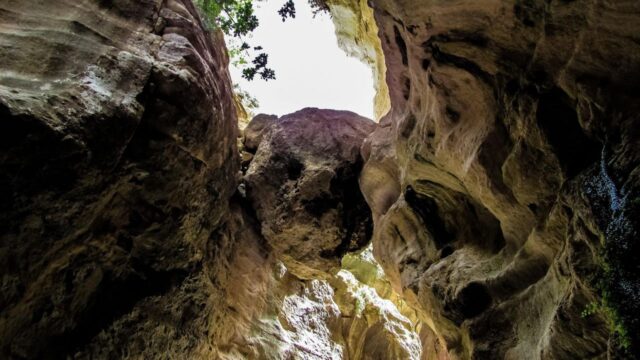
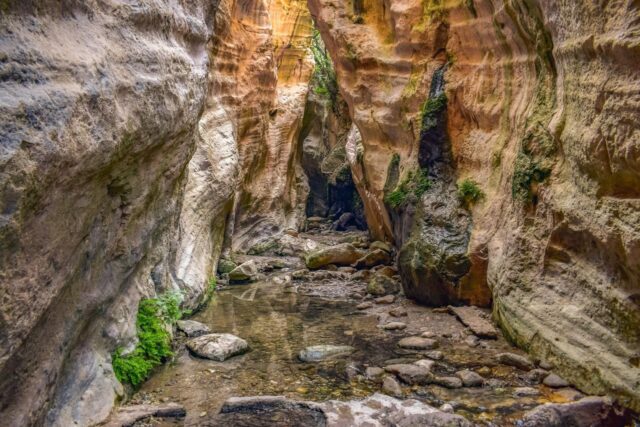
- Avgas Gorge is one of the park’s most picturesque spots, a narrow canyon with sheer walls covered in ferns and ivy. A stream flows constantly through it, and even in the summer, the shade remains cool.
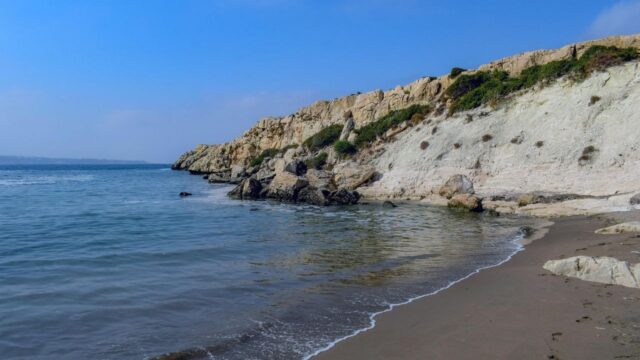
- Lara Bay Beach is a protected bay where sea turtles lay their eggs from May to August. Fences and information boards have been installed to protect the nests, and swimming is permitted only in designated areas.
- Fontana Amorosa (Spring of Love) is a coastal lagoon with turquoise waters, accessible via the Aphrodite Trail. Legend has it that anyone who drinks from this spring will be forever in love.
Hiking routes
There are several official trails in the Akamas area, equipped with signs and viewing platforms:
- Aphrodite’s Trail (7.5 km) is a circular route starting from the Baths of Aphrodite and passing through viewpoints with panoramic views of Chrysochous Bay and Cape Arnaoutis.
- The Adonis Trail (7 km) is a steeper route through wooded areas and mountain slopes. From the summit, views of the peninsula and the sea open up.
- The Avgas trail (about 6 km) is a path through the gorge, suitable for lovers of hiking and photography.
The paths are well maintained, and benches and information boards about plants and animals are installed along the routes.
How to get there
Akamas National Park is located approximately 45 kilometers from Paphos. You can reach it by car to the villages of Latchi or Neo Chorio, where the main trails begin. For travelers without a car, there are jeep and quad bike tours that take you to remote areas, including Lara Bay and Cape Aramtis.
Traffic on some roads is restricted: to protect the ecosystem, entry is permitted only for off-road vehicles, and some routes are intended exclusively for walking or cycling.
Visiting rules
Akamas is a protected area, so strict environmental regulations apply here:
- it is prohibited to make fires and leave garbage;
- the collection of plants and removal of stones from the territory is prohibited;
- movement outside designated routes is restricted;
- swimming at Lara Bay beach is only permitted in designated areas to avoid disturbing the turtles.
All natural objects are preserved in their original form, and compliance with the rules is monitored by inspectors from the Department of Nature Conservation.
Best time to visit
The best months for hiking in Akamas are March to May and September to November. In spring, the scenery is especially beautiful: orchids are in bloom, the air is filled with the scent of herbs, and temperatures hover around 20–25°C. In summer, hikes are possible early in the morning or late in the evening, when the heat subsides. In winter, the park remains accessible for trekking, although some roads may be washed out after rain.
Ecological significance and nature conservation
Akamas plays a key role in Cyprus’s ecosystem. It regulates the region’s microclimate and serves as a refuge for rare animal and plant species. In recent years, the Cypriot government, in collaboration with conservation organizations, has been implementing programs to restore vegetation, combat erosion, and monitor turtle populations.
The park is also a center for ecotourism, attracting researchers, photographers, and volunteers from around the world. Their participation helps maintain a balance between tourism and the preservation of the unique ecosystem.
Interesting facts
- Scenes from several documentaries about the nature of the Mediterranean were filmed in the Akamas region.
- More than 160 species of migratory birds can be found here, making a stopover during their migration from Europe to Africa.
- In some areas of the park, shepherds still live, leading a traditional way of life, as they did hundreds of years ago.
- Legends say that pirates and later hermit monks hid in the caves near Cape Aramtis.
Akamas National Park is an open-air natural museum, where every corner preserves the history and beauty of Cyprus. Here you can explore pristine landscapes, walk along the paths of the goddess Aphrodite, swim in clear waters, and experience harmony with nature.
Akamas has become a place where man and nature exist in balance. A visit to this park leaves an unforgettable impression: the sounds of the sea, the scent of pine trees, and the silence of the mountains create a sense of peace and eternity.